
Livraison le jour même ou le lendemain

Qualité garantie

Débloquez vos offres de bienvenue: Livraison GRATUITE | Jusqu'à -80 % | 30 jours d'essai gratuits à JoyPlus
Téléchargez l'application
In the competitive gaming arena, every millisecond counts. The promise of an 8K wireless gaming mouse is an alluring one: near-instantaneous responsiveness, that slight edge that can mean the difference between victory and defeat. The problem: the market is flooded with technical jargon and marketing claims designed to confuse you. Before you pull the trigger, it's essential to know how to distinguish true innovation from a superfluous gimmick. Our mission? To help you see things more clearly. Let's break down the pitfalls to avoid and the criteria that truly matter to make an informed choice.
The excitement of a new purchase can sometimes make you overlook the essentials. Here are the three most common mistakes to avoid.
To avoid making a mistake, focus on these three essential points that define an excellent wireless gaming mouse.
The heart of the mouse is its sensor. Prioritise models equipped with optical sensors renowned for their precision and lack of hardware acceleration. For the 8000?Hz polling rate, ensure it's a native capability and not a software-based extrapolation. Native performance is the guarantee of a stable connection and minimal latency, provided, of course, that your PC can keep up.
The ideal mouse is one you forget is even there, perfectly fitting your hand and grip style.
A programmable e-sports mouse allows you to tailor it to your needs and adapt it to each game. The number of programmable buttons, the ability to create macros, and the option to save profiles to the mouse's onboard memory are major assets. Finally, the durability of the switches is a guarantee of longevity. Optical switches, for example, offer a longer lifespan than traditional mechanical switches and eliminate the risk of unintentional double-clicks.
Here are a few models that check all the boxes, designed for different types of gamers.
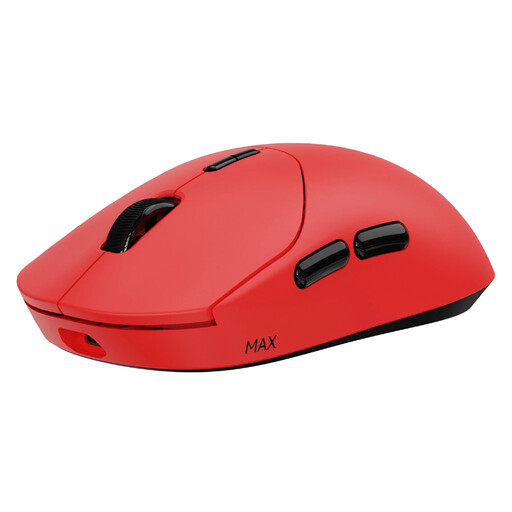
Why this one? Designed for pure performance, it delivers the e-sports winning trifecta: a feather-light 53g weight for lightning-fast movements, a native 8000 Hz wireless polling rate for absolute responsiveness, and record-breaking battery life to power through gaming sessions without interruption.
It ends the weight vs. battery life dilemma. Thanks to an ultra-efficient Nordic chip, it offers up to 750 hours of battery life (at 1000 Hz) while weighing only 53g. Compromise is a thing of the past.
A native 8000 Hz wireless polling rate without an additional dongle, and 10 programmable buttons with onboard memory.
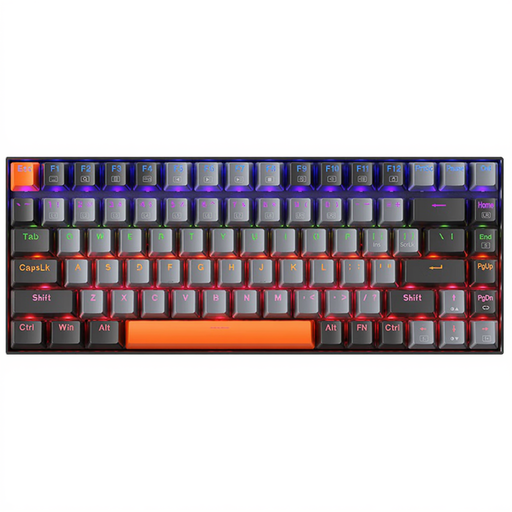
Why this one? A good mechanical keyboard is the perfect partner for a precision mouse. This compact model (75% layout) frees up valuable desk space for wide mouse movements, a decisive advantage in FPS games. Its red switches ensure a smooth and responsive keystroke.
It gets straight to the point: reliable mechanical switches and an optimised layout. No superfluous gimmicks that drive up the price and clutter your desk, unlike many oversized "gaming" keyboards.
Compact 84-key layout for maximum space, and red mechanical switches for fast, quiet actuation.
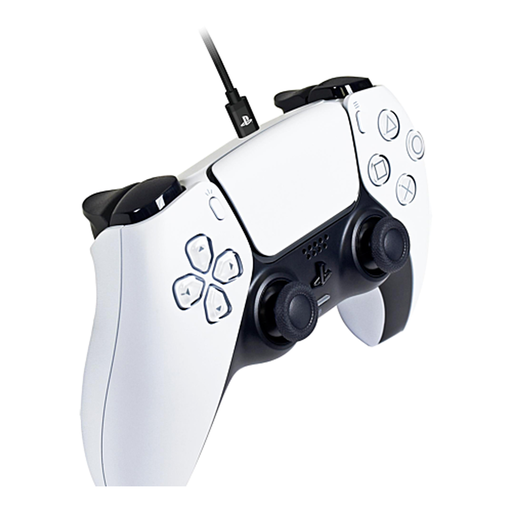
Why this one? For those who juggle between PC and PlayStation 5, cable management is a real issue. This 3-meter model, officially licensed by Sony, lets you charge your DualSense controller mid-game or use it wired on PC for a zero-latency connection.
No more frustration with low-quality cables that fail after a few weeks or don't support a wired connection. Its braided sheath and metal connectors are built to last.
Its 3-meter length offers great freedom of movement. Its tangle-free design and official Sony license guarantee a hassle-free experience.
Explore our complete selection of products, all approved by our experts for their performance and reliability.
No, not necessarily. The benefit of an 8000?Hz mouse is most noticeable for competitive or professional level gamers using very high refresh rate monitors (240?Hz and up) and seeking the lowest possible latency. For a casual gamer on a 60 or 144?Hz monitor, a 1000?Hz mouse is already excellent and will be much less demanding on your PC.
Several tricks can help extend battery life. The first is to lower the polling rate when you're not gaming (e.g., switching from 8000?Hz to 1000?Hz). The second is to dim or turn off the RGB lighting, which is very power-hungry. Finally, many models offer a power-saving mode that activates after a period of inactivity.
Yes, and it's significant, especially in games that require quick and precise movements like FPS. An ultra-lightweight gaming mouse requires less effort to start and stop moving, which can improve aiming accuracy and reduce wrist fatigue over long sessions. However, the ideal weight is a matter of personal preference: some players prefer the more stable feel of a slightly heavier mouse.