
Livraison le jour même ou le lendemain

Qualité garantie

Débloquez vos offres de bienvenue: Livraison GRATUITE | Jusqu'à -80 % | 30 jours d'essai gratuits à JoyPlus
Téléchargez l'application
By the Joybuy Team, Organisation ExpertsPublished August 27, 2026
Back-to-school season is just around the corner, bringing with it the resolution to be perfectly organised. Yet, the story is often the same: loose papers flying around, lecture notes getting mixed up, and important documents ending up crumpled at the bottom of your bag. The 8-compartment expanding file seems like the perfect solution. But be warned—not all models are created equal. Before you buy, it's crucial to understand the design flaws that can turn a promising purchase into a daily source of frustration.
It's easy to be swayed by a rock-bottom price or a cool design, only to end up with a file folder that's destined for the bin after just a few weeks. Here are the pitfalls to avoid at all costs:
Choosing the right file folder isn't a minor detail; it's an investment in your peace of mind and efficiency. Whether you're organising your university notes or managing project files at the office, the right tool makes all the difference.
To make the right choice, look past the design and focus on these key technical points. They are the hallmark of a practical file folder that's built to last.
The choice of material is critical. While cardboard might be tempting for its low price, it quickly shows its limits when faced with moisture and daily commutes.
An A4 polypro (polypropylene) file is the most reliable alternative. This plastic has it all:
Look for a cover made of rigid, opaque polypropylene: it's your guarantee of maximum protection and excellent long-term durability.
A good A4 flap folder integrated into the file should be a fortress. The first thing to check is the size of the flap. A wide model that covers at least two-thirds of the height will keep papers perfectly in place, unlike a small, token flap. It prevents documents from sliding out and protects them from impacts. Also, remember to check the quality of the elastic closures: they should be thick and securely attached.
The word "expanding" is often overused. A truly great accordion file must have a sliding spine or gussets that genuinely adapt to the volume of paper. This flexibility allows you to store anything from a few sheets to a substantial file without straining the structure. This is a non-negotiable feature for a student document organiser, where the workload can vary dramatically from one week to the next.
To help you out, here are two models that tick all the boxes for durability and practicality, designed for different needs.
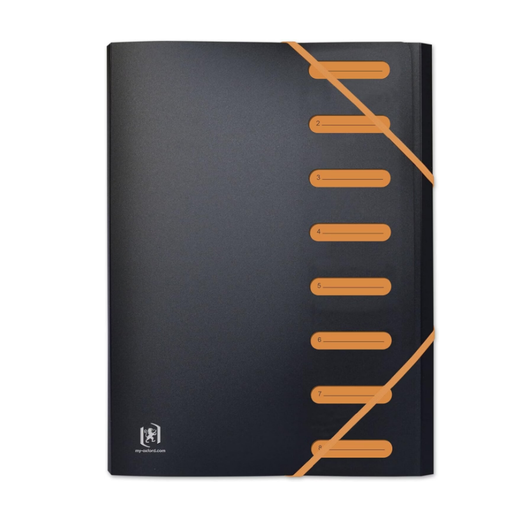
Why we chose it: Ideal for the student juggling lectures, tutorials, an internship, and administrative paperwork. A true Swiss Army knife designed for heavy, on-the-go use.
Its rigid polypropylene shell is warp-resistant. Its sliding expandable spine adjusts with precision, and the wide flap locks contents in to prevent any document spillage.
A zipped pouch for small supplies (pen, USB drive) and an index card to find things in a flash.
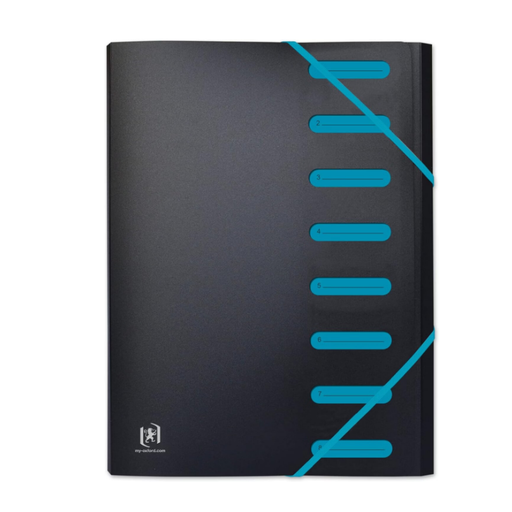
Why we chose it: Perfect for organising project files or carrying documents to client meetings. Its two-tone black and blue design is understated and professional, without sacrificing practicality.
Its opaque polypropylene structure ensures document confidentiality. It's robust enough to handle frequent travel without flinching, and its flexible spine accommodates everything from a single contract to a 100-page report.
It shares the same great features as the student model: sliding spine, large flap, and a zipped pouch. The blue colour adds the necessary touch of professionalism.
Explore our complete selection of filing solutions that meet our standards for quality and durability.
A quality polypropylene (PP) file folder, like those from Oxford, is designed to last for several years, even with heavy use. Its resistance to tears and moisture gives it a clear edge over cardboard models. To maximise its lifespan, simply avoid overloading it beyond its capacity and keep it away from heat sources.
The golden rule: one compartment = one subject, project, or document type (invoices, contracts, etc.). Use the index card to keep track of what's where. Pro tip: place your most frequently used documents at the front for quicker access. The zipped pouch, meanwhile, is perfect for small items like a USB drive, business cards, or an emergency pen.
For most degree programmes, an 8-compartment expanding file is perfect for managing the semester. Its expandable capacity can easily handle the accumulation of handouts and notes. The best practice is to archive your notes in binders or boxes at home at the end of the semester, giving you a fresh start for new subjects. If your course is particularly paper-intensive (like law or medicine), having a second file folder can be a winning strategy.