
Livraison le jour même ou le lendemain

Qualité garantie

Débloquez vos offres de bienvenue: Livraison GRATUITE | Jusqu'à -80 % | 30 jours d'essai gratuits à JoyPlus
Téléchargez l'application
The 75?% layout has emerged as the ideal compromise for many users. More compact than a TKL (Tenkeyless) keyboard yet more functional than a 60?% model, it retains the essential arrow keys and a function row while freeing up valuable desk space. Whether you're a gamer seeking maximum responsiveness, a developer looking to optimise your workspace, or simply an enthusiast of fine mechanical engineering, finding the perfect model can be a daunting task given the sheer number of options.
This guide is here to break down the key criteria and introduce a curated selection of 75?% mechanical keyboards that stand out from the crowd—without the unnecessary marketing jargon.
Choosing a keyboard is, above all, a matter of personal taste and feel. Here are three technical aspects to scrutinise to help you narrow down your selection.
Your keyboard's connection method directly impacts its versatility and performance.
The typing feel and acoustics are at the heart of the mechanical keyboard experience.
Even in a compact form factor, a small mechanical keyboard must remain comfortable and functional. The US QWERTY layout is ubiquitous on customisable models, often preferred by developers and some gamers. Switching from a regional layout like AZERTY is simple?: you just need to change a setting in your operating system.
Finally, an RGB mechanical keyboard allows for per-key lighting customisation, which is ideal for highlighting shortcuts or simply for visual appeal. Other models opt for more understated, single-colour backlighting.
Here are a few models that stand out for their design and features, each catering to specific needs.
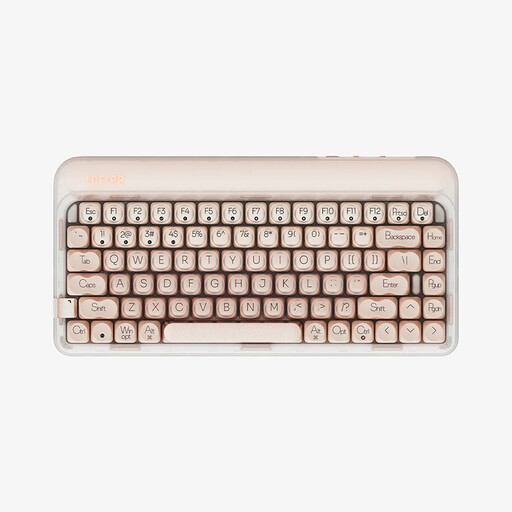
Highlights?: The Lofree OE914 is all about delivering a soft and quiet typing experience, thanks to an internal structure engineered to dampen sound. Its tri-mode connectivity makes it an ideal travel companion.
Pros?:
Who is it for?? For those seeking an elegant, discreet, and versatile keyboard that can move effortlessly from the office to remote work and casual gaming.
See Details for the Lofree OE914
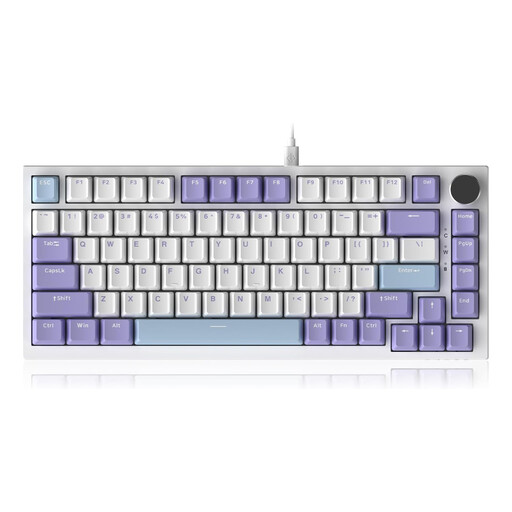
Highlights?: The wired AK820 is built for pure performance. It combines a flawless connection, a gasket mount structure, and a CNC metal volume knob that is as practical as it is elegant.
Pros?:
Who is it for?? Gamers and professionals who demand a flawless connection, a premium typing experience, and practical details like the volume knob.
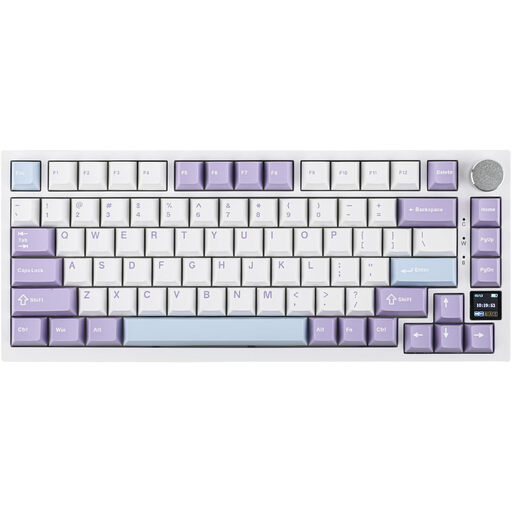
Highlights?: The Pro version of the AK820 stands out with its interactive TFT colour screen, a still-uncommon feature that displays real-time information and allows for advanced visual customisation.
Pros?:
Who is it for?? Tech enthusiasts and power users who want a keyboard at the cutting edge of innovation, offering maximum customisation and top-tier performance.
The selection above is just a glimpse of the possibilities offered by the 75?% layout. If you want to explore other types of backlighting or form factors, our catalogue is full of other gems.
? Explore our full collection of backlit keyboards to find other models that suit your style.
1. What is the difference between a 75?% and a TKL (80?%) keyboard?? A 75?% keyboard is more compact. It condenses the arrow and navigation keys (Delete, End, etc.) right up against the main key cluster to save space. A TKL keyboard retains a more traditional separation between these key groups, making it slightly wider.
2. Is it difficult to use a QWERTY keyboard if you're used to a different layout?? It's simply a matter of habit?! The physical key arrangement differs from layouts like AZERTY. However, you just need to set your operating system (Windows, macOS, Linux) to the "US-International" layout, which makes it easy to type accented characters (for example, ' + e = é). In fact, many developers and gamers have adopted it for its more direct access to programming symbols and its compatibility with default game shortcuts.
3. Gasket mount: a real advantage or just a gimmick?? It's a matter of preference. A 75?% gasket keyboard uses gaskets to isolate the switch plate from the case, which provides a more flexible typing feel and a deeper, less metallic sound. Many find it more comfortable for long typing sessions, but some purists may prefer the rigidity of a more traditional mount.