
Livraison le jour même ou le lendemain

Qualité garantie

Débloquez vos offres de bienvenue: Livraison GRATUITE | Jusqu'à -80 % | 30 jours d'essai gratuits à JoyPlus
Téléchargez l'application
The 75% layout is taking over, and for good reason. It represents the ideal sweet spot between the compactness of a 60% keyboard and the functionality of a TKL (tenkeyless) model, all while freeing up maximum desk space. But faced with a market flooded with marketing jargon and sometimes obscure spec sheets, it's easy to get lost. To avoid buyer's remorse, it's best to know the pitfalls to avoid.
As a product expert at Joybuy, my role is to decode what really matters for you. Follow this guide: here are the essential points to check and the mistakes not to make.
To make the right choice, focus on the few technical details that truly make a difference in daily use and over the long term.
A 75% mechanical keyboard is distinguished by its optimized layout. Unlike a 60% keyboard, which sacrifices the function keys (F1-F12) and arrow keys, the 75% layout manages to keep them by arranging them more densely. The result: you maintain direct access to essential commands for gaming and productivity, while gaining considerable space for your mouse movements. It's a format particularly popular with gamers and professionals whose workspace is limited.
The mounting style of the internal components plays a crucial role in the sound and feel of typing. Most standard keyboards use a rigid tray mount, which tends to transmit vibrations and produce a harsher, clackier sound. In contrast, a gasket mount keyboard uses silicone or Poron gaskets to isolate the plate holding the switches from the rest of the chassis. This "cushioned" mount dampens each keystroke for a softer feel, a deeper, more muted sound (thocky, to enthusiasts), and unparalleled typing comfort.
Customization is one of the cornerstones of the mechanical keyboard world. A hot-swappable keyboard features a printed circuit board (PCB) with sockets that allow you to change switches on the fly, without any soldering. This gives you the freedom to experiment with different types of switches (linear, tactile, etc.) to find your perfect match, or to replace a faulty switch in a snap.
At the same time, the choice of keycap material is just as crucial. PBT (polybutylene terephthalate) keycaps are a class above traditional ABS plastic. Being denser, they are much more resistant to wear and the shine that develops from finger oils. Opting for a keyboard with PBT keycaps (even if it's RGB compatible) not only ensures greater longevity but also maintains that pleasant, textured feel that won't degrade over time.
Here is a selection of models that meet these quality criteria, tailored to specific needs.
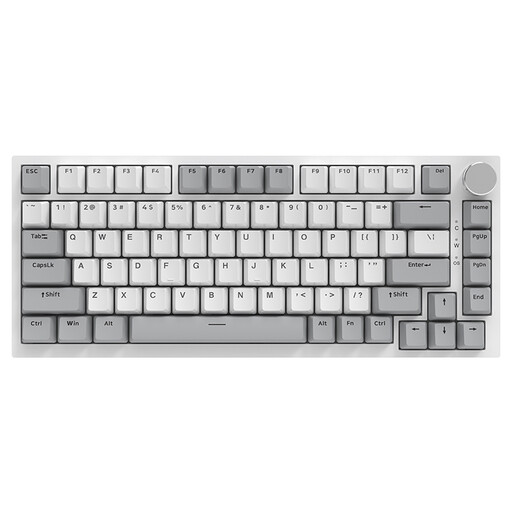
Why It's a Great Choice: Perfect for gaming, its compact gaming keyboard format frees up ample space for wide mouse movements, which are essential in FPS games. Its metal volume knob lets you manage audio on the fly during a match or stream, without ever taking your eyes off the game. The wired connection guarantees flawless responsiveness, which is crucial in competitive play.
This is a true mechanical keyboard, equipped with PBT keycaps built to last. Say goodbye to the "worn plastic" effect of ABS models and fake mechanical sensations.
The combination of the gasket mount for a soft typing feel and the dedicated volume knob is a winning duo. It offers comfort and ergonomics that are rare at this price point.
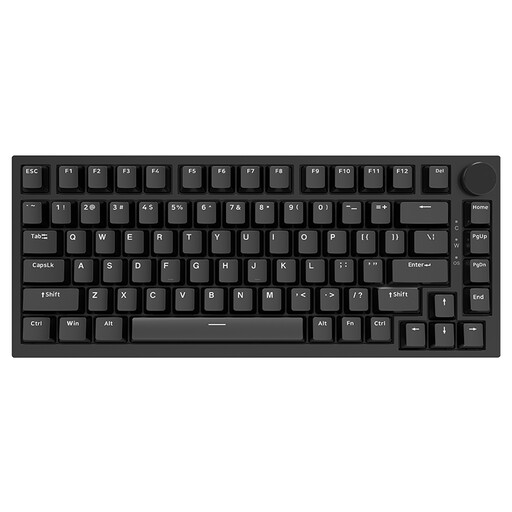
Why It's a Great Choice: For long coding or writing sessions, comfort is non-negotiable. The AK820's gasket mount structure, combined with its insulation foams (Poron, IXPE), cushions keystrokes and reduces long-term fatigue. Its 75% layout retains the arrow and function keys, which are indispensable for navigating code or using shortcuts in creative software.
Its hot-swappable design frees you from the tyranny of the stock switch. You can opt for silent linear switches for the office or tactile ones for more pronounced feedback, without being stuck with a default choice.
Its refined acoustics and typing comfort are its greatest assets. The layers of sound-dampening foam and the gasket mount create a bubble of focus, worthy of much more expensive models.
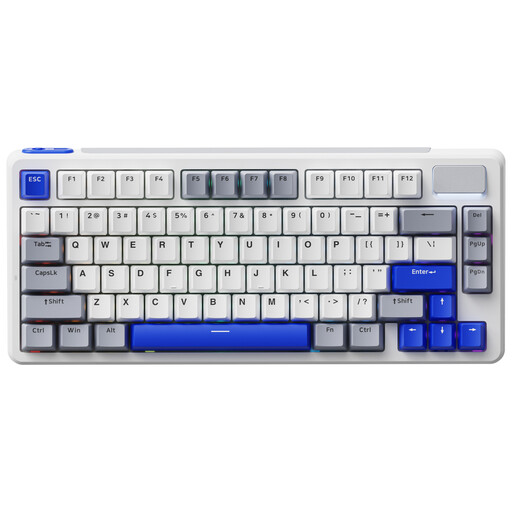
Why It's a Great Choice: The term "DIY" (Do It Yourself) says it all. This keyboard is an excellent starting point for building the keyboard of your dreams. It combines a gasket mount structure and a hot-swappable PCB—the two fundamentals of any self-respecting modern custom keyboard.
It turns the concept of a "closed" keyboard on its head. It's designed to be disassembled, modified, and optimized with the switches, stabilizers, and keycaps of your choice.
Its versatility is its greatest strength. The tri-mode connectivity (Wired, Bluetooth, 2.4 GHz) allows you to juggle between multiple devices, making it a modding platform that is as powerful as it is flexible.
If these three models don't check all your boxes, take a look at our complete selection. Each keyboard has been chosen according to the same exacting standards.
A TKL keyboard (around 80%) is simply a standard keyboard with the number pad removed. The layout of the other keys (arrows, Insert, Delete, etc.) remains traditional. The 75% format takes compactness a step further: it condenses all the keys, including the arrows and the function row, by eliminating all superfluous space. The goal: maximum space savings without sacrificing essential controls.
No, provided you choose a quality model. Modern sockets are designed to withstand thousands of switch changes. For a user who only changes switches occasionally, the reliability is identical to that of a soldered keyboard. The main advantage is practical: maintenance becomes child's play. A faulty switch can be replaced in seconds, saving you from having to throw away the entire keyboard.
PBT is a denser and much more durable plastic than ABS. In practical terms, it doesn't suffer from the "shining" effect that makes ABS keycaps glossy and slippery after a few months of use. The surface of PBT keycaps retains its grainy texture, ensuring a better grip and a consistent typing feel over the long term. It's a hallmark of quality and durability.