
Livraison le jour même ou le lendemain

Qualité garantie

Débloquez vos offres de bienvenue: Livraison GRATUITE | Jusqu'à -80 % | 30 jours d'essai gratuits à JoyPlus
Téléchargez l'application
Greening up a balcony, terrace or patio without filling it with pots means choosing a container that is spacious, mobile and easy to maintain. A 74 L wheeled wall planter can meet these needs perfectly, provided you look beyond its appearance or the simple presence of a water reservoir.
Some of the features highlighted in product listings deserve closer attention. A large capacity can become a considerable weight once the planter is filled. Wheels that are easy to use on a perfectly flat surface may be far less practical on uneven paving. And if a water reservoir is misunderstood, you may end up watering too much or too little, particularly during the colder months.
Here are the key points to check before choosing a planter for your balcony or terrace.
An advertised capacity of 74 L refers to the container’s overall capacity. The amount of soil that can actually be used may vary depending on the presence of a reservoir, filter grid or drainage system. For larger plants, check the planter’s length, width and height rather than relying solely on the number of litres.
An 80 cm outdoor planter generally provides a useful length for grouping several plants together. However, it must remain suitable for the space available along a wall or balcony railing.
A wheeled planter makes it easy to change its exposure to sunlight, clear a walkway or move plants closer to a water source. However, wheels are no substitute for a stable base. On a balcony, the planter should sit on a level surface without obstructing a door, water drainage or movement around the space.
Before moving the planter, also take into account the weight of the damp growing medium, plants and full reservoir.
A planter with a water reservoir can extend the time between some watering sessions, but it does not remove the need to monitor the moisture level of the growing medium. The reservoir must be filled according to the manufacturer’s instructions. It should not be left full at all times if the plants you have chosen prefer relatively dry soil.
In winter, water can freeze and put pressure on the plastic. It is therefore best to check the care instructions and protect or empty the reservoir during severe cold weather.
The EDA Toscane model shown measures 79 × 35 × 39 cm. Its shallow depth may be suitable for a terrace or balcony where every centimetre counts. Before ordering, measure the installation area carefully, allowing enough room to water, move the planter and care for the plants.
Despite its name, a wall planter is not necessarily designed to be fixed to a wall. Here, the term refers to a format intended to be placed against a wall to create a planted divider. The product information recommends installing it on a level, stable surface.
For year-round use in France, look for plastic described as UV- and frost-resistant. This indicates how the material has been designed, but it does not mean the product can be left exposed without precautions in every extreme condition. Impacts, temperature fluctuations and prolonged frost can accelerate ageing.
The EDA planter’s product information mentions recyclable plastic, French manufacture and Origine France Garantie certification. It also states a 7-year commercial warranty. Keep this information with your proof of purchase and check the applicable commercial terms.
A well-designed system should keep the water reservoir separate from the growing medium. The EDA Toscane model includes a water reservoir, filter grid, filling spout and drainage system, as stated in its product information.
The grid helps prevent impurities from entering the reservoir, but it does not replace regular maintenance. Leaves, roots and deposits can reduce its effectiveness. To prevent excess water, adjust the filling level according to the weather, exposure and plants’ needs.
The available information mainly concerns the EDA Toscane planter. Rather than incorrectly associating kitchen accessories with outdoor use, the cards below show three relevant ways to use this same model according to your needs.
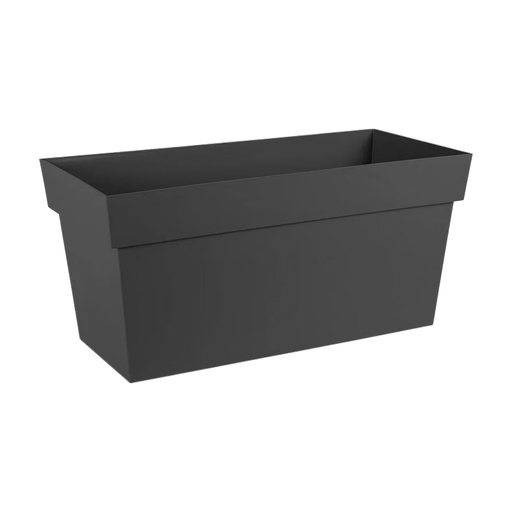
Why this choice suits this profile : its 74 L capacity lets you create a generous plant display. The wheels and integrated reservoir make it easier to get started.
The dimensions and capacity are clearly stated. The filling spout helps you use the reservoir without watering blindly.
74 L capacity, wheels, water reservoir, filter grid and dimensions of 79 × 35 × 39 cm.
Why this choice suits this profile : its anthracite grey finish complements contemporary décor and adds visual structure to a terrace or patio.
This choice is based on verifiable features — dimensions, stated material and colour — rather than a vague decorative promise.
Anthracite colour, mobile design, plastic described as UV- and frost-resistant, and stated French manufacture.
Why this choice suits this profile : its capacity is suitable for dense planting, while the wheels make maintenance and terrace cleaning easier and allow you to adapt the planter to changing sunlight.
The reservoir, filter grid and drainage system are detailed in the product information, making it easier to monitor watering throughout the seasons.
74 L capacity, filling spout, filter grid, wheels and advertised 7-year commercial warranty.
We have compiled a complete, real-time updated list of products that fully meet these strict selection criteria and European safety regulations.
It depends on the exposure, wind and available depth. Herbs, seasonal flowers and trailing plants may all be suitable. Ideally, group species with similar light and watering requirements.
It can extend the time between some watering sessions, but consumption depends on the climate, exposure, growing medium and plants chosen. In hot weather, check the planter more often and do not automatically fill the reservoir without checking the moisture level of the compost.
The EDA Toscane model’s product information states that it is UV- and frost-resistant. This feature does not remove the need to take precautions during prolonged frost, particularly around the water reservoir. A stable position and regular maintenance also help preserve the planter.