
Livraison le jour même ou le lendemain

Qualité garantie

Débloquez vos offres de bienvenue: Livraison GRATUITE | Jusqu'à -80 % | 30 jours d'essai gratuits à JoyPlus
Téléchargez l'application
Switching to an electric car is a great step forward, but choosing a home charging solution can quickly become a headache. Between the marketing jargon and indigestible tech specs, it's easy to get lost and regret your purchase. Useless "smart" features, overlooked safety... common pitfalls can turn a smart investment into a source of daily frustration.
This guide breaks down the key points for choosing the 7?kW charging station that truly fits your needs and helps you avoid costly mistakes.
Before you even start comparing models, let's review two common issues that can ruin your home charging experience.
To make an informed choice, there are three parameters to examine closely. They determine the performance, safety, and efficiency of your future home electric car charger.
A power output of 7?kW (or 7.4?kW) is now the standard for home charging in Europe. Compatible with a standard single-phase wallbox electrical setup, it offers the ideal compromise: a full charge overnight (about 6 to 8 hours for a 50?kWh battery) without requiring an expensive upgrade to your electrical service. As for the connector, ensure the station is equipped with a Type 2 connector, the prevailing standard for all new electric vehicles in Europe.
Smart features are what truly set a modern charger apart. Here are the two you should demand:
On this point, no compromises are acceptable. A quality charger must integrate protections against overcurrent, overvoltage, and current leakage (residual current device or RCD). Its IP (Ingress Protection) rating is just as crucial: it measures its resistance to dust and water. An IP54 charging station is sufficiently protected for installation in a garage or under a carport. For an unprotected outdoor installation, aim for an IP55 rating at a minimum.
To put theory into practice, here's how these criteria apply to a few typical user profiles and their corresponding chargers.
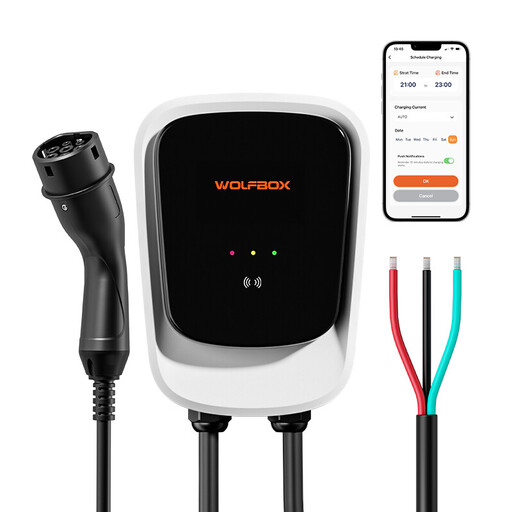
The Verdict: Perfect for a first-time setup, this station offers an excellent balance. It includes essential smart features (app control, RFID cards for secure access) without unnecessary frills, ensuring a straightforward user experience and reliable daily charging.
It offers true smart control via its app (scheduling, monitoring), which is far more than a gimmicky timer.
RFID card access is a real bonus in shared-parking environments or for multi-driver households, ensuring only authorized users can start a charge.
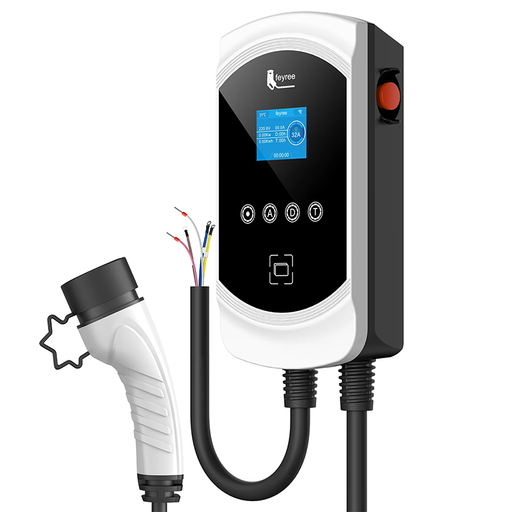
The Verdict: Designed for those who want to optimize their charging without tripping the breaker or upgrading their electrical service. Its dynamic load balancing feature makes it a smart choice for fine-tuned energy management and long-term savings.
It tackles the risk of an overload head-on—an often-underestimated problem. This is the very definition of a truly "smart" charger.
Dynamic Load Balancing (DLB) ensures uninterrupted charging, even when all your home appliances are running at full blast. Total peace of mind.
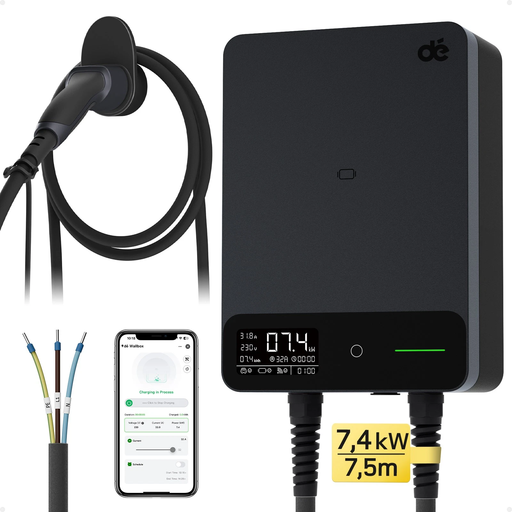
The Verdict: For those seeking absolute peace of mind. It checks all the boxes: app control, RFID access, and, most importantly, top-tier integrated electrical protections. Its long 7.5-meter cable also offers unmatched parking flexibility.
It perfectly meets the safety criteria by integrating comprehensive RCD protection (Type A 30mA AC + 6mA DC). This guarantees maximum protection for your vehicle and your electrical system.
The combination of the long 7.5m cable and built-in protections offers a level of convenience and peace of mind that few other models provide.
Discover our full selection of charging stations that meet our quality criteria and current safety standards.
A heavy-duty socket delivers up to 3.7?kW, making charging about twice as slow as with a 7?kW charging station. While it may be sufficient for a plug-in hybrid with a small battery, a 7?kW station is far more convenient for a fully electric model, guaranteeing a full charge in a single night.
No, and that's one of its major advantages. A 7?kW charger is designed to run on a standard single-phase home installation, which is the most common type in many regions. More powerful stations, like 11?kW or 22?kW, on the other hand, require a three-phase power supply.
It all depends on your vehicle's battery capacity. To give you a rough idea, a 7?kW station allows you to regain about 40 to 50?km of range per hour. A common 50?kWh battery will go from 20% to 100% in about 6 hours. Perfect for an overnight charge.