
Livraison le jour même ou le lendemain

Qualité garantie

Débloquez vos offres de bienvenue: Livraison GRATUITE | Jusqu'à -80 % | 30 jours d'essai gratuits à JoyPlus
Téléchargez l'application
A 65 W USB-C charger can power a laptop, tablet and phone with a single adapter. But the wattage printed on the box isn't enough to make an informed choice. Between ports that share the power, incompatible cables and promises of universal charging, some purchases can quickly turn into disappointment.
Before comparing models, here are the main pitfalls to avoid.
A charger advertised as 65 W doesn't necessarily deliver 65 W to every device. On a multi-port model, the power is often shared between the different outputs. A laptop might receive 45 W, while a smartphone plugged into the second port gets just 18 or 20 W.
So check the maximum power of the main USB-C port, but also the power distribution table when several devices are connected at the same time.
Even a high-performance USB-C charger can be limited by a cable that can't handle the required power. To power certain laptops at 65 W, choose a USB-C cable that supports that wattage and USB Power Delivery technology.
Models sold without a cable can be a good option if you already have suitable cables. However, a charger that comes with its own cable is still more convenient for immediate use.
Fast charging depends on compatibility between the charger and the device. The PD 3.0 protocol works with many USB-C devices, while some Android smartphones also support variants compatible with PPS or QC 3.0. An iPhone, a Samsung, a tablet and a laptop don't necessarily negotiate the same power.
And fast charging doesn't mean the device will always receive 65 W. The phone or laptop automatically adjusts the power according to its own limits.
For a USB-C laptop, check the power recommended by the manufacturer. A 65 W fast charger will suit many ultraportables, but some more powerful models require more. For a smartphone or tablet, 65 W offers a comfortable reserve, without ever forcing the device to accept more than it can handle.
The presence of PD 3.0 is a good indicator for compatible USB-C devices. If you still use USB-A devices, a QC 3.0 port can usefully complete the setup.
A USB-C and USB-A charger adapts to various uses: a modern cable for your phone, an older accessory for a watch, headphones or a power bank. If you own several devices, a multi-port charger can be a great solution, as long as you check its power distribution.
Two USB-C ports allow you to charge a laptop and a phone simultaneously. Four ports, as found on some desktop models, further reduce the number of sockets needed on your workspace.
GaN technology makes it possible to design compact chargers, which are particularly handy in a bag or suitcase. However, the casing can get hot during high-power use. Place it on an open surface and avoid covering it with clothes or paper.
For use in the UK, check compatibility with UK plugs and consult the regulatory information available, particularly regarding RoHS, REACH and WEEE recycling standards. Protection against overvoltage, overcurrent, short circuits and overheating is also a serious plus.
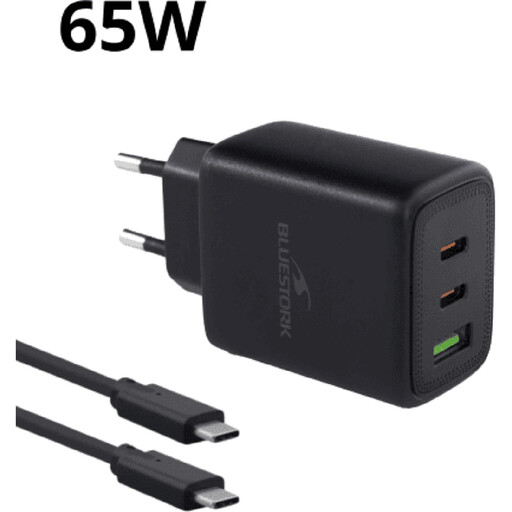
Why this choice suits this profile: This USB-C mains charger offers a simple setup, with one USB-C PD 3.0 port, one USB-A QC 3.0 port and an included cable. It's a practical first piece of kit for a phone, tablet or compatible laptop.
The listing specifies that the cable is included, avoiding extra purchases and compatibility errors.
Rated power of 65 W, 100–240 V input and two fast charging standards advertised.
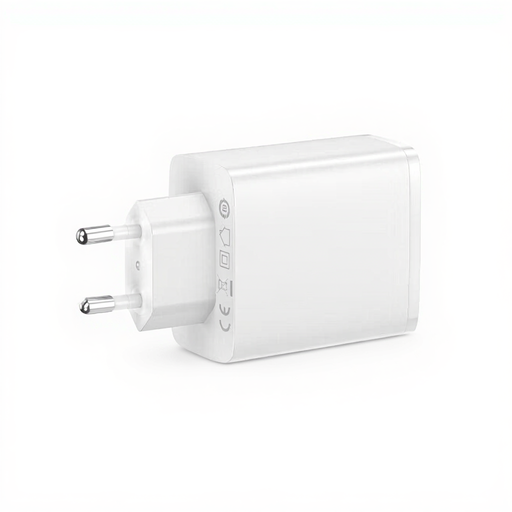
Why this choice suits this profile: Its GaN design and three outputs are aimed at those looking for a compact charger for multiple USB-C and USB-A devices.
The listing details the power distribution between ports, including up to 45 W + 20 W when both USB-C outputs are in use.
GaN5 technology, two USB-C ports, one USB-A port and 110–240 V input.
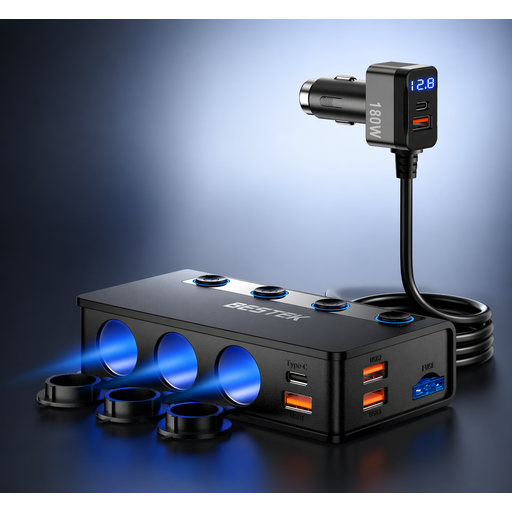
Why this choice suits this profile: This car adapter is aimed at families, teams and drivers who need to power multiple devices on the go.
The power and number of outputs are clearly detailed: two USB-C ports, four USB-A ports and three cigarette lighter sockets for 12–24 V vehicles.
Independent switches, voltage display and advertised protection against short circuits, overvoltages and overcurrents.
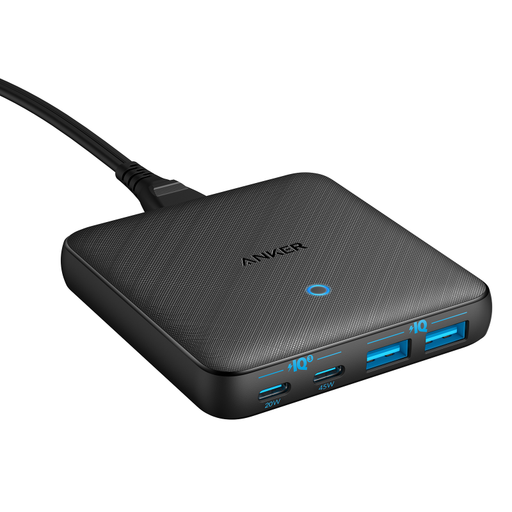
Why this choice suits this profile: With four outputs and a detachable power cord, it fits easily on a desk accommodating a laptop, phone, tablet and accessories.
The listing clearly states 45 W on one USB-C port and 20 W on the other: no chance of thinking each output delivers 65 W.
Two USB-C ports, two USB-A ports, GaN technology and a total advertised power of 65 W.
We've put together a comprehensive, real-time updated list of products that meet these demanding selection criteria and European safety regulations.
Yes, as long as you use a compatible protocol and a suitable cable. The phone will only draw the power it can accept. For a Samsung, check compatibility with the charging modes supported by your model. For an iPhone, the right USB-C cable is still essential depending on the generation of the device.
It's best to unplug it when it's not in use for a long period, especially during a thunderstorm. While charging, leave enough space around the casing and avoid surfaces that retain heat. A charger with a cracked casing, bent pins or a damaged cable should be replaced.
A standard USB car charger is fine for a phone or small accessories. To power several devices, a splitter like the BESTEK model featured above offers more outputs. However, check that your vehicle accepts the 12–24 V range stated and don't exceed the capacity intended for connected equipment.