
Livraison le jour même ou le lendemain

Qualité garantie

Débloquez vos offres de bienvenue: Livraison GRATUITE | Jusqu'à -80 % | 30 jours d'essai gratuits à JoyPlus
Téléchargez l'application
Juggling chargers for your laptop, smartphone, and tablet is a daily headache. The promise of a single 65W GaN charger to power all your devices is tempting. Yet, disappointment is common, with lackluster performance or questionable compactness.
Before you get rid of your army of power bricks, it's crucial to navigate the marketing traps and technical pitfalls that can make a charger ineffective, or even dangerous. This guide is here to shed some light.
The market is flooded with options, but they are far from equal. Here are the three mistakes to avoid so you don't regret your purchase.
A charger advertised as "65W" with two ports rarely delivers 65W from a single port. More often than not, this power is shared. Plug in your laptop and your phone, and the power might drop to 45W for the former and 20W for the latter. If your laptop requires 60W for a proper charge, it will charge slowly, or not at all.
The "fast charging" label guarantees nothing. For a 65W fast charger to deliver on its promise, it must speak the same language as your devices. The essential standard is Power Delivery (PD 3.0), which is a must-have for laptops like the MacBook or Dell XPS. For some smartphones, particularly recent Samsung models, the PPS (Programmable Power Supply) protocol is even required to reach maximum charging speed. Without PPS, the charging for these models will be throttled.
GaN technology has paved the way for much more compact chargers. The problem? Some low-cost models push miniaturisation to the extreme without paying attention to heat dissipation. The result: a GaN wall charger that gets dangerously hot, risking a shorter lifespan for itself, damage to your device batteries, and a genuine safety hazard.
To make the right choice, focus on these three technical points that make all the difference.
Before buying, scrutinise the spec sheet to understand the power distribution. A good dual-port USB-C charger must clearly state the maximum power from a single port (e.g., 65W) and the distributed power when both are in use (e.g., 45W + 20W). This guarantees that your laptop will continue to charge properly even when another device is plugged in.
Verify that the charger is compatible with the Power Delivery 3.0 standard. It's the near-universal standard for fast charging over USB-C. If you have a recent Samsung smartphone or another compatible device, support for the PPS protocol is a real bonus for adaptive and even faster charging.
Gallium nitride (GaN) is a semiconductor that is supplanting traditional silicon. It enables the design of smaller, lighter, and more efficient chargers that waste less energy as heat. A good compact GaN travel charger will offer excellent performance without overheating, making it the ideal companion for your travels.
Instead of searching for a "perfect" model that doesn't exist, it's better to choose one that is tailored to your devices and your daily routine.
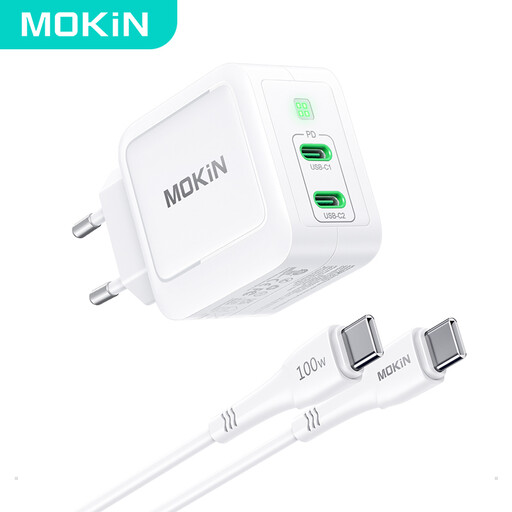
Why we love it : Ideal for those who juggle a laptop (like a MacBook Air/Pro) and a smartphone. Its 67W output can fast-charge a laptop, even when the second port is in use.
Its 67W single-port output is sufficient for most ultrabooks. The smart power distribution ensures efficient charging for both devices, avoiding the common pitfall of insufficient shared power.
GaN technology for a compact design. An included 1.2m USB-C cable is always a nice bonus.
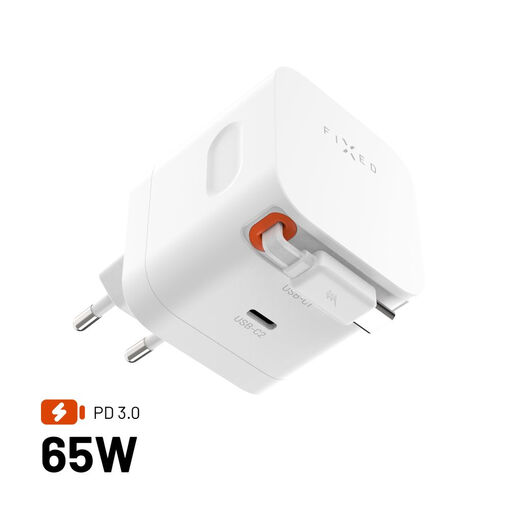
Why we love it : For nomads who count every gram and hate tangled cables. The integrated cable is a huge plus, and its pocket-sized form factor is perfect for travel.
Its GaN technology ensures excellent heat management despite its small size, thus avoiding the overheating trap. The integrated cable is designed to be both durable and convenient.
Integrated retractable USB-C cable. Dual USB-C ports compatible with Power Delivery 3.0 for maximum versatility.
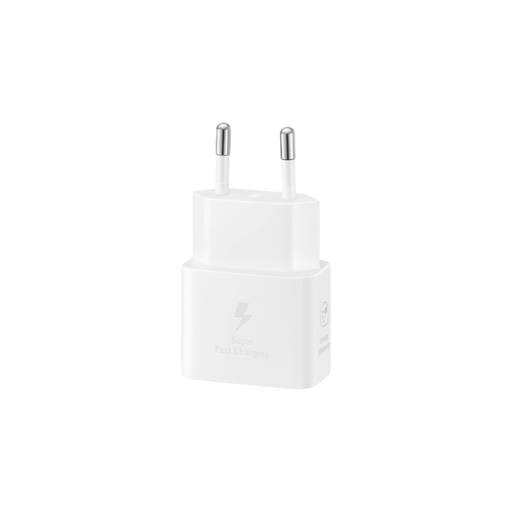
Why we love it : Only 25W? Yes, but this official charger is the smartest choice for Samsung smartphone owners. Designed by the brand, it guarantees an optimised "Super Fast Charging" experience thanks to GaN technology and the PPS protocol.
As an official product, it ensures perfect compatibility with Samsung devices, bypassing the pitfall of third-party chargers being throttled by protocol mismatches.
Official Samsung GaN technology for an ultra-compact design. Optimised for Super Fast Charging (PPS).
We have compiled a comprehensive list of products that meet our selection criteria and European safety standards.
Absolutely not. A modern charger with Power Delivery technology communicates with the connected device to supply only the precise amount of power it needs. You can safely charge a smartphone that requires 20W with a 65W charger. The charger will adapt automatically.
Yes, and this is a point that shouldn't be overlooked. The cable is just as important as the charger. To take full advantage of 65W, you need a USB-C to USB-C cable certified to handle that power (look for a "100W" or "5A" rating). A standard smartphone cable will throttle the charging speed, especially for a laptop.
The difference lies in the material. GaN (gallium nitride) chargers are much more energy-efficient than traditional silicon-based chargers. In short: they generate less heat, waste less energy, and can therefore be much more compact and lightweight for the same power output.