
Livraison le jour même ou le lendemain

Qualité garantie

Débloquez vos offres de bienvenue: Livraison GRATUITE | Jusqu'à -80 % | 30 jours d'essai gratuits à JoyPlus
Téléchargez l'application
A 65 cm fitness ball can help strengthen your core muscles, improve balance, practise Pilates or yoga, and even replace your office chair from time to time. However, not all models are the same or designed for the same uses. Choosing the wrong diameter, a surface that is too slippery or an impractical pump can quickly turn a promising purchase into an accessory left forgotten in a corner.
Before comparing the models, here are the main pitfalls to avoid.
A 65 cm gym ball is generally suitable for average-height adults. However, the right diameter depends on the exercise you plan to do and the seat height you need. For floor-based exercises, a slightly softer ball can be useful. If you intend to use it as an office chair, however, your knees should remain close to a right angle and your feet should rest flat on the floor.
Models available in several diameters, usually 55, 65 and 75 cm, make it easier to adjust your position. Also bear in mind that a ball may sink slightly under the user's weight.
The term anti-burst does not mean you can overlook the material, maximum load, inflation recommendations or condition of the surface. A PVC ball can easily withstand daily use while still being vulnerable to sharp objects, animal claws, radiators or prolonged exposure to sunlight.
“Anti-burst” therefore refers to a design feature highlighted by the manufacturer, not absolute protection against every type of damage.
A ball sold without a pump may require you to buy an additional accessory or a specific adapter. An included pump makes initial inflation easier and allows you to adjust the pressure easily over time. For maintenance, simply use a soft, slightly damp cloth and mild soap, without abrasive products.
With a 65 cm fitness ball, check that the stated diameter corresponds to the ball once inflated. Firmness has a direct impact on stability and how the ball feels:
Never exceed the recommended diameter. Over-inflation increases the tension on the walls and can accelerate wear.
PVC is commonly used for fitness, Pilates and rehabilitation balls, particularly because it is flexible and easy to maintain. Choose a non-slip surface, especially for standing exercises, planks, lateral movements or use on a hard floor.
The ball's texture does not replace a clear space or a clean floor, however. Before each session, inspect it for cracks, deformation or punctures.
The maximum load should take into account your weight as well as that of any accessories used during exercise. The Capelli model featured below states a capacity of up to 330 pounds, or approximately 150 kg, according to the information on its product page. Compare this figure with your actual use rather than relying solely on the marketing claim.
If you are pregnant, undergoing rehabilitation or returning to exercise after an injury, ask a healthcare professional for advice before incorporating a balance ball into your routine. A pregnancy ball is not a substitute for medical supervision or exercises prescribed by a professional.
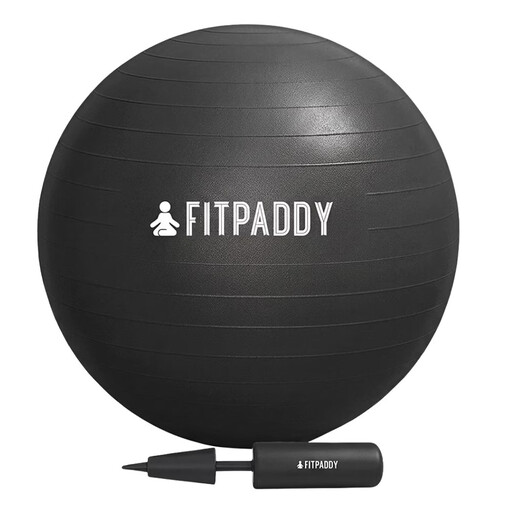
Why this choice suits this profile: Its fixed 65 cm diameter and included pump provide a simple solution for getting started with fitness at home, improving mobility or strengthening your core muscles.
The diameter and components are clearly specified, and a PP pump is included. You therefore do not need to buy additional equipment straight away.
PVC, 65 cm diameter, stated net weight of 900 g, and suitable for use at home, in the gym or outdoors.
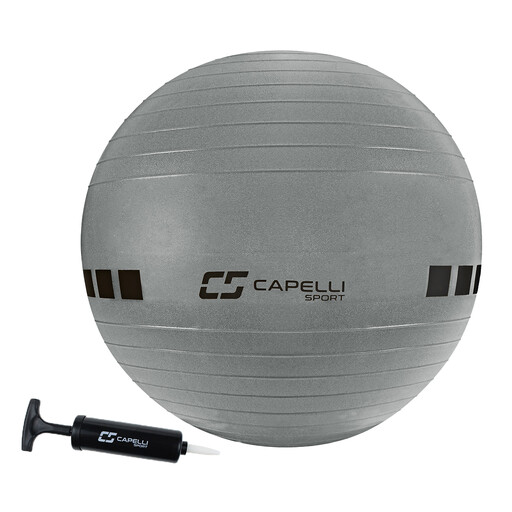
Why this choice suits this profile: This model is designed for anyone looking for a single ball for fitness, yoga, Pilates, stability work, stretching and dynamic sitting at a desk.
The product page specifies the available sizes, the inclusion of a foot pump and the inflation precautions. It also highlights a non-slip, anti-burst design.
PVC, stated capacity of up to 330 pounds, three diameters available and an included pump.
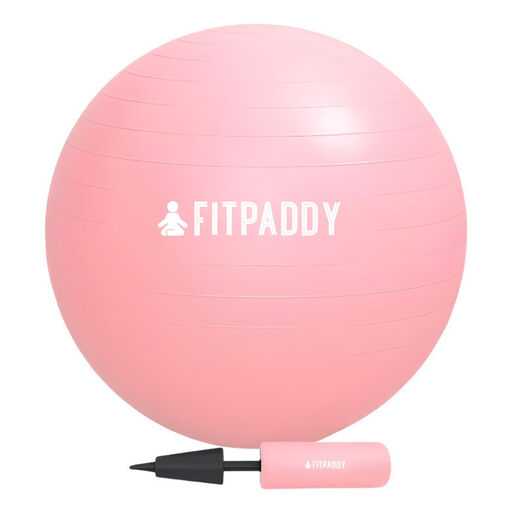
Why this choice suits this profile: It is suitable for regular strength, balance and flexibility sessions. Its colour also makes it easy to spot in a gym or shared training space.
The product page states the exact diameter, PVC construction and inclusion of a pump. For frequent training, it remains essential to follow the space requirements and inspect the ball regularly.
65 cm diameter, included pump, flexible contact surface according to the product page, and suitable for indoor or outdoor use.
We have brought together a comprehensive, real-time updated selection of products that meet these demanding criteria, in line with European safety regulations.
To set up your 65 cm fitness ball, place it on a clean surface away from furniture corners and any object that could damage it. Inflate it gradually using the supplied pump, then check its diameter and stability before your first session.
A few simple precautions can help it last longer:
If you use the ball as an office chair, alternate it with a conventional chair. Dynamic sitting can change your postural habits, but it is not a substitute for a properly adjusted workstation.
A 65 cm diameter is often suitable for average-height adults. However, the ideal size depends on the length of your legs, the exercise you are doing and the height of your desk. For seated use, check that your feet touch the floor properly and that your knees are not noticeably higher than your hips.
It depends on the pump and the volume of the ball. A foot pump supplied with the product will generally allow you to inflate it gradually at home. The most important thing is to check the final diameter and not try to inflate it too quickly without checking the firmness.
Its lifespan depends on how often it is used, the weight it supports, storage conditions and contact with the floor. A ball kept away from sharp objects, heat and direct sunlight will remain functional for longer. Replace it as soon as a crack or puncture appears.