
Livraison le jour même ou le lendemain

Qualité garantie

Débloquez vos offres de bienvenue: Livraison GRATUITE | Jusqu'à -80 % | 30 jours d'essai gratuits à JoyPlus
Téléchargez l'application
Choosing a new television can be a daunting task given the maze of technologies and technical jargon: QLED, Mini LED, 120?Hz, Smart TV... If you're looking for an immersive viewing experience on a large screen, a 65-inch model (about a 165?cm diagonal) is a premium choice.
As the Head of Buying Guides at Joybuy, my mission is to help you see things more clearly. This guide breaks down the essential features and presents a selection of standout models to help you make the right choice, whether you're a cinephile, a passionate gamer, or looking for the perfect family entertainment hub.
Before we unveil our selection, let's review the key criteria that will guide your choice.
QLED (Quantum Dot Light Emitting Diode) technology uses a quantum dot filter to enhance the purity and richness of colours from a standard LED backlight. The result: a more vibrant picture and a wider colour gamut, perfect for HDR content.
Mini LED technology, on the other hand, revolutionises backlighting. As its name suggests, it uses thousands of diodes that are much smaller than conventional LEDs. This ultra-fine grid allows for the creation of hundreds, or even thousands, of independent backlighting zones (local dimming). In practical terms, a 65-inch Mini LED TV can thus offer much deeper blacks, spectacular contrast, and more intense peak brightness. This brings image quality closer to that of OLED panels, without the risk of screen burn (burn-in).
The refresh rate, expressed in Hertz (Hz), indicates the number of frames the television can display per second.
Today, a 65-inch Smart TV is much more than just a screen. The operating system (OS) is the heart of the user experience. The most common are Tizen (Samsung) and Google TV (used by many brands like CHiQ). Ensure the interface is responsive and includes all your favourite streaming apps (Netflix, Disney+, Prime Video...). Connectivity is just as important: Wi-Fi (5 or 6) and Bluetooth (5.2, for example) are essential for wirelessly connecting a soundbar, headphones, or other peripherals.
We have selected three models that stand out for their technical specifications and market positioning, designed to suit different user profiles.
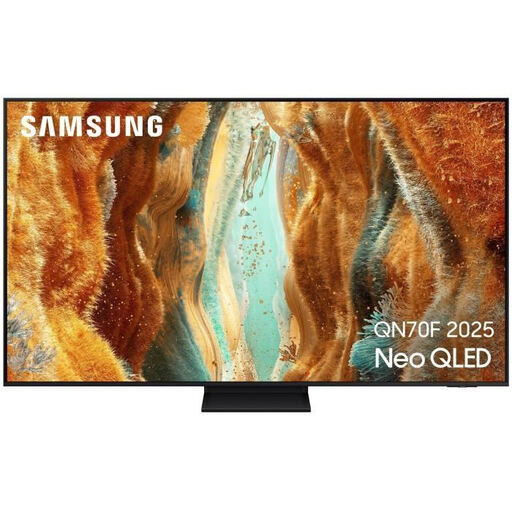
Why it stands out: This 65-inch Samsung TV combines Neo QLED and Mini LED technologies to deliver stunning image quality. The fine-tuned backlight control results in intense peak brightness and deep blacks. Its Neural Quantum Processor 4K uses AI to optimise every scene, whether it's native 4K film or lower-resolution content that needs to be upscaled (upscaling).
Highlights:
Who is it for? For demanding cinephiles and gamers who want top-tier display performance, combining striking contrasts and impeccable smoothness.
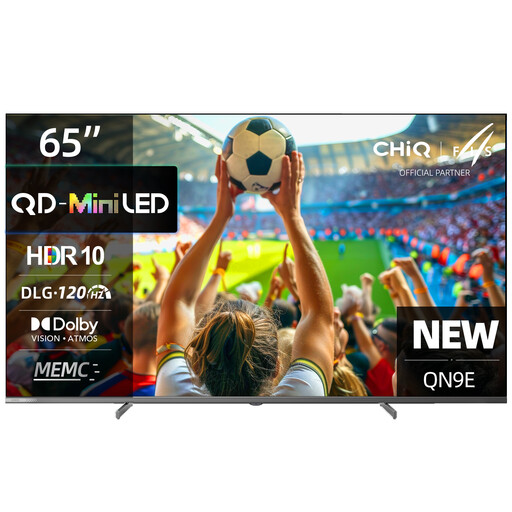
Why it stands out: The CHiQ M65QN9E stands out as a very comprehensive alternative, combining Mini LED and QLED technologies with the added bonus of Dolby Vision and Dolby Atmos support. Its Google TV operating system (running on Android 14) offers a rich and customisable interface, with Google Assistant and Chromecast built-in. The DLG (Dual Line Gate) technology allows it to achieve a 120?Hz refresh rate for optimal fluidity.
Highlights:
Who is it for? For those looking for an ultra-versatile TV, optimised for streaming, who appreciate the rich features and user-friendliness of the Google TV ecosystem.
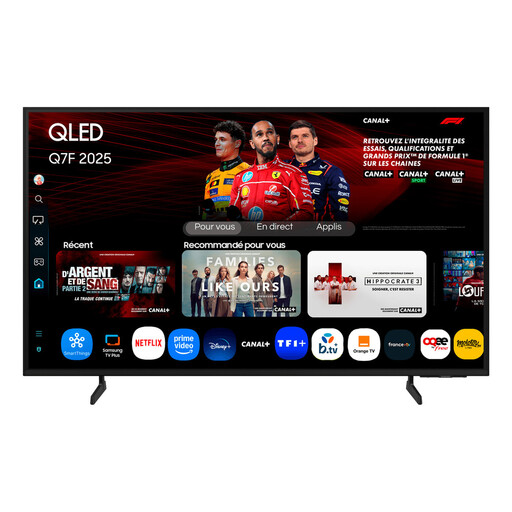
Why it stands out: This model is an excellent entry point into Samsung's 65-inch 4K QLED universe. It focuses on colour richness thanks to Quantum Dot technology, which ensures 100% colour volume coverage, according to the brand. Its in-house operating system, Tizen, is known for its speed and simplicity, and includes a Gaming Hub that centralises cloud gaming services.
Highlights:
Who is it for? For families and users looking for a high-performance, easy-to-use television suitable for varied daily use, from movies to casual gaming.
Our selection focuses on QLED and Mini LED models that offer an excellent balance of performance and features. If you wish to explore other technologies, screen sizes, or budgets, feel free to browse our full catalogue.
Discover our full range of QLED televisions
For optimal 4K immersion, the ideal viewing distance is between 2 and 2.5 metres. At this distance, the screen occupies a large part of your field of view without individual pixels being visible, which greatly enhances the sense of immersion.
It all depends on your usage. For owners of new-generation consoles (PS5, Xbox Series X), a 120?Hz screen is a must-have to fully enjoy the smoothness and responsiveness these machines offer. For cinephiles and sports fans, it provides significant visual comfort by reducing motion blur, but a good 60?Hz panel remains perfectly satisfactory.
The fundamental difference lies in how light is managed. A QLED TV relies on a backlighting system (LED or Mini LED) to illuminate a layer of quantum dots. This allows it to achieve very high peak brightness, a major asset in bright rooms. An OLED TV, in contrast, has no backlight: each pixel produces its own light. This self-emissive technology allows it to display absolute blacks and so-called "infinite" contrast. The trade-off is that its peak brightness is generally lower, and the risk of screen burn-in, although minimal today, exists over the very long term.