
Livraison le jour même ou le lendemain

Qualité garantie

Débloquez vos offres de bienvenue: Livraison GRATUITE | Jusqu'à -80 % | 30 jours d'essai gratuits à JoyPlus
Téléchargez l'application
Buying a new high-end television is a significant investment. It's easy to feel lost in the jungle of technologies and spec sheets. You dream of total immersion for your movie nights and perfect responsiveness for your gaming sessions, but jargon like Mini LED, Neo QLED, 144 Hz, or Dolby Vision can make your head spin.
Don't worry, this guide is here to demystify it all. Our mission, in partnership with the experts at Joybuy, is to give you all the keys to making an informed choice that truly matches your desires and your budget. Together, let's break down the criteria that matter and discover the top models of 2026.
Before we unveil our selection, let's review the key points to check to ensure you choose the right 165 cm (65-inch) large-screen TV.
Mini LED technology is a true revolution for LCD screens. The principle? Replacing the large LEDs of traditional backlighting with thousands of tiny diodes. This miniaturisation allows for controlling light with surgical precision across hundreds, or even thousands, of independent zones. The promise? Much deeper blacks, spectacular highlights, and a contrast that rivals OLED, but without the risk of burn-in.
And what about a 65-inch Neo QLED TV? It's simply Samsung's name for its own recipe: Mini LED technology combined with a Quantum Dot filter to boost the vibrancy and richness of colours.
For gamers, a beautiful picture isn't enough. A 144?Hz gaming TV ensures rock-solid smoothness, a decisive advantage in fast-paced action games. Paired with technologies like VRR (Variable Refresh Rate) and ALLM (Auto Low Latency Mode), it guarantees gameplay without screen tearing and with instantaneous responsiveness. To take full advantage of this on next-gen consoles, the presence of HDMI 2.1 ports is simply non-negotiable.
To turn your living room into a private cinema, support for advanced HDR formats is crucial. Dolby Vision analyses and optimises the image scene by scene (or even frame by frame) for a dynamic picture that's always true to the director's intent. On the audio front, Dolby Atmos envelops you in a 3D sound bubble: the sound seems to come from all around, including from above, for spectacular immersion. A Dolby Vision Atmos compatible TV is a must-have for any self-respecting cinephile.
We have selected three models that excel in their respective areas and cater to specific needs.
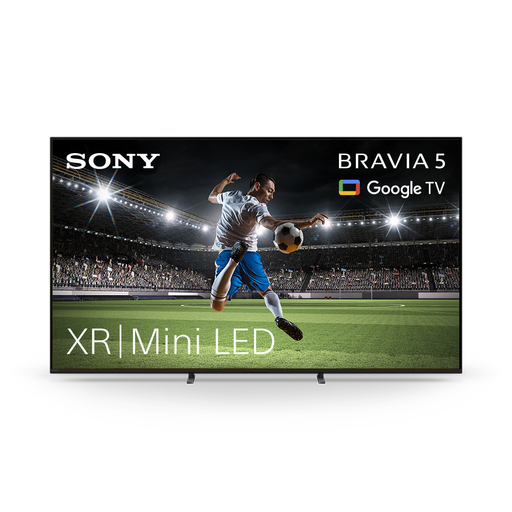
What sets it apart The 65-inch Sony Bravia K65XR5 focuses entirely on absolute picture fidelity. Its Cognitive Processor XR analyses content in real-time to enhance every scene, while its XR Backlight Master Drive technology, inherited from studio monitors, controls the Mini LEDs with exquisite precision.
Highlights
Who is it for? For cinephiles and picture purists who want to see a film exactly as the director intended.
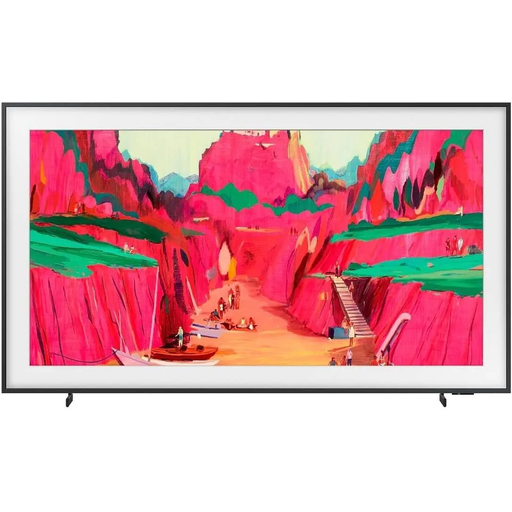
What sets it apart The 65-inch Samsung The Frame refuses to be just a black screen. Its goal? To blend seamlessly into your decor. Thanks to its anti-reflection matte display and Art Mode, it transforms into a painting when in standby. The clever One Connect Box, which houses all the connections, leaves only a single, nearly invisible cable running to the TV, ensuring an immaculately clean wall-mounted setup.
Highlights
Who is it for? For aesthetes and interior design enthusiasts who demand that technology be discreet without sacrificing performance.
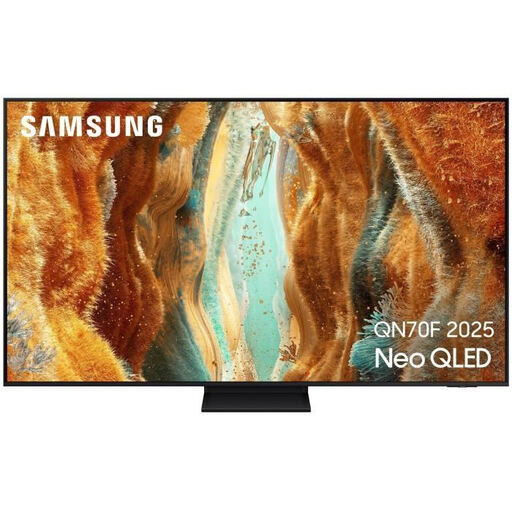
What sets it apart This 165 cm (65-inch) 4K Smart TV from Samsung is the master of versatility. It combines the power of Neo QLED technology with a remarkably slim design. Its engine, the Neural Quantum Processor 4K, uses AI to enhance the picture and sound in real-time, regardless of your source's quality.
Highlights
Who is it for? The ultimate all-rounder. Ideal for those who want the best for their movies, series, and games, all in a modern and sleek package.
A 65-inch screen is fantastic for immersion, but it can quickly become overwhelming in a modestly sized living room or bedroom. If you're short on space or looking for an excellent secondary TV, other sizes are available.
Discover our selection of more compact TVs to find the perfect size.
1. What is the difference between a Mini LED and an OLED TV? It's all about light management. An OLED screen is made of self-emissive pixels: each one produces its own light and can turn off completely. The result is absolute black and infinite contrast. Mini LED, on the other hand, is an evolution of LCD. It uses a backlighting system with thousands of mini-diodes, allowing for very precise brightness control. The contrast is excellent, far superior to a standard LCD, but doesn't achieve the 'pixel-perfect' black of OLED.
2. Is a 144?Hz refresh rate really useful? For watching movies or series (which are mostly shot at 24 or 30 frames per second), the difference is imperceptible. However, for PC and next-gen console gamers, it's a real game-changer. Displaying up to 144 frames per second provides unparalleled fluidity and responsiveness in compatible games, which can even offer a competitive advantage.
3. What is the ideal viewing distance for a 65-inch 4K TV? For a 165 cm (65-inch) 4K Smart TV, the recommended viewing distance is between 2 and 2.5 metres (approx. 6.5 to 8 feet). At this distance, the image comfortably fills your field of view for perfect immersion, without you being able to distinguish individual pixels. The sharpness is therefore optimal.