
Livraison le jour même ou le lendemain

Qualité garantie

Débloquez vos offres de bienvenue: Livraison GRATUITE | Jusqu'à -80 % | 30 jours d'essai gratuits à JoyPlus
Téléchargez l'application
A cable that frays after just a few months, an excruciatingly slow charge, a length that chains you to the wall outlet... Too many users know these frustrations all too well. Whether you're deep in a game on your future Nintendo Switch 2, finishing a project on your MacBook Air, or simply charging your Samsung S25, a faulty cable can quickly ruin the experience.
Choosing a 2m 60W USB-C cable shouldn't be a headache. Yet, with a jungle of options available, it's easy to get lost. This guide is here to demystify the topic and present a selection of reliable cables, each designed for specific needs regarding power, length, and durability.
To make the right choice, you need to know what separates a good cable from a bad one. Here are the essential criteria to consider.
The 60W rating indicates the maximum power the cable can deliver. This is a comfortable power level, more than enough for 60W fast charging on most modern devices, including ultrabooks like the MacBook Air and demanding smartphones like the Samsung S25 and iPhone 16.
To take advantage of this, your charger and device must, of course, be compatible with the Power Delivery (PD) standard. A 60W cable will work with less power-hungry devices (for example, a smartphone that only requires 25W), but it obviously cannot supply more than 60W to a device that requires 100W.
A length of 2 metres offers a very welcome freedom of movement. This is a real bonus for a USB-C gaming cable, allowing you to play comfortably on your couch while the console is charging.
Durability is another crucial point. A braided cable is often a guarantee of longevity compared to a standard plastic model. Its nylon or recycled material sheath protects the internal wires from repeated twists and bends, thereby extending its lifespan.
A quality USB-C to USB-C cable must be safe. USB-IF (USB Implementers Forum) certification is a mark of trust here: it guarantees that the cable meets industry standards for performance and safety. It ensures perfect communication between the charger and the device to prevent any overcharging or overheating. Choosing a certified cable is therefore the best way to protect your valuable devices.
Here is our selection of models that stand out from the crowd, each suited for very specific uses.
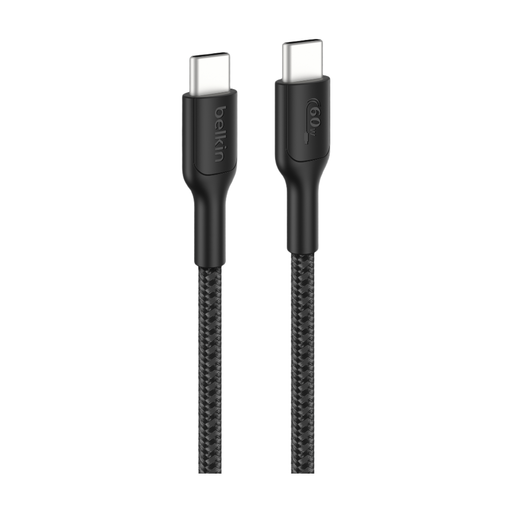
Why it stands out: This cable from Belkin is built for heavy use. Its ultra-durable design and use of recycled materials make it a choice that is as high-performing as it is environmentally friendly.
Key features:
Who is it for? Console and mobile gamers, as well as people on the go who are rough on their cables and need an ultra-reliable solution.
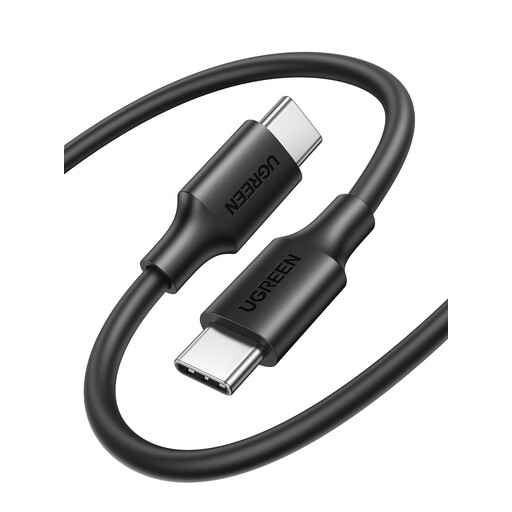
Why it stands out: A simple and effective model that gets straight to the point. At 1.5 metres, it's a bit shorter but remains very practical for stationary use, at the office, or by a bedside table.
Key features:
Who is it for? Those looking for a reliable and affordable replacement cable to charge their smartphone or tablet, both at the office and at home.
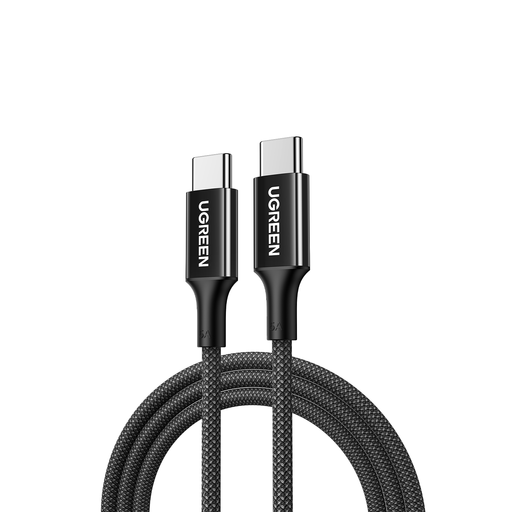
Why it stands out: With its 100W capacity, this cable is future-proof. It can not only handle all your current devices but also power the most demanding laptops.
Key features:
Who is it for? Professionals and tech enthusiasts juggling multiple USB-C devices, including a powerful laptop, who want a single, versatile, and future-proof cable.
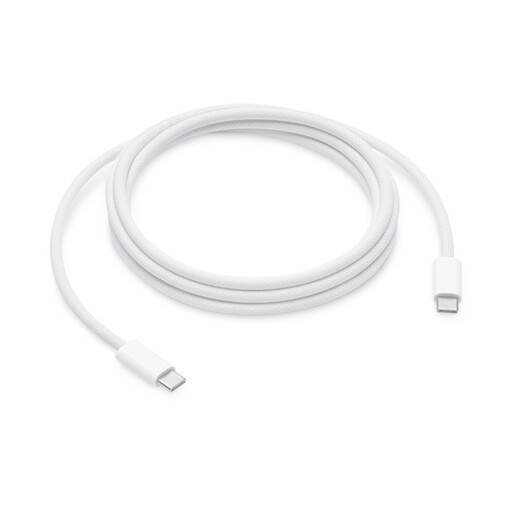
Why it stands out: In true Apple fashion, this cable combines a colossal 240W charging power with a premium braided finish, ensuring seamless integration into the brand's ecosystem.
Key features:
Who is it for? Apple ecosystem loyalists who want the most powerful and durable official solution for their devices, especially MacBook Pro owners.
Our selection focuses on 2-metre cables with at least 60W of power. If you have different needs (a shorter length, different connectors, a specific budget, etc.), many other solutions are available.
Feel free to explore our full category to find the phone-compatible cable that perfectly matches your needs.
1. Can a 60W cable charge a device that requires less power? Yes, absolutely. Power Delivery technology allows the cable, charger, and device to communicate to deliver only the precise amount of power needed. Using a 60W cable to charge a smartphone that only requires 20W is therefore completely safe.
2. What is the difference between a 60W and a 100W cable? The difference lies in the maximum power they can deliver. A 60W cable is sufficient for most smartphones, tablets, and ultrabooks. A 100W (or higher) cable becomes necessary for fast-charging more powerful laptops (e.g., a 16-inch MacBook Pro, mobile workstations). A 100W cable is therefore more versatile, as it is compatible with all devices supported by a 60W cable, and many more.
3. Does the cable length affect charging speed? In theory, a very slight power loss can occur over long distances. However, with a quality 2-metre cable, this loss is so negligible that it will have no perceptible impact on charging speed. Certified cable manufacturers anticipate this phenomenon to guarantee their advertised performance.