
Livraison le jour même ou le lendemain

Qualité garantie

Débloquez vos offres de bienvenue: Livraison GRATUITE | Jusqu'à -80 % | 30 jours d'essai gratuits à JoyPlus
Téléchargez l'application
Buying a dishwasher is about more than choosing a brand or the capacity shown on the front. An inaccurate measurement, an impossible connection or an appliance that’s too noisy can quickly turn this everyday essential into a real source of frustration.
Product descriptions often focus on wash temperature, the number of programmes or the drying function. In practice, three common pitfalls are worth avoiding:
In a family kitchen, a 60 cm dishwasher remains a popular choice. Freestanding models are generally around 60 cm wide, 85 cm high and 59 cm deep. Check the exact dimensions, the clearance needed to open the door and the space required for the hoses.
A built-in dishwasher is concealed behind a door panel that matches your kitchen units. Before ordering, measure the niche in width, height and depth. Also check that the hinge type is compatible with your decorative door panel. For example, the Bosch SMV4HVX03E requires a niche at least 60 cm wide, between 81.5 and 87.5 cm high, and an installation depth of 55 cm.
A freestanding dishwasher gives you more flexibility when it comes to installation. Some models have a removable top, allowing them to fit beneath a worktop. However, you should confirm this in the appliance’s technical specifications.
For a studio flat, small kitchen, motorhome or caravan, consider mini dishwashers, countertop dishwashers or compact dishwashers. They can be as narrow as around 37 to 46 cm, but their capacity is generally limited to three to six place settings.
A “place setting” is a standardised set of crockery used by one person during a meal. However, it doesn’t give you a precise idea of how much room there is for saucepans, large dishes or kitchen utensils.
Even a model advertised as holding 14 place settings shouldn’t be packed to the brim. The spray arms need to rotate freely, and plates mustn’t block the water jets.
Noise levels are measured in dB(A). In an open-plan kitchen, a model rated between 41 and 46 dB will generally be more comfortable to live with than one that exceeds 50 dB. However, consider the quoted figure in context: room acoustics, flooring and distance can all affect how loud an appliance sounds.
The European energy label rates appliances from A to G. Models in class C, class D or class E may each suit different needs. To compare two models, focus on energy consumption in kWh per 100 cycles and water consumption per cycle.
For example:
A dishwasher with a drying function may use a heating element, a heat exchanger or automatic door opening. The latter helps release steam, but it’s best to let the dishes cool for a few minutes before putting them away.

Why it suits this profile : Its countertop design is ideal for flats and kitchens without a standard dishwasher space. The built-in 5-litre tank means you can use it without connecting it directly to a tap.
Its two water supply options reduce the risk of buying an appliance that you can’t connect in a rental property or small kitchen.
Rated for 4 place settings, with five wash programmes, automatic drying and dimensions of 45.8 × 42.8 × 42.5 cm.
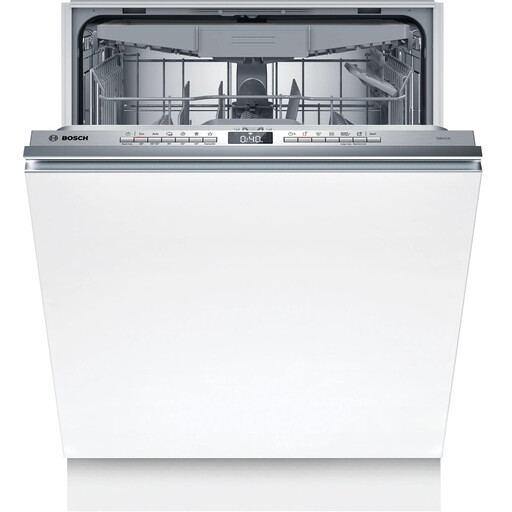
Why it suits this profile : It’s designed for households looking for a discreet fit, generous capacity and more flexible settings.
The niche dimensions, basket system and door panel type are all detailed, so you can check compatibility before you buy.
14 place settings, class D, 46 dB, a third cutlery rack, a Silence programme and an Extra Dry option.
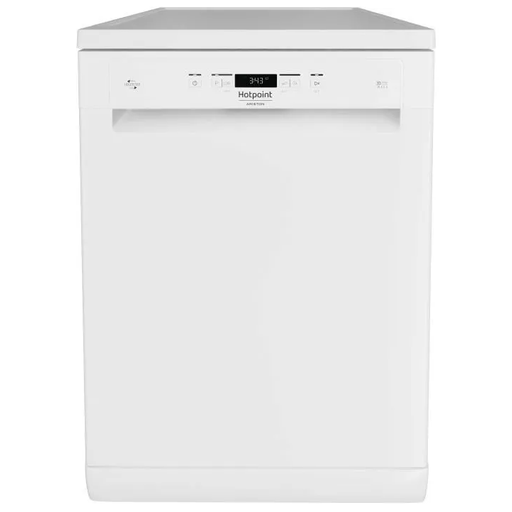
Why it suits this profile : Its capacity and programmes are well suited to families who regularly run full loads.
The standard 60 cm format, adjustable height and removable top make it easier to install in a kitchen designed for a freestanding appliance.
14 place settings, class C, 41 dB, automatic door opening and stated water consumption of around 9.5 litres on Eco.
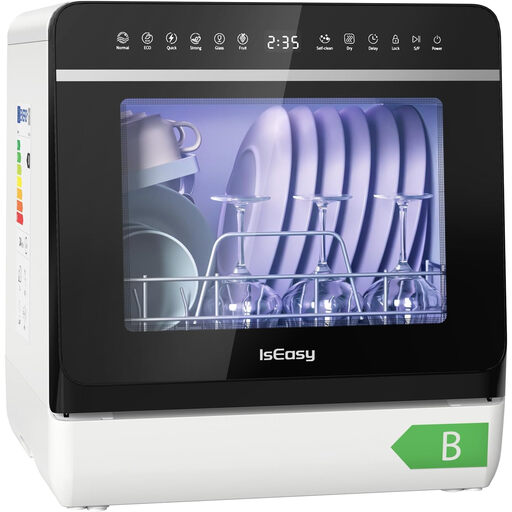
Why it suits this profile : Its 5-litre tank offers a portable solution when it’s not possible to install a permanent water supply.
Being able to use it with or without a connection lets you try out different layouts before deciding where to keep it permanently.
Three place settings, seven programmes, dimensions of 43 × 43 × 46 cm, a delay start of up to 18 hours and a stated drying function.
Before using your dishwasher for the first time, check the earth connection, water inlet and drainage. Don’t use an extension lead or multi-socket adaptor with an appliance this powerful. For a built-in model or any plumbing alterations, it’s best to call a qualified professional.
Use only detergent designed for dishwashers, rinse aid and, if needed, dishwasher salt. Regular washing-up liquid creates far too much foam and can cause a leak. Clean the filter regularly and make sure the spray arms aren’t blocked.
We’ve put together a comprehensive, real-time list of products that meet these strict selection criteria and comply with European safety regulations.
Yes, provided the model specifically allows you to fill the tank manually. You’ll need a stable spot for the appliance, suitable drainage and a container or sink to collect the waste water. Also check the tank capacity and the space needed to open the door fully.
It depends on how often you run cycles, the water quality, how well you maintain the filter and whether you follow the loading instructions. Regular cleaning, using salt suited to your water hardness and checking the hoses can all help prevent premature wear.
It depends on how much water you use when washing by hand, how full the dishwasher is and which programme you select. To keep costs down, choose the Eco cycle, load the baskets properly and check the figures on the energy label: kWh per 100 cycles and litres of water per cycle.