
Livraison le jour même ou le lendemain

Qualité garantie

Débloquez vos offres de bienvenue: Livraison GRATUITE | Jusqu'à -80 % | 30 jours d'essai gratuits à JoyPlus
Téléchargez l'application
A 60 cm cooker hood is suitable for most standard hobs, but its width alone isn’t enough to guarantee a good choice. In a studio flat, an open-plan kitchen or a rental property, installation constraints, noise and maintenance can quickly turn a bargain into an appliance that’s impractical for everyday use.
Before comparing models, it’s worth knowing the most common pitfalls.
The airflow rate given in m³/h usually refers to the maximum power setting. It doesn’t necessarily reflect performance at normal speed, nor the real efficiency once the ducting, bends and filters are in place. A hood rated at 370 m³/h can be fine for a standard kitchen, but its effectiveness will also depend on the installation set-up.
A hood that works in recirculation or extraction mode offers more flexibility. In extraction mode, air laden with steam and odours is expelled outside through a suitable duct. In recirculation mode, it passes through a grease filter, then a charcoal filter, before being returned to the room.
Recirculation is necessary when it’s impossible to drill through a wall, particularly in a rental property. However, you’ll need to budget for regular replacement of the charcoal filter. This mode also doesn’t remove humidity from the kitchen. So before ordering, check the price and availability of consumables.
A black cooker hood can fit perfectly into a contemporary kitchen, while a stainless steel cooker hood blends easily with most appliances. But a good-looking front won’t make up for awkward filter access, unclear controls or excessive noise levels.
Measure your hob, the available wall space and the distance between the cooking area and the hood. A 60 cm model must be fixed securely, following the instructions in its manual. Also check the adjustable height of the chimney, especially if you have high ceilings.
The wall-mounted models shown here measure approximately 600 mm wide and 432 mm deep, with an adjustable height of up to 950 mm on some appliances. These dimensions tell you more than simply ‘60 cm’.
For everyday use, compare the different power levels rather than just the maximum airflow. The Ciarra CBCB6201, for example, offers three levels rated at 221, 291 and 367 m³/h, with corresponding noise levels of 51, 57 and 63 dB.
A quiet cooker hood is a relative concept: the perceived noise depends on the room, the ducting and the operating mode. In an open-plan kitchen, it’s better to choose a mid-range speed that’s effective enough, so you don’t have to run the appliance at full power all the time.
A washable aluminium filter makes maintenance easier and avoids having to buy disposable parts regularly. For the Ciarra model, the manual recommends cleaning every two to four weeks, depending on how often you use it. Use a non-abrasive cleaner and always unplug the appliance before carrying out any work.
The integrated lighting above the hob improves usability, but the technology used is also worth a look. Some models include task lighting, while the Heinrich’s model shown below features an LED light. An A++ energy rating, when listed on the product sheet, along with a stated power consumption of 41.5 W for some Ciarra models, gives you a more concrete way to compare running costs.
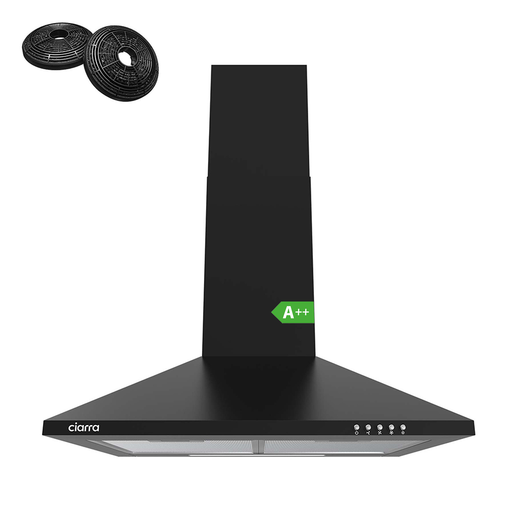
Why this choice suits this profile: This 60 cm wall-mounted hood has mechanical push-button controls, two washable aluminium filters and works in extraction or recirculation mode. It’s suitable for most standard domestic installations.
The product sheet details the three speeds, noise levels and reusable filters, rather than just highlighting a maximum airflow rate.
Three speeds from 221 to 367 m³/h, adjustable height from 572 to 950 mm, integrated lighting and a stated 24-month warranty.
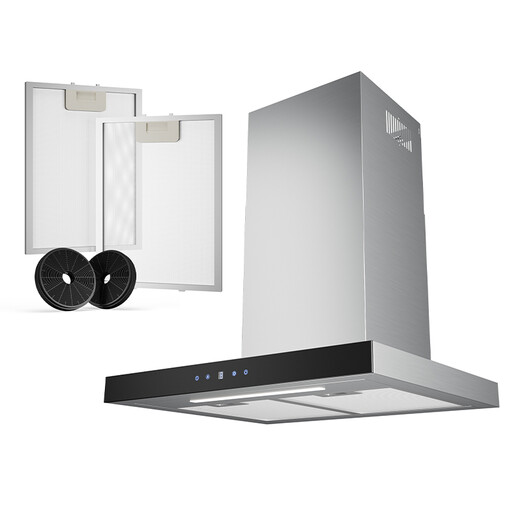
Why this choice suits this profile: Its digital display, touch controls and stainless steel finish are aimed at renovated kitchens, where visual integration and precise settings matter as much as extraction power.
The product sheet specifies an airflow of 611 m³/h, a five-layer aluminium filter and the option to choose between extraction and recirculation.
Stated A++ energy rating, LED lighting, filter described as dishwasher-safe and charcoal filter included.
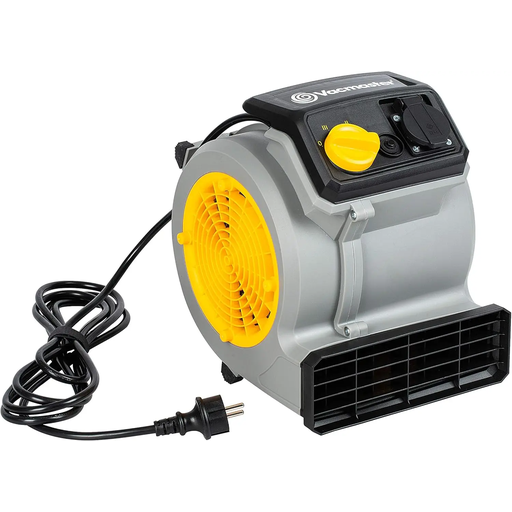
Why this choice suits this profile: This portable air mover is designed for drying and ventilating a workshop, basement or large room, not for extracting cooking fumes.
Its function is clearly different from a cooker hood: it doesn’t replace a grease filter. So there’s no risk of mistaking it for a kitchen appliance it isn’t designed to be.
Three speeds, stated airflow of 245 l/s, adjustable tilt and a socket that allows multiple units to be linked depending on the set-up.
We’ve put together a comprehensive, regularly updated selection of products that meet these demanding criteria, while complying with European safety regulations.
Before fitting, check the following:
For a hood used regularly, clean the grease filter as soon as it starts to look dirty. In recirculation mode, keep an eye on the charcoal filter: its replacement depends on the manufacturer’s recommendations and how intensively you use the hood. Never block the air outlets, and always disconnect the power before cleaning the appliance.
Yes, it can work with a hob of a similar width. However, in an open-plan kitchen, noise and airflow are particularly important. Compare the noise levels at each speed and switch the hood on as soon as you start cooking, before smoke and odours spread through the room.
Extraction is preferable when it’s possible to install a compliant external duct. Recirculation is better suited to rental properties, studio flats and kitchens without an external wall outlet. It requires a charcoal filter and mainly reduces odours; it doesn’t replace the removal of humidity to the outside.
Use the appropriate power level rather than running the hood at maximum all the time, clean the aluminium filter regularly and replace the charcoal filter when it becomes saturated. A product sheet showing an A++ energy rating and annual energy consumption also makes it easier to compare different appliances.