
Livraison le jour même ou le lendemain

Qualité garantie

Débloquez vos offres de bienvenue: Livraison GRATUITE | Jusqu'à -80 % | 30 jours d'essai gratuits à JoyPlus
Téléchargez l'application
Choosing a 60cm cooker hood? A minor detail, you think? Think again: this seemingly trivial purchase determines the comfort of your kitchen for years to come. Faced with a jungle of models, it's easy to fall into the classic traps: falling for a stylish design at the expense of efficiency, or underestimating the daily nightmare of an overly noisy appliance.
As a product expert at Joybuy, my mission is to help you cut through the noise. Let's forget the marketing jargon and focus on what truly matters in your kitchen. Here are the mistakes to avoid and the criteria to scrutinise to make an informed choice.
The 2 Pitfalls to Avoid Before Buying Your Hood:
To be sure you're making the right call, focus on this technical trio. It's what determines the real performance, running cost, and lifespan of your hood.
The air flow, measured in cubic metres per hour (m?/h), corresponds to the volume of air the hood can process. For a standard kitchen (around 10-15 m?), an extraction rate of 300 to 400?m?/h is more than sufficient. There's no need to aim for stratospheric figures if it means sacrificing acoustic comfort.
The noise level is the real deciding factor for comfort. A quiet cooker hood worthy of the name does not exceed 55 dB at medium speed. Above 65 dB at maximum power, the appliance becomes a nuisance, especially in a kitchen that opens into the living room. The holy grail: the best balance between an air flow rate suited to your room and golden silence.
This crucial choice depends entirely on your home's layout.
The good news: most recent models are convertible and offer both modes.
Never underestimate maintenance: it's the key to keeping your hood performing well over the long term. Check the type of grease filters: aluminium or stainless steel models are the most practical. A simple run through the dishwasher and they're good to go! This is the most economical and ecological solution. If you opt for recirculation, remember to check the reference number and cost of the charcoal filters before you buy.
To put theory into practice, here are a few models that perfectly illustrate these criteria and meet various needs, all while avoiding the classic pitfalls.
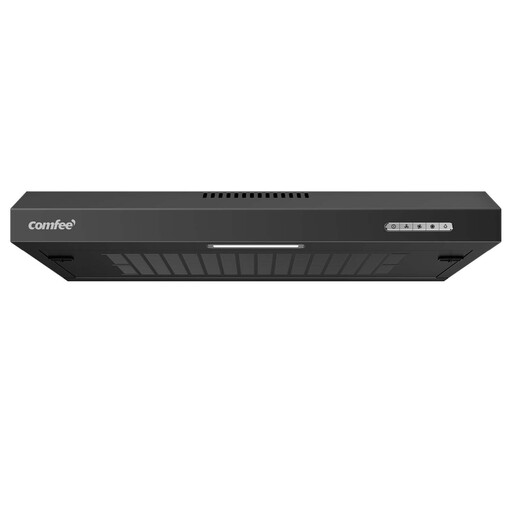
The right choice if: you have a small kitchen or a kitchenette. This visor model fits discreetly under a wall unit for maximum space saving. Its simplicity makes it an excellent choice for a first appliance or a budget-friendly replacement.
This model is convertible (extraction or recirculation), giving you the choice and preventing any nasty surprises during installation. Its 200 m?/h air flow is calibrated for small spaces, without turning your kitchen into a wind tunnel.
Its ultra-compact format and dishwasher-safe aluminium filter make it a practical and economical solution to run.
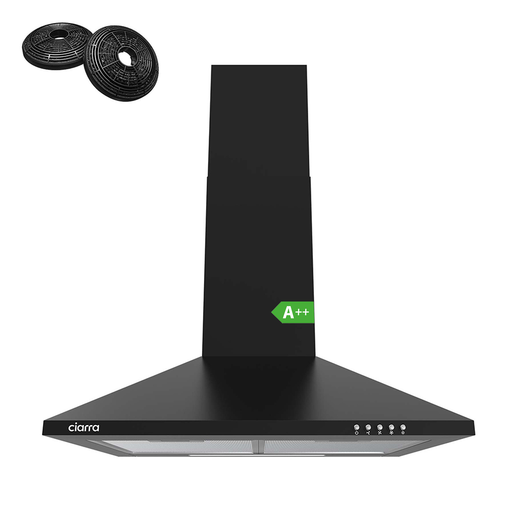
The right choice if: you're looking for a versatile and stylish solution. With its "chimney" design and modern black finish, this wall-mounted hood suits most kitchens while offering balanced performance for daily use.
At a maximum of 63 dB for a 367 m?/h flow rate, it strikes the right compromise between efficiency and discretion. Its A++ energy rating is a guarantee of controlled consumption, preventing unpleasant surprises on your electricity bill.
Its excellent energy efficiency and dishwasher-safe aluminium grease filters make it a smart, durable, and economical choice to run.
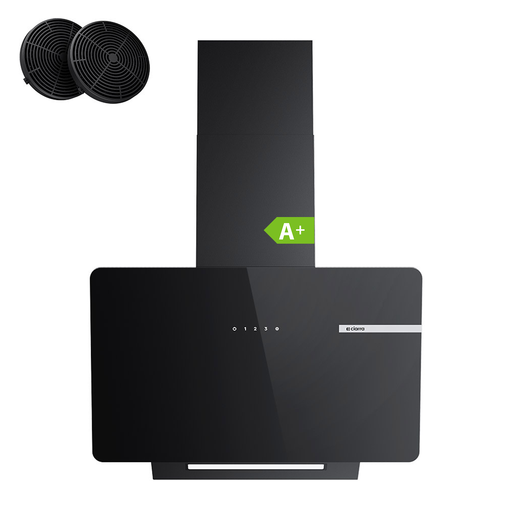
The right choice if: your kitchen opens into the living room and you care about your decor. This designer hood, with its angled black glass front, is made for modern interiors. It frees up space above the hob and stands out as a true decorative piece.
It doesn't sacrifice performance for design. Its powerful 580 m?/h air flow is perfect for large spaces, while its touch controls are more hygienic and much easier to clean than traditional buttons.
Its angled design prevents you from banging your head and offers better visual comfort. Its extraction power is ideal for intense cooking (frying, grilling) which can quickly become an issue in an open-plan kitchen.
Once you've chosen your hood, don't neglect your space organisation. Well-designed storage solutions can free up your worktop and keep your utensils within easy reach.
Discover our selection of smart storage for a kitchen that's always functional and perfectly organised.
1. What power (air flow) should I choose for a 60cm hood? For an enclosed kitchen under 15 m?, a flow rate of 300 to 400?m?/h is sufficient. For an open-plan kitchen or if you're a fan of cooking styles that generate a lot of smoke (frying, woks, grilling), aim for a model between 500 and 600?m?/h.
2. Is a recirculation hood really effective? Yes, a 60cm recirculation hood is perfectly effective for standard domestic use, on one condition: impeccable maintenance. It filters grease perfectly. Its effectiveness against odours, however, depends directly on the quality and condition of its charcoal filter. It's an excellent alternative when installing an extraction duct is impossible.
3. How long does a charcoal filter last and how much does it cost? An active charcoal filter has a lifespan of 3 to 6 months, depending on your usage frequency and cooking style. It is essential to change it regularly to maintain good odour filtration. Budget-wise, expect to spend between €20 and €50 per year for replacement filters, depending on the brand.