
Livraison le jour même ou le lendemain

Qualité garantie

Débloquez vos offres de bienvenue: Livraison GRATUITE | Jusqu'à -80 % | 30 jours d'essai gratuits à JoyPlus
Téléchargez l'application
A 60 cm 14 place setting dishwasher is designed for families and households who want to fit a whole day's worth of dishes — or even a large meal's — into a single cycle. But the stated capacity alone isn't enough to separate the best models from the rest. Installation, noise level, energy consumption and interior layout can turn what looks like a great deal into an impractical appliance.
Before you start comparing models, here are the most common pitfalls and the key criteria to check.
An appliance advertised as a 60 cm model doesn't necessarily measure exactly 60 cm in depth or height. Depending on the model, you also need to allow space for pipes, the door to open and ventilation.
So, measure:
Some freestanding models have a removable worktop so they can be installed under a worktop. A 60 cm integrated dishwasher, on the other hand, requires a compatible niche and a suitable decorative door panel.
The '14 place settings' label refers to a standardised capacity, but it doesn't tell you whether loading will actually be practical. A third cutlery basket, an adjustable upper basket or fold-down tines can make a real difference with large plates, saucepans and glasses.
A poorly designed interior can mean you have to run several cycles despite a high theoretical capacity. So, look at the adjustment options rather than just the number on the box.
A dishwasher rated at 41 to 44 dB(A) will be quieter in an open-plan kitchen than a model at 46 dB(A). However, the noise level must be weighed against the energy label and water consumption. The duration of the Eco programme can also be significant: this mode is generally designed to limit energy use, but it doesn't always meet the need for a quick wash.
A freestanding dishwasher is easier to replace and can be moved without altering your kitchen cabinet fronts. Its control panel remains visible. An integrated model, on the other hand, is hidden behind a cabinet door for a seamless look, but it requires more precise measurements.
Also check the length of the hoses, the position of the drain and the presence of an earthed socket. Using an extension lead or multi-plug adapter is not recommended for this type of appliance; always refer to the manual and the requirements of your electrical installation.
The European energy class comes with more useful data for comparing appliances: consumption in kWh per 100 cycles, water consumption per Eco cycle and the duration of the reference programme.
In this selection, the Whirlpool WFP5O41PLGX is rated class C, with 9.5 litres of water per cycle and 75 kWh per 100 cycles. The Samsung DW60M6050FS is rated class E, with 10.5 litres per cycle. These figures should be compared on an identical basis, as the programmes, their duration and the measurement conditions all affect real-world usage.
A water-efficient dishwasher doesn't mean you can skip filling it properly. Running a machine half-empty cancels out much of the benefit of a large format, unless a half-load function is available.
For an open-plan kitchen or night-time use, choose a noise level between 41 and 44 dB(A), checking the exact value on the product page. An automatic door opening at the end of the cycle can help release steam and improve natural drying, but you need enough space in front of the appliance.
The third basket also frees up space in the lower basket. It's particularly handy for cutlery, fine utensils and small items, as long as it doesn't obstruct the spray arms.
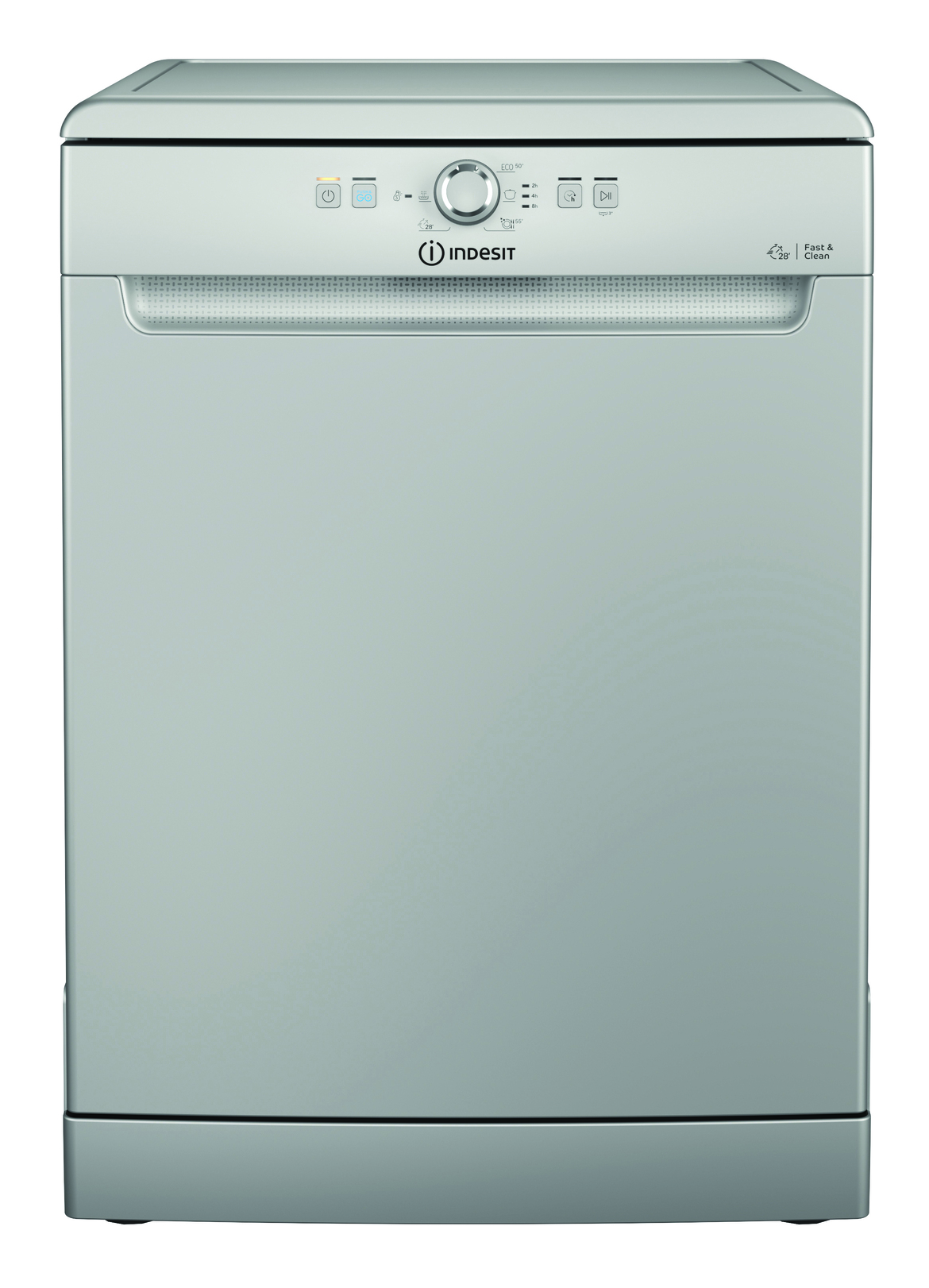
Why this choice suits this profile: its 60 cm freestanding format and 85-minute Push&Go programme make everyday use simple and straightforward.
The product page details its six programmes, stainless steel interior, stated water consumption of 9.5 L per cycle and adjustable upper basket.
14 place settings, delay start from 1 to 8 hours and anti-flood protection.
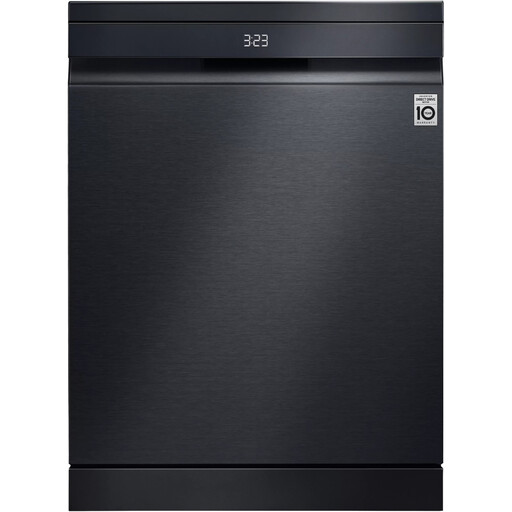
Why this choice suits this profile: it combines 14 place settings, an adjustable third basket, a black matte finish and LG ThinQ Wi-Fi control.
The stated data is detailed: 43 dB(A), 9.5 L of water per Eco cycle and 49 kWh per 100 cycles. The TrueSteam and QuadWash functions are technologies claimed by LG, without constituting a guarantee of results in every case.
Stated energy class A, automatic door opening and ten programmes.
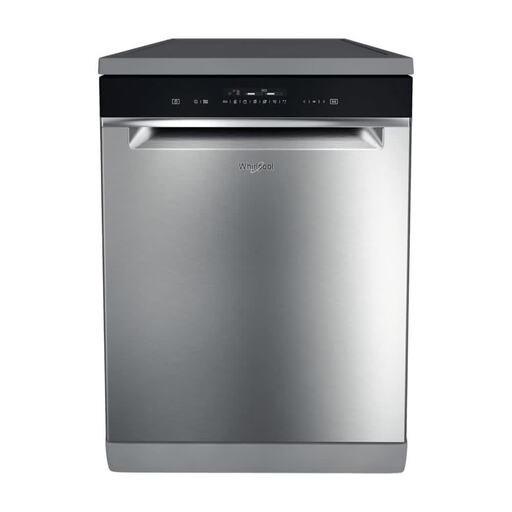
Why this choice suits this profile: its 11 programmes, Multizone function and third basket suit households that alternate between full loads and partial washes.
The half-load function means you don't have to wait for a full machine every time, while the stated noise level of 41 dB(A) is suitable for open-plan living spaces.
Stated class C, 9.5 L per Eco cycle, Wi-Fi, AquaStop and delay start up to 24 hours.
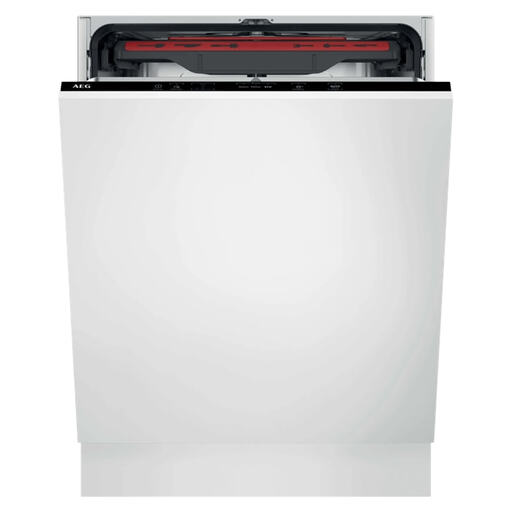
Why this choice suits this profile: its fully integrated design fits a fitted kitchen that prioritises a uniform cabinet front and operation stated at 44 dB.
The product page mentions the sliding hinges, cutlery basket and installation dimensions — all elements to check before ordering.
Stated class C, 10.5 L per Eco cycle and AirDry technology with automatic door opening.
We've put together a comprehensive, real-time updated list of products that fully meet these strict selection criteria and European safety regulations.
Allow a width close to 60 cm, but always check the exact dimensions of the model. Add space for connections, ventilation and the door to open. For an integrated appliance, also check the height of the niche and the compatibility of the cabinet door.
The lifespan of a dishwasher depends on how often it's used, the quality of the installation and how well it's maintained. Clean the filter regularly, check the spray arms, use salt appropriate for your water hardness and avoid overloading the baskets. It's also worth checking the availability of spare parts and the warranty terms before you buy.
The energy class provides a comparable benchmark, but the actual cost depends on your electricity price, the number of cycles and the programme you choose. Compare the consumption in kWh per 100 cycles and the amount of water used per cycle, then estimate how often you'll use it. An appliance that's properly filled and mainly used on Eco mode can keep costs down compared to repeated short cycles or washes with a partially loaded machine.