
Livraison le jour même ou le lendemain

Qualité garantie

Débloquez vos offres de bienvenue: Livraison GRATUITE | Jusqu'à -80 % | 30 jours d'essai gratuits à JoyPlus
Téléchargez l'application
For a family of 3 to 6 people, a 60 cm 14-place dishwasher should cover most daily needs. But the stated capacity alone doesn't guarantee a machine that's practical, quiet and economical. The layout of the baskets, the actual consumption and the installation constraints can significantly change the experience once the appliance is in place.
Here are the criteria to check before choosing a freestanding dishwasher, along with a selection of models suited to different needs.
An appliance marketed as a 60 cm model can measure slightly more or less depending on its design. Check its full dimensions, especially its height, depth, the space needed for pipework and the door's opening arc.
For installation under a worktop, height is crucial. Some freestanding models have a removable worktop, but this must be confirmed on the product page. Also remember to measure doorways, hallways and staircases before delivery.
Fourteen place settings correspond to a standardised capacity, but that doesn't necessarily tell you whether the appliance is easy to load. An adjustable upper basket, fold-down tines and a third cutlery tray can prove far more useful than a simple number.
Large plates, tall saucepans and bulky glasses need a sufficiently flexible tub. Also check whether the upper basket can be adjusted when loaded – in daily use, this feature makes a real difference.
A quiet dishwasher typically has a noise level between 41 and 44 dB among the models shown here. However, this figure comes from a standardised measurement. The sounds of filling, draining or clattering crockery can still be heard.
For an open-plan kitchen or night-time use, look at both the decibel rating and the acoustic class. A silent programme or a delay start option can also improve comfort.
For a family, prioritise:
A large capacity shouldn't encourage overloading the baskets. The spray arms must be able to rotate freely and each item must receive enough water.
The European energy label allows you to compare appliances on a common basis. Models rated A, B, C or D generally use less electricity than those in lower classes, but you also need to consider the duration of the Eco programme.
As a guide, several models in this selection use 9.5 litres of water per Eco cycle. The LG DF587HMS claims 49 kWh per 100 cycles, while the Whirlpool WFP5O41PLGX states 75 kWh per 100 cycles. These values should be interpreted with the relevant programme in mind. They don't allow you to estimate your bill precisely, as usage, electricity tariffs and wash frequency vary from household to household.
A water-efficient dishwasher can reduce consumption compared to several hand washes. However, the actual saving depends on how you load the appliance and which programme you choose.
The auto-open door aids drying by letting steam escape at the end of the cycle. A Wi-Fi connected model can let you track the programme, receive notifications or download certain options. This feature does require a stable connection and use of the manufacturer's app.
The finish should also suit your kitchen. A stainless steel dishwasher generally blends in with other appliances, while a matt black model creates a bolder contrast. The colour, however, doesn't change the capacity or consumption.
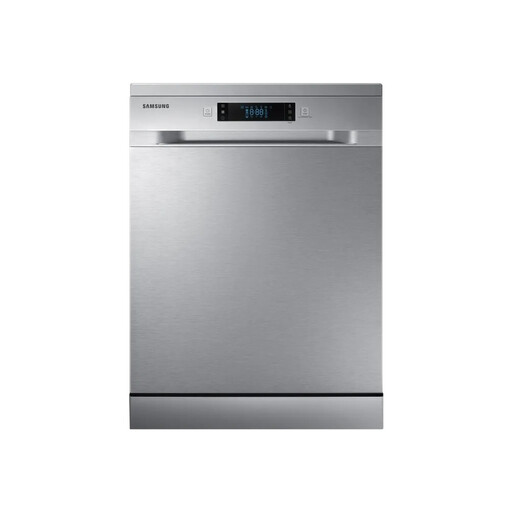
Why this choice suits this profile: It offers 14 place settings, seven programmes and a width of 59.8 cm, with a simple LED interface that's easy to get to grips with.
The adjustable upper basket and half-load function reduce the constraints of a poorly adapted tub.
14 place settings, 44 dB, adjustable upper basket and stated water consumption of 10.5 litres per Eco cycle.
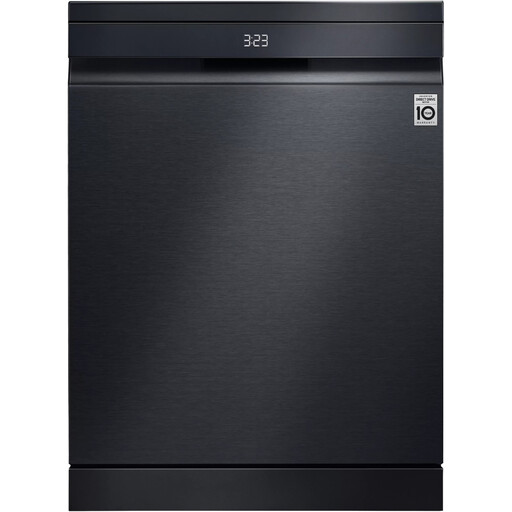
Why this choice suits this profile: This matt black dishwasher combines Wi-Fi connectivity, an adjustable third basket and an auto-open door.
Its spec sheet details the noise level, water consumption and electricity consumption for the Eco cycle, rather than relying on general promises.
Energy class A, 43 dB, 9.5 litres of water per Eco cycle and 49 kWh per 100 cycles according to the supplied spec sheet.
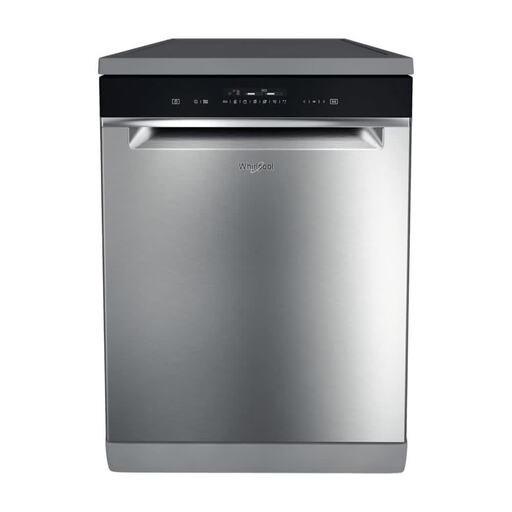
Why this choice suits this profile: Its 11 programmes and Multizone, half-load and self-cleaning functions adapt to the most varied loads.
The spec sheet clearly states its class C rating, its 41 dB noise level and its water consumption of 9.5 litres per cycle.
14 place settings, 41 dB, third cutlery tray, Wi-Fi and stated AquaStop protection.
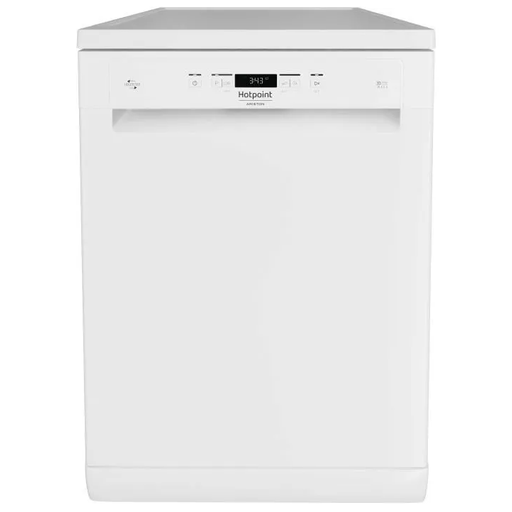
Why this choice suits this profile: It combines 14 place settings, 41 dB and an auto-open door in a 60 cm freestanding format.
The noise level, water consumption and available programmes are listed separately to make comparison easier.
Class C, 41 dB, 9.5 litres per Eco cycle, Eco, Auto, Intensive and Rapid programmes.
We've put together a comprehensive, real-time updated list of products that fully meet these strict selection criteria and European safety regulations.
Before first use, fill the salt reservoir and rinse aid compartment according to the water hardness in your area. Only use products designed for dishwashers and avoid washing-up liquid meant for hand washing.
To keep the appliance performing well:
It depends on the energy class, the programme used and the frequency of cycles. In this selection, the stated Eco water consumptions range from 9.5 to 11.5 litres per cycle. Consult the energy label and the spec sheet rather than a general marketing promise.
A noise level of 41 dB is relatively discreet under the stated measurement conditions. However, the actual noise you hear depends on the loading, the draining and the room layout. The delay start function lets you run the cycle when the kitchen is less busy.
The lifespan depends on the quality of the installation, filter maintenance, water hardness and cycle frequency. Regular cleaning, correct detergent dosing and sticking to the recommended load all help prevent premature wear. Also check the warranty terms and the availability of spare parts before buying.