
Livraison le jour même ou le lendemain

Qualité garantie

Débloquez vos offres de bienvenue: Livraison GRATUITE | Jusqu'à -80 % | 30 jours d'essai gratuits à JoyPlus
Téléchargez l'application
Choosing bed linen in France often involves navigating distinctive European sizing, varied weave densities and different fastening designs. Natural cotton remains a staple across continental bedrooms due to its innate temperature regulation and soft feel against the skin. However, selecting an ill-fitting duvet cover or an impractical closure can transform routine bed-making into an exasperating chore and compromise your nightly comfort.
A rewarding purchase aligns exact mattress and duvet dimensions with a fabric structure tailored to your laundering routine. Whether you prefer understated neutral tones, bold modern prints, or convenient low-maintenance sets, evaluating thread construction, pillowcase proportions and fastening mechanics ensures your linen stays crisp, neat and durable wash after wash.
Shoppers accustomed to UK or North American bedding often purchase French linen sets without realising standard dimensions differ markedly. In France, square pillowcases measuring 63 x 63 cm are standard, whereas northern European or international sets frequently feature rectangular 50 x 70 cm or oversized 80 x 80 cm covers. Similarly, continental double duvets typically measure 220 x 240 cm or 240 x 260 cm. Verifying exact measurements prevents loose, bunching fabric or squashed pillow inserts.
Marketing often equates soaring thread counts with superior luxury, yet excessive counts can sometimes indicate multi-ply yarns woven from shorter, weaker fibres. For daily use, a standard dense plain weave of 57 threads per square centimetre in pure cotton provides an optimal balance between durable tensile strength, natural suppleness and breathable airflow without trapping excessive body heat.
Traditional French duvet covers frequently employ a funnel or bottle-neck flap at the base, which tucks under the mattress but can prove cumbersome to insert and remove. Conversely, sets lacking secure closures allow duvets to migrate and twist overnight. Opting for full-width zip closures or side zippers significantly reduces changeover time while preventing the duvet core from shifting inside the cover.
The raw fibre and weave structure dictate breathability, tactile softness and longevity through frequent hot washes. Pure natural cotton excels at moisture absorption, whereas blended microfibres provide crease resistance and rapid line drying.
Accurate drape depends on matching your duvet cover directly to the insert rather than the mattress width alone, allowing sufficient overhang on both sides of the bed.
The closure method directly influences how smoothly you can change your bedding and how neatly the duvet sits during sleep.
Explore these carefully selected bedding sets tailored to distinct bedroom aesthetics, dressing speeds and linen maintenance preferences.
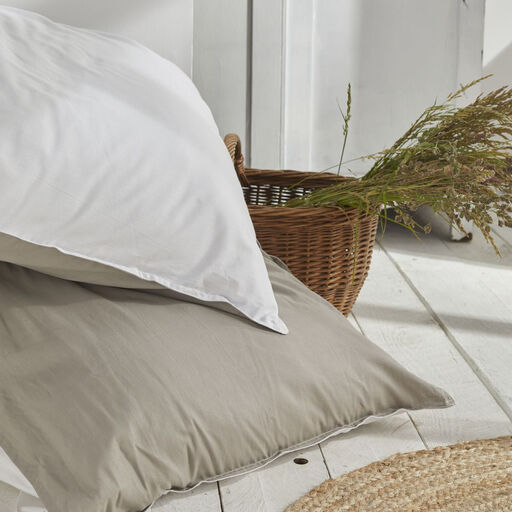
Why This Fits Their Persona: This two-person bedding set features a pure cotton construction with a dependable 57 threads per square centimetre weave. The Dune and Craie colourway introduces gentle, earthy neutrality that complements minimalist, Scandinavian, or rustic French bedroom decor. Available in classic continental double formats, it pairs effortlessly with standard 63 x 63 cm square pillows.
It circumvents the trap of stiff synthetic blends that trap clammy heat, using pure breathable cotton that softens naturally with each wash while resisting fabric thinning.
Its balanced plain weave ensures reliable thermal regulation across all four seasons alongside straightforward 40°C machine laundering.
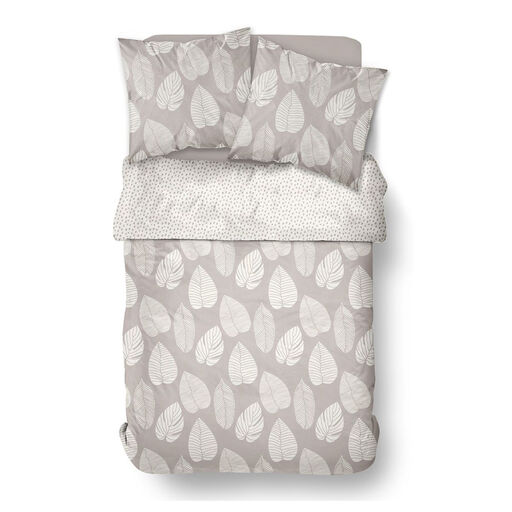
Why This Fits Their Persona: Crafted from 100% cotton with a solid 57-thread density, this printed double bed set features an innovative zip closure running along both sides of the cover. Combined with two matching 63 x 63 cm pillowcases, it brings modern graphic character into the bedroom while cutting changeover time down to moments.
It resolves the frustrating struggle of wrestling thick duvets through narrow bottle-neck flaps or fastening dozens of fragile buttons on laundry day.
Dual-side zippered openings allow you to lay the cover flat and guide the duvet into place with minimal physical effort and zero interior bunching.
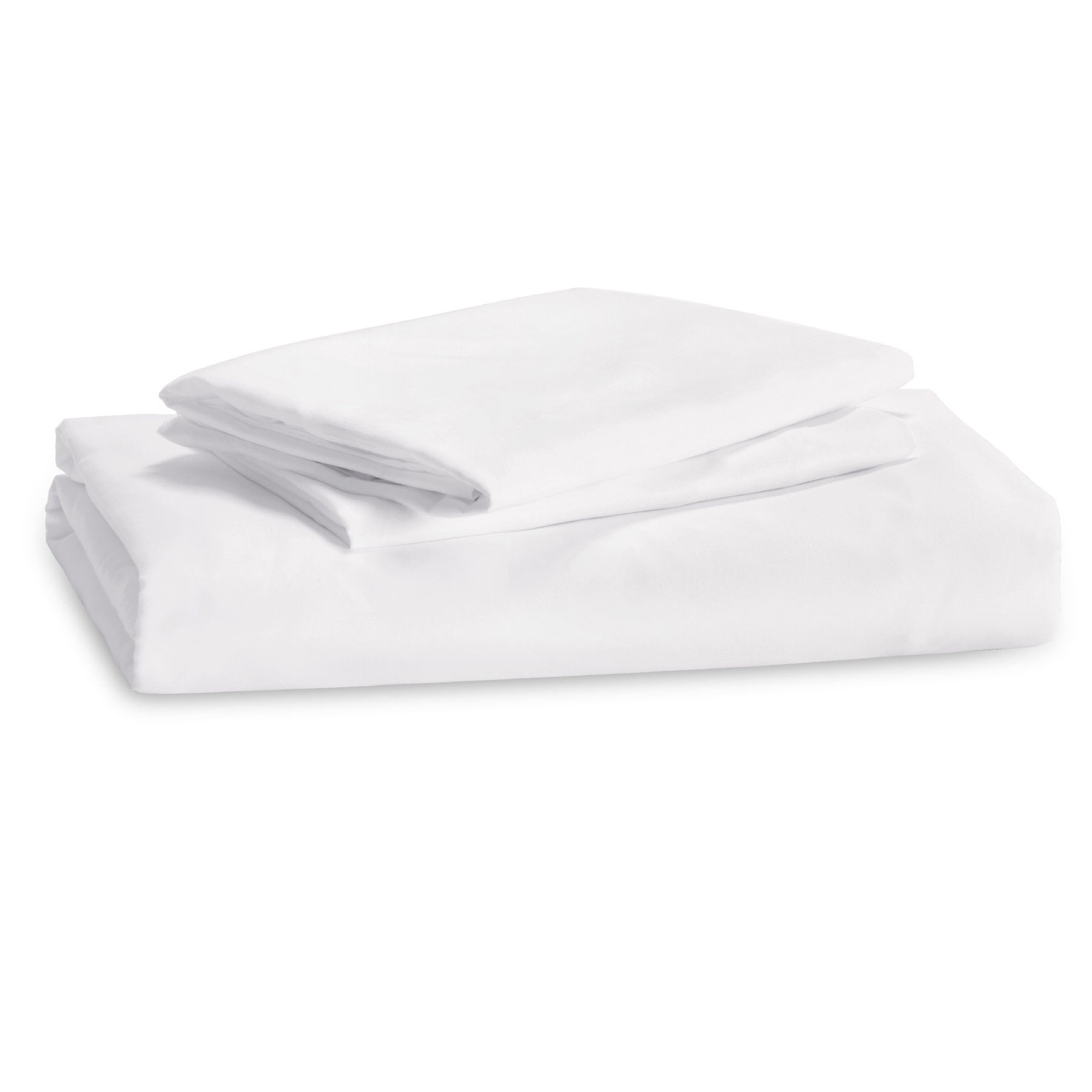
Why This Fits Their Persona: Measuring 155 x 220 cm with two generous 80 x 80 cm pillowcases, this clean white bedding set is tailored for European single-wide or compact double duvet setups. Constructed from lightweight microfibre with a full zip closure, it provides a smooth, uniform surface that requires little to no ironing.
It eliminates the hassle of extensive pressing and slow outdoor drying, shedding creases naturally and drying rapidly after a standard cycle.
Certified under OEKO-TEX Standard 100, it delivers dependable peace of mind regarding textile safety alongside practical, snag-resistant zip functionality.
If your bed requires specialised mattress fittings, alternate fabric textures like washed linen, or individual flat sheets, discover our wider collection of continental bed linen.
For daily use, a cotton weave of 57 threads per square centimetre (approximately 145 threads per square inch) is the established continental standard. This density provides sufficient structural strength to withstand frequent weekly laundering at 40°C while remaining light, breathable and gentle against the skin.
In France, a standard 140 x 190 cm double bed typically pairs best with a 220 x 240 cm duvet cover to allow a comfortable 40 to 50 cm drop on each side. If you sleep on a 160 x 200 cm queen mattress, choose a 240 x 260 cm cover so two sleepers can share the blanket without draughts.
A zipped duvet cover creates a clean, fully enclosed pocket that prevents the duvet from poking out or shifting unevenly during the night. It also dramatically accelerates laundry routines compared to button closures or French bottle-neck tails, which require tedious hand-tucking under the mattress.