
Livraison le jour même ou le lendemain

Qualité garantie

Débloquez vos offres de bienvenue: Livraison GRATUITE | Jusqu'à -80 % | 30 jours d'essai gratuits à JoyPlus
Téléchargez l'application
Choosing a new 55-inch 4K QLED TV can quickly become overwhelming with the jungle of technologies and technical jargon: 144Hz, Dolby Vision, Google TV... How can you make sense of it all and be sure you're making the right purchase, whether you're a passionate cinephile, an avid gamer, or a family seeking a top-tier viewing experience?
As the Head of Product Recommendations at Joybuy, my mission is to bring you clarity. In this guide, we'll break down the features that really matter and present a selection of models with an unbeatable price-to-performance ratio, helping you find the perfect television for your living room.
Before diving into our selection, let's review the key points that will help you sort through the options.
The refresh rate, expressed in Hertz (Hz), is the number of images your TV can display per second. While a standard model makes do with 50 or 60Hz, a 144Hz (or 120Hz) 4K TV makes a real difference in achieving perfect fluidity, especially in fast-paced video games or sports broadcasts. These TVs, often equipped with HDMI 2.1 ports and technologies like VRR (Variable Refresh Rate), synchronise the display with your console or PC to eliminate screen tearing and deliver flawless responsiveness. This is a decisive factor if you're looking for a high-performance 55-inch gaming TV.
A modern 55-inch Smart TV is much more than just a screen; it's a true connected entertainment hub. Its operating system is therefore a crucial element. A Google TV stands out thanks to its intuitive interface, which gathers content from all your apps (Netflix, Disney+, YouTube...) onto a single home screen. It offers personalised recommendations, a secure kids' profile, and integrates Google Assistant for voice searches. Chromecast and AirPlay 2 compatibility also make it easy to stream content from a smartphone or tablet.
QLED (Quantum Dot Light Emitting Diode) technology uses quantum dot filters to deliver purer and richer colours than a standard LED TV. For a truly cinematic experience, compatibility with HDR (High Dynamic Range) formats is essential. A QLED Dolby Vision TV goes even further by adjusting the image scene by scene to optimise contrast and brightness, thus staying true to the director's vision. Finally, if your living room is bathed in light, an anti-glare TV with a matte panel will be a game-changer by neutralising distracting reflections.
Here are three models that meet a variety of needs, selected for their solid spec sheets and excellent value proposition.
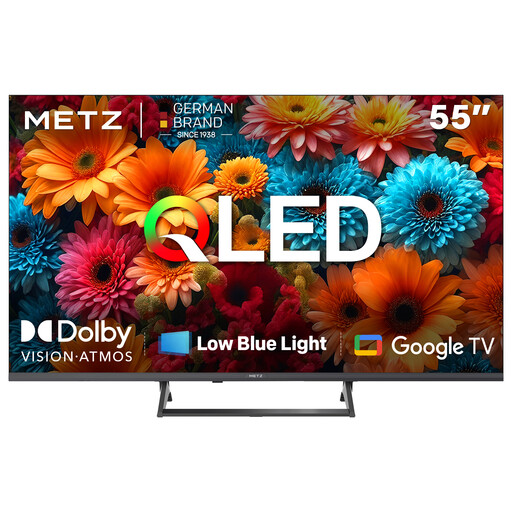
What Sets It Apart
The METZ 55MQF7500Z stands out as a complete and well-balanced solution. It combines the manufacturer's 5th generation QLED technology with full compatibility for HDR formats, including HDR10+ and Dolby Vision. It also considers your viewing comfort with its blue light reduction technology, a real bonus for long movie nights.
Key Features
Who Is It For?
Ideal for families looking for a versatile TV that is equally at home with films and series as it is for daily use, and which incorporates thoughtful features for everyone's comfort.
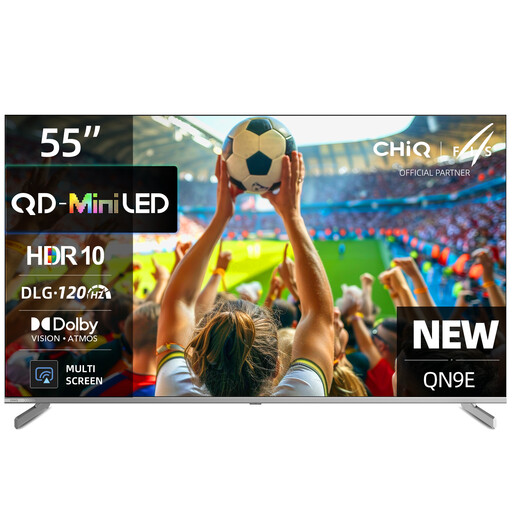
What Sets It Apart
The CHiQ M55QN9E stands out by combining two display technologies: QLED for colour vibrancy and Mini LED for backlighting. The latter allows for much finer control of light, delivering deeper blacks and striking contrast. Paired with a 120Hz DLG frequency, it's all about smoothness.
Key Features
Who Is It For?
This model is aimed at cinephiles and sports fans who want high contrast and impeccable fluidity, without having to jump to a more expensive OLED model.
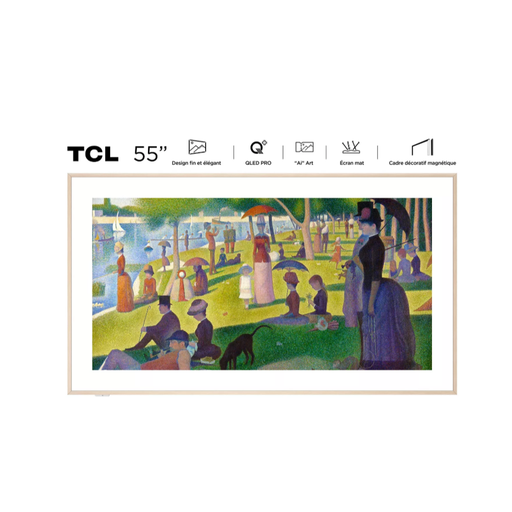
What Sets It Apart
The TCL 55A300W is a TV decidedly built for performance, especially for video gaming and very bright living rooms. Its anti-glare TV panel is a decisive advantage in this context. For gamers, it deploys the full arsenal: a native 144Hz VRR frequency and the Game Master Pro 3.0 software suite.
Key Features
Who Is It For?
This is the clear choice for demanding gamers on next-gen consoles or PC, as well as for anyone whose living room is bathed in light.
Is your ideal model not in this selection? Don't worry, every living room and every budget is unique. To discover a wider range of models, other screen sizes, or new technologies, explore our complete category.
? Explore Our Full Range of UHD Televisions
The fundamental difference lies in the backlighting technology. A QLED TV uses a backlighting system (LED or Mini LED) that passes through a layer of quantum dots to generate colours. Conversely, an OLED TV has no backlight: each pixel produces its own light. OLED can thus display perfect blacks and so-called "infinite" contrast, while QLED generally offers higher peak brightness and is less susceptible to the risk of screen burn-in.
For standard use (movies, series, broadcast TV), a 60Hz frequency is more than sufficient. 120Hz or 144Hz really comes into its own if you are a fan of competitive video games on PC or next-gen consoles (PS5, Xbox Series X), or if you are particularly sensitive to the smoothness of sports broadcasts. For these uses, the improvement in fluidity and responsiveness is undeniable.
Yes, absolutely. Although the ecosystem is from Google, you can control your Google TV from an iPhone via the Google Home app. Most recent models, like the TCL in our selection, are even compatible with AirPlay 2. This allows you to instantly stream your content (videos, photos, music) from an iPhone, iPad, or Mac directly to the big screen.