People who regularly cook high-protein meals
You use butter to prepare eggs, meat, fish, vegetables or sauces. In these meals, think of its role in cooking separately from the foods you choose for their protein content.


A 500 g block of butter can be a good choice if you cook regularly, but don’t rely on it as your main source of protein. The butter products listed by Auchan contain 0.6 to 1.1 g of protein per 100 g, compared with around 80 to 82.5 g of fat. To choose between unsalted and salted butter, consider the seasoning in your recipes, how much you’ll use and the nutritional information for the specific product.
You use butter to prepare eggs, meat, fish, vegetables or sauces. In these meals, think of its role in cooking separately from the foods you choose for their protein content.
You want to tailor the seasoning to your recipes. Checking the “salt” line in the nutritional information lets you compare specific products, rather than assuming all salted butters are the same.
You’re looking for a pack size that suits how often you cook. Before choosing a larger block, check its date and storage instructions, then consider whether you’ll use the whole pack.
For high-protein meals, first consider the role of butter in your recipe. Then choose a pack size and seasoning that suit the way you’ll use it.
| What to consider | What to check | Who is it for? |
|---|---|---|
| Protein content | Compare the protein and fat per 100 g for the product you’re considering. | When I put together high-protein meals, I want to distinguish foods that provide protein from butter used in cooking. Around 42% of consumers are said to prioritise this distinction. |
| Pack size and use | Check whether it’s a 500 g block or 2 × 250 g, as well as the date and storage instructions. | I cook often and want to use the whole pack without leaving some of it unused. This regular use is said to be a priority for around 33% of consumers. |
| Taste and salt | Choose unsalted or salted according to your recipe, then compare the salt per 100 g. | For my recipes, I want to decide how to season them rather than assume that two salted butters taste the same or contain the same amount of salt. Taste and salt are said to come first for around 25% of consumers. |
The butter products listed by Auchan contain 0.6 to 1.1 g of protein per 100 g, compared with around 80 to 82.5 g of fat. Butter’s main role in a meal is therefore as a cooking ingredient.
Choose foods to provide the protein separately, and use butter according to how you want to prepare the dish.
Two products listed by Auchan contain 2 g and 1.8 g of salt per 100 g respectively. The specific product matters when you’re seasoning a recipe.
Compare the “salt” line for each product, especially if other ingredients in the dish are already salty.
A larger pack is more suited to frequent cooking than occasional use. The date and storage conditions also affect your choice.
Estimate how much you’ll use and read the instructions on the packaging before choosing between a 500 g block and another pack size.
Président offers its Gastronomique block in 125 g, 250 g and 500 g sizes, with unsalted and salted varieties.
Carrefour offers, among other options, a 500 g block of Carrefour unsalted butter and a 500 g Président product.
Auchan offers unsalted and salted butter totalling 500 g in two 250 g blocks.
E.Leclerc offers a 500 g block of Les Croisés Bretagne salted butter, as well as a range of Marque Repère butters.
These two products are 500 g packs of ghee, which you can consider as cooking fats. They aren’t a direct substitute for a block of unsalted or salted butter. If you’re specifically looking for one of those varieties, check the product description before choosing.
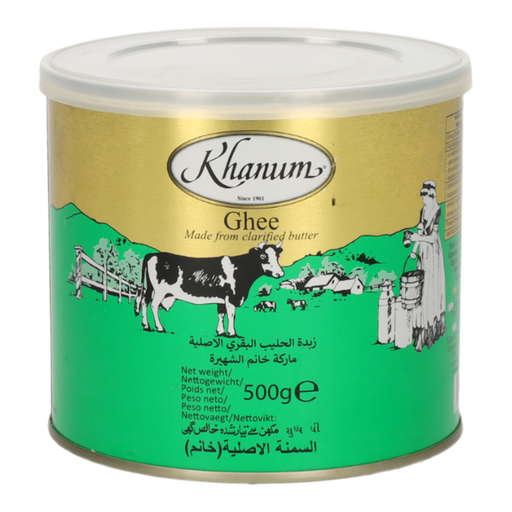 Image unavailable
If you cook regularly, this 500 g pack of ghee is worth considering as a cooking fat rather than a source of protein. Check its nutritional information and storage instructions on the packaging.
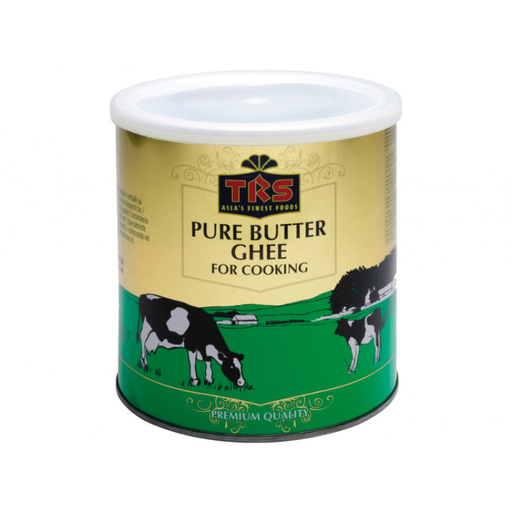 Image unavailable
This 500 g pack of ghee is an option for cooking if you’re not specifically looking for unsalted or salted butter. If protein content matters to you, compare the value shown on the label before buying.
No. The butter products listed by Auchan contain 0.6 to 1.1 g of protein per 100 g, compared with around 80 to 82.5 g of fat. If you’re preparing a high-protein meal, choose foods that provide protein separately from the butter you use in cooking.
Unsalted butter lets you choose how much salt to add to your recipe, while salted butter already brings seasoning that you’ll need to take into account. Compare the specific products: two salted butters listed by Auchan contain 2 g and 1.8 g of salt per 100 g respectively.
Make sure you’ll cook often enough to use this size, then check the date and storage instructions on the packaging. Président recommends keeping its butter refrigerated at between 4 and 6 °C; follow the instructions for the product you buy.
Compare the product name, net weight, ingredients, allergens and nutritional information for each variety. The DGCCRF notes that nutritional declarations include, among other things, fat, sugars, protein and salt. Compare these values on the same basis, usually per 100 g.