For several batches or an event, choose a 5 kg professional praline if its suitability for baking, ingredients and storage instructions meet the needs of your recipes. A spread, even in a large format, may work as a filling or for occasional use, but it won’t automatically replace the praline specified in a recipe. Check the nuts, texture and ingredients.
Who is this choice for?
If you’re baking for an event
You’re planning several desserts, a buffet or multiple batches. A 5 kg tub may be worth considering if you’ll use that amount and can store it as instructed. Cacao Barry and Valrhona Selection product pages describe pralines intended for uses including fillings, crémeux and mousses.
If you’re looking for a specific result
You need to choose between an almond and hazelnut profile, a more pronounced hazelnut flavour, a smooth paste or a preparation with crunchy pieces. The Valrhona Selection products described for these uses aren’t interchangeable without taking your recipe into account.
If you pay close attention to ingredients
You’re making a dessert for guests and need to check which nuts and other allergens are declared, as well as any may-contain warnings for the exact product. The ingredients list and nutritional information also help you compare products with similar names or formats.
What should you check before buying?
Start with how you plan to use it: a praline intended for baking and a ready-to-eat spread may suit different needs, even when both come in large formats. Then compare the amount your recipes require, the ingredients and the information provided on the product you’re considering.
| What to consider |
What to check |
Who is it for? |
| Size and storage |
Compare the container size with the recipes you have planned. Check the date and storage instructions for the product you buy. |
For a buffet or multiple batches, I want to use the contents without being left with an opened tub and no idea what to do with it. Around 31% of consumers put having the right amount first. |
| Flavour and texture |
Compare the nuts listed, their percentage and whether the product contains crunchy pieces; check that its stated use suits your recipe. |
If my recipe calls for a smooth cream or almond and hazelnut praline, the product name alone isn’t enough to help me choose. The finished bake is the priority for around 31% of consumers. |
| Ingredients and allergens |
Read the ingredients list, declared allergens and any may-contain warnings for the exact product. |
When I’m serving dessert to guests with allergies, I need to know what’s in the product I’m using. This is the main concern for around 23% of consumers. |
| Nutritional information |
Compare the nutritional values per 100 g, particularly sugars and fats. Check the Nutri-Score only if one is displayed. |
When comparing two differently sized containers, I’d rather start with the same per-100 g values than judge by the packaging alone. Around 15% of consumers prioritise this nutritional guide above all else. |
The Valrhona Selection and Chocolat Weiss product pages we reviewed specify storage at 16–18 °C for some 5 kg products. Those instructions, and the dates stated for other pralines, don’t tell you how or for how long the product you buy should be stored, particularly after opening.
Common mix-ups to avoid
-
Ruling out a product because it has no Nutri-Score
In France, displaying the Nutri-Score is voluntary, as the Ministry of the Economy explains. Its absence doesn’t remove the need to check the nutritional information: the DGCCRF reminds businesses that nutritional declarations are required for relevant prepacked foods.
Compare the values per 100 g and the ingredients list. Use the Nutri-Score as additional information when it appears on the products you’re comparing, but don’t rely on it alone to decide whether a product is right for your recipe.
-
Treating a spread as if it were recipe praline
Their ingredients and textures can differ. For example, Carrefour’s product page for Artisans Noisetiers spread lists hazelnuts, sugar and palm oil. Cacao Barry and Valrhona Selection, by contrast, describe pralines and their specific uses in baking.
For a ganache or crémeux, follow the formula and use specified in your recipe. If you’re considering a substitution, compare the ingredients and try it with a small amount first.
-
Choosing 5 kg without planning what you’ll make
A large container is only useful if the quantity you need and the storage conditions suit your plans. The instructions on the Cacao Barry and Valrhona Selection products we reviewed vary from one product to another.
Work out which recipes you plan to make, then check the date and storage instructions on the container you buy.
Any unused product also takes up storage space and may leave you with a surplus to deal with.
-
Relying on the word “hazelnut” alone to check for allergens
The product page for Valrhona Selection Hazelnut 66% praline also lists almonds. A product name alone doesn’t tell you all the nuts it contains.
Before serving the dessert, check the ingredients, declared allergens and any may-contain warnings on the information for the product you’ve actually used.
Brands to compare
These products show the different ingredients and formats you can compare for your recipe. A brand name alone won’t tell you the texture, allergens or storage instructions for a specific product.
Cacao Barry
The range includes a 50% hazelnut praline and a 65% Héritage almond and hazelnut praline, both offered by Cacao Barry in 5 kg tubs.
- The 50% hazelnut praline product page lists uses including fillings, crémeux, mousses, ice creams and sauces.
- Check the ingredients, allergens and instructions for the specific product before using it in a recipe.
Valrhona
Valrhona Selection offers several 5 kg pralines, including caramelised or crunchy almond and hazelnut varieties, as well as one with a stronger hazelnut profile.
- The product pages distinguish between the nuts and textures, helping you choose the right one for your dessert.
- The product page for the 50% caramelised almond and hazelnut praline specifies storage at 16–18 °C. Check the instructions and allergens for each product rather than assuming they apply to the whole range.
Chocolat Weiss
Chocolat Weiss offers an almond and hazelnut praline in 300 g and 5 kg formats for baking.
- According to its product page, the 5 kg praline can be added without melting it first.
- For this product, Chocolat Weiss specifies storage at 16–18 °C, away from moisture, light and odours.
Artisans Noisetiers
Carrefour’s product page lists a 300 g jar of praline spread, distinct from tubs of praline intended for baking in large batches.
- The listed ingredients include 54% hazelnuts, sugar and non-hydrogenated palm oil.
- Check the format and ingredients against your recipe before using it instead of baking praline.
Large-format spreads on Joybuy
These two large-format spreads may suit fillings or several recipes if their ingredients work for your needs. However, being described as spreads doesn’t make them equivalent to professional baking pralines.
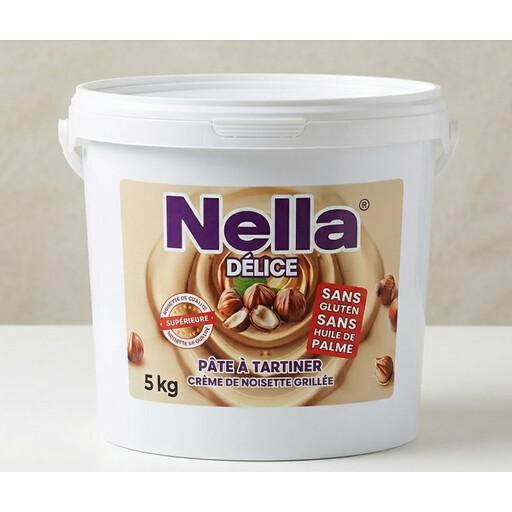 Image unavailable
NELLA PRO roasted hazelnut spread, 5 kg
The 5 kg format is worth considering for several recipes if you plan to use the whole contents. This roasted hazelnut spread isn’t automatically equivalent to the praline called for in a recipe just because of its name. Check the ingredients, texture and storage instructions on the product.
View on Joybuy
 Image unavailable
Nutella hazelnut and cocoa spread, 3 kg
The 3 kg container may suit you if you need spread for several recipes. The cocoa content matters if your recipe calls for almond and hazelnut or hazelnut praline instead. Compare the ingredients and the amount you need before choosing this format.
View on Joybuy
Frequently asked questions
Is the Nutri-Score compulsory on praline sold in France?
No. According to the Ministry of the Economy, displaying the Nutri-Score is voluntary in France. The DGCCRF reminds businesses that nutritional declarations are compulsory for relevant prepacked foods. Check this information alongside the ingredients list, even if no Nutri-Score is shown.
Which allergens should you check in praline?
Check which nuts are listed, along with any other allergen information or may-contain warnings for the product you’ve chosen. The Valrhona Selection product pages we reviewed show that a praline described as “hazelnut” may also contain almonds. Its name is no substitute for reading the information for the product you’re serving.
Can you use a spread instead of praline in a ganache?
Not automatically. The spread’s ingredients and texture need to work in the ganache you’re making. Compare the nuts, any oils and other ingredients with those in the praline specified, then try the substitution with a small amount before making the whole dessert.
How should you store a 5 kg tub of praline?
Follow the instructions for the product you’ve bought and check the date on its packaging. The product pages for some Valrhona Selection and Chocolat Weiss pralines specify 16–18 °C. Chocolat Weiss also advises protecting the product from moisture, light and odours. These instructions don’t set a standard shelf life for all products once opened.


