
Livraison le jour même ou le lendemain

Qualité garantie

Débloquez vos offres de bienvenue: Livraison GRATUITE | Jusqu'à -80 % | 30 jours d'essai gratuits à JoyPlus
Téléchargez l'application
Drying, straightening, curling and adding volume with a single appliance can really simplify your hair routine. But not all models sold as 5-in-1 hair multi-stylers are created equal, and they don't all meet the same needs. Power, attachments, temperature settings and electrical compatibility all have a direct impact on how comfortable they are to use.
Before you place an order, it's worth distinguishing between the features that are genuinely available and the marketing promises that can sometimes be hard to verify. Here are the criteria to consider when choosing a multi-function hot air brush that suits your hair type and your everyday life in the UK.
An appliance advertised as "5-in-1", "7-in-1" or "8-in-1" may include several very similar attachments. Check the box contents carefully: a smoothing brush, volumising brush, diffuser, concentrator nozzle, curling attachments and a hairdryer function all serve different purposes.
For curly or wavy hair, a diffuser will often be more useful than a second straightening attachment. For fine hair, a round volumising brush and a gentle setting will generally be of more interest than an especially powerful airflow.
Claims like "damage-free", "anti-frizz" or "professional quality" don't guarantee the same result for everyone. The outcome depends on the temperature, exposure time, your hair's moisture level and the technique you use.
Ionic technologies are often presented as being able to reduce static electricity and frizz. It's still recommended to use a heat protectant, opt for a moderate temperature and avoid holding the appliance on the same section for too long.
An imported appliance may come with a plug or operate on a voltage that's incompatible with your home setup. Check that it has a UK plug and verify the electrical specifications listed on the product page. A 360° swivel cord makes manoeuvring easier, while an appliance that's too heavy can quickly become uncomfortable during a full blow-dry.
The filter also deserves your attention. Dust and hair that build up in it gradually reduce the airflow and can cause overheating. A removable or magnetic filter makes regular cleaning much simpler.
Power, measured in watts, indicates the maximum electrical consumption and gives you a rough idea of heating capability. However, it's not enough on its own to compare two appliances. The motor, airflow and number of speed settings also play an important role.
For a versatile appliance, look for at least:
An ionic hairdryer or a hot air brush can help tame unruly strands, but the anti-frizz effect won't be the same on all hair types. Thick, porous or curly hair often needs drying in small sections.
Coanda technology, when fitted to an automatic curler, uses the airflow to guide hair around the barrel. It can make the process easier for beginners, provided you work on small sections and follow the curling direction indicated by the attachment.
A drying and styling brush is better suited to blow-drying and creating volume, whereas an automatic curler is mainly aimed at creating curls or waves. For naturally curly hair, a diffuser and a gentle air setting should be your top priority.
Choose a model that comes with clear instructions and detailed information about the manufacturer or the responsible person within the European Union. Use the appliance away from water, unplug it after each use and let the attachments cool down before removing them.
Never use an appliance with a damaged cable, plug or casing. To protect your hair, avoid staying still on one section and adjust the temperature to your hair's thickness and condition.
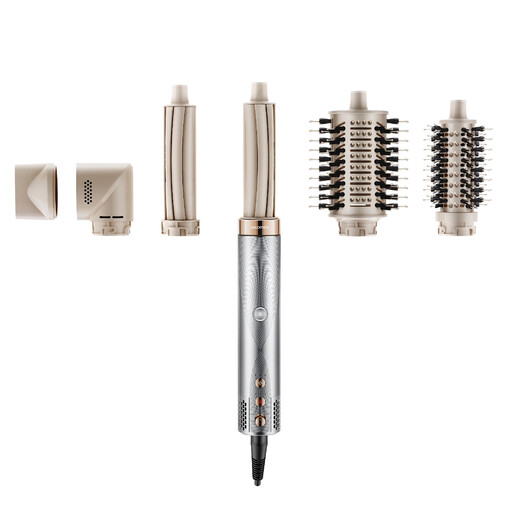
Why this choice suits this profile: Its versatile format is ideal as a first purchase for drying hair and creating curls with a single handle. The price shown is €54.90, with an instant €5 discount mentioned on the product page at the time of writing.
The product page specifies that the appliance should be used on towel-dried hair and details the heat and airflow settings, as well as filter cleaning. This information helps you avoid using it on too high a heat or neglecting maintenance.
Automatic airflow curling, ionic technology presented as anti-frizz and a lightweight design, according to the product description.
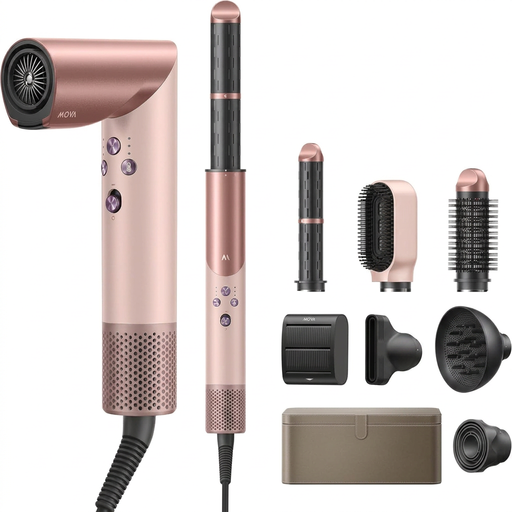
Why this choice suits this profile: This model is aimed at users looking for a complete appliance to switch between drying, straightening, adding volume and curling as part of a regular routine.
The product page details four heat levels, three speeds, a cool shot button and attachment recognition. These are concrete features that speak louder than a simple promise of versatility.
Motor rated at 110,000 rpm, 1,600 W power, Coanda function, mode memory and a storage case.
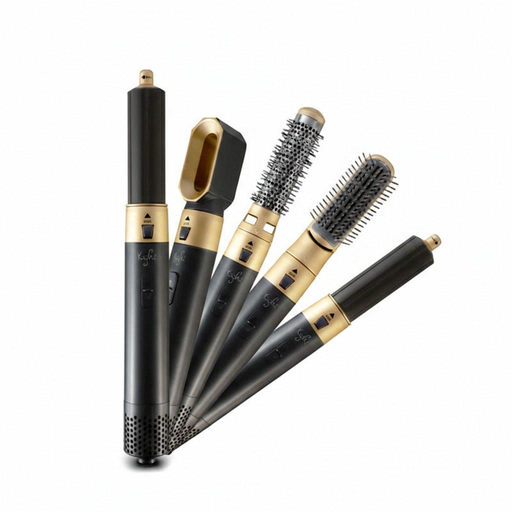
Why this choice suits this profile: With its five interchangeable heads, travel pouch and swivel cord, it's suitable for people who style their hair regularly or travel often.
The attachments are clearly differentiated: two curling barrels, a smoothing brush, a volumising brush and a concentrator nozzle. The settings offer three levels of airflow and temperature.
Rated power of 1,000 W, 1.8 m cable with 360° rotation, weight stated as 0.615 kg and a travel pouch.
We've put together a comprehensive, real-time updated list of products that fully meet these demanding selection criteria and European safety regulations.
It depends on the model. Some hot air appliances are designed to be used on towel-dried or slightly damp hair, whereas a standard heated brush should only be used on dry hair. Always check the instructions and never use an appliance that isn't intended for damp hair.
Start with the lowest setting, then increase it gradually if needed. Work on small sections, apply a heat protectant and limit the contact time. On damaged hair, a high temperature is rarely necessary to create volume or waves.
Its lifespan depends on how often you use it, how well you clean the filter and the condition of the cable and attachments. Remove dust regularly, let the appliance cool down before storing it and stop using it if you notice an unusual smell, overheating or visible damage.