
Livraison le jour même ou le lendemain

Qualité garantie

Débloquez vos offres de bienvenue: Livraison GRATUITE | Jusqu'à -80 % | 30 jours d'essai gratuits à JoyPlus
Téléchargez l'application
Are you looking for a 5.75 inch LED motorcycle headlight to give a café racer, bobber, cruiser or a bike with a standard round headlight housing a fresh new look? At first glance, the models all look very similar. Yet a few millimetres of depth, a different connector or a poorly designed beam pattern can turn a quick installation into an expensive DIY headache — and could even cause problems on the open road.
Before you place your order, make sure you check three things in particular: the actual compatibility of the diameter and depth, the quality of the beam pattern for both high and low beam, and the evidence of type approval applicable in the UK.
The mention ‘5.75 inches’ usually corresponds to the 5 3/4 inch replacement format. It doesn’t guarantee that the unit will fit easily into your headlight housing. The rear depth, the position of the mounting tabs, the connector and the space available behind the lens can vary significantly from one model to another.
A projector lens headlight, for example, can have a much longer rear casing than a standard round headlight. So measure not only the housing, but also the distance available between the back of the lens, the cables and the speedometer.
The stated lumen count is a theoretical value or a measurement provided by the manufacturer. This figure alone isn’t enough to judge the quality of the beam pattern. A poorly designed optic can create a dark spot, dazzle oncoming vehicles or produce an uneven range.
For a motorcycle headlight with high and low beam, look for a sharp cut-off in the dipped beam position and check the information about the optic used.
The DOT SAE marking mainly refers to the requirements of the North American market. It does not automatically replace European type approval, which is indicated by an ‘E’ mark on the product or in its documentation. In the UK, check the manufacturer’s instructions, the marking on the headlight and the rules that apply to your vehicle before using it on the open road.
Decorative features, such as the Angel Eyes halo, or white and amber daytime running lights, may also be subject to specific regulations. Their presence doesn’t mean that all lighting modes are permitted in every situation.
A round LED motorcycle headlight must match the diameter of the housing, but also its usable depth. Compare the following points:
The mention plug and play motorcycle headlight usually means the wiring is designed for direct installation. That doesn’t mean you can skip checking your bike’s wiring diagram. Disconnect the battery before any work, then test the dipped beam, high beam and sidelight separately.
A projector motorcycle headlight can offer a sharper cut-off in dipped beam thanks to its lens. However, this feature must be confirmed by the product’s design, not just assumed from its appearance.
According to the available technical specifications, some models offer:
The halo and daytime running light remain additional functions. Check their wiring, intended use and compliance with local regulations before connecting them to an indicator or daytime running light circuit.
If you ride all year round, choose an aluminium housing, a shatter-resistant lens and a clearly stated ingress protection rating. An IP68 waterproof motorcycle headlight offers a high level of protection against dust and water. That doesn’t mean it can be submerged or cleaned with a high-pressure jet held just a few centimetres away.
The specification sheet for the CO LIGHT model mentions a PMMA lens, an aluminium housing, UV protection and an IP68 rating. These details describe the construction stated by the manufacturer; they don’t guarantee an identical lifespan on every bike or in every condition.
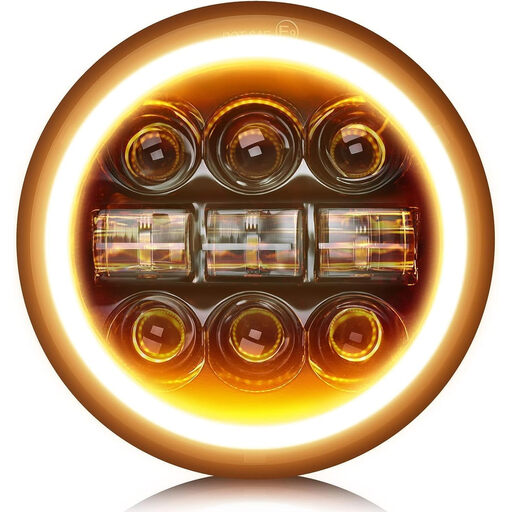
Why this choice suits this profile: Its round format and three-pin H4 connector could be suitable for a first upgrade, provided you check the bike’s headlight housing and wiring.
The specification states that an H4 to three-pin adaptor is supplied, which usually saves you from buying extra connectors. However, the depth should still be checked before ordering.
Stated IP68 rating, 15 LED chips of 3 W, white and amber halo, with high beam and low beam functions.
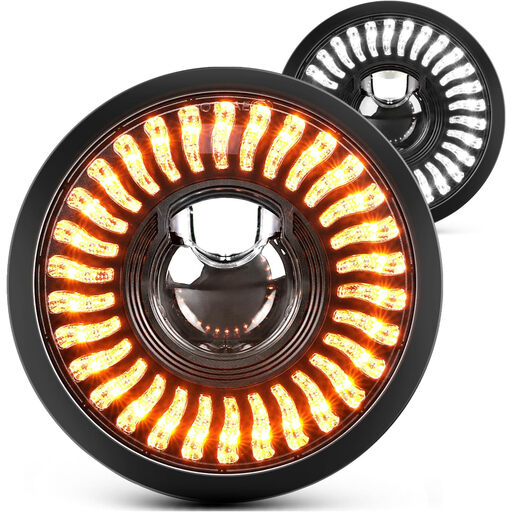
Why this choice suits this profile: Its projector lens and start-up halo are aimed at custom builds that want a more refined lighting signature.
The specification mentions a cut-off line for the dipped beam and notes a longer rear section. This detail helps you anticipate potential depth issues.
Projector optic, high/low beam, white and yellow daytime running light, with installation stated as requiring no additional decoder.
Why this choice suits this profile: Its aluminium housing, stated UV protection and IP68 rating may appeal to riders who regularly use their bike in changing weather conditions.
The stated materials and protection address concerns about moisture, dust and lens ageing. Nevertheless, inspect the seals after installation.
Stated IP68, PMMA lens, aluminium housing and stated operating life of up to 50,000 hours.
Even when a plug and play connection is stated, take the time to work methodically:
A beam that’s adjusted too high can dazzle other road users. If the installation requires modifying the original wiring or bracket, it’s best to seek advice from a motorcycle professional.
No. The diameter is only a starting point: the depth, fixings, electrical connector and the space available inside the headlight housing must also match. Projector models in particular can be longer at the rear.
It depends on thermal management, vibration, moisture and riding conditions. Some manufacturers state up to 50,000 hours, but this value remains a product specification indication. It doesn’t allow you to predict the actual lifespan on every bike.
Not necessarily in all its modes. Check the European marking, the manufacturer’s documentation and the rules that apply to position lights, daytime running lights and indicators. The DOT SAE marking alone is not enough to establish the headlight’s compliance with European regulations.