
Livraison le jour même ou le lendemain

Qualité garantie

Débloquez vos offres de bienvenue: Livraison GRATUITE | Jusqu'à -80 % | 30 jours d'essai gratuits à JoyPlus
Téléchargez l'application
A 4x4 drift remote-control car can help you learn the basics of driving, string together drifts or perform stunts on different surfaces. The problem is that product descriptions often list top speed, lighting effects and promises of durability without explaining the conditions in which these performances can actually be achieved.
Before buying an RC 4WD car, three pitfalls deserve your attention.
A radio-controlled drift car generally performs best on a smooth, clear surface: tiles, wooden flooring, vinyl flooring or an indoor track. Low-grip tyres make it easier to slide, while racing tyres improve stability and help maintain the intended line.
For outdoor driving, look instead for a genuine off-road RC car, with sufficient ground clearance, suitable wheels and a chassis capable of absorbing uneven surfaces. 1/24-scale drift models are primarily intended for flat surfaces, even when they feature 4WD transmission.
A remote control with proportional controls lets you adjust acceleration and steering progressively. The result is fewer sudden starts and manoeuvres that are easier to anticipate.
Two adjustable speeds are also very practical for a remote-control car for children. Slow mode makes it easier to get started, while fast mode can take over once the controls have been mastered. An adjustable gyroscope can correct some deviations during a drift, but it cannot replace a safe driving area or gradual learning.
A rechargeable RC car means you do not have to replace the vehicle’s batteries regularly. However, take the time to check:
Models equipped with LEDs add an appealing visual effect when the light begins to fade, but the lighting also uses energy. After each session, remove any debris caught in the wheels, wipe the chassis and allow the car to dry before putting it away.
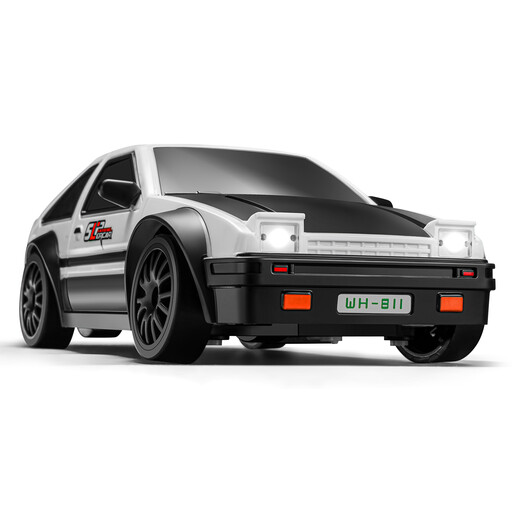
Why this choice suits this profile : Its 1/24 scale is well suited to indoor sessions, while its two speed settings allow you to progress at your own pace.
The adjustable gyroscope and slow mode help limit loss of control during your first drifts.
Interchangeable tyres, LED lighting and a lithium battery with protection against overcharging and excessive discharge, according to the product description.
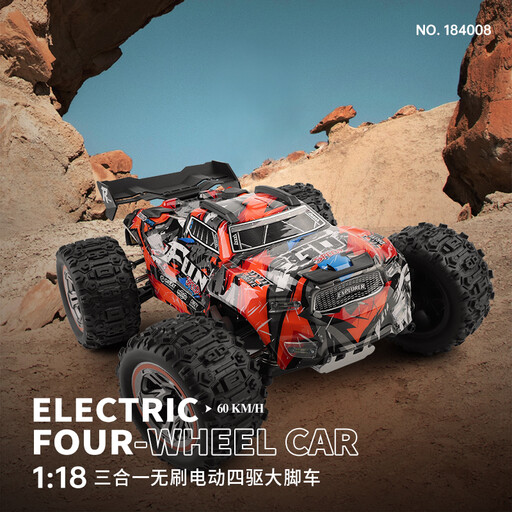
Why this choice suits this profile : It is designed for users looking for several driving styles, from racing to tackling obstacles outdoors.
It is not limited to indoor drifting: the three advertised configurations are also intended for racing, obstacle tackling and jumps.
Brushless motor, metal chassis, oil-filled shock absorbers and 4WD transmission: a combination built for more demanding use.
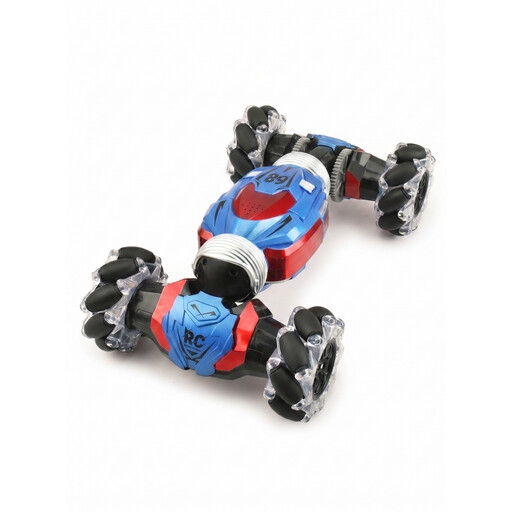
Why this choice suits this profile : Gesture control, sideways movement and driving on both sides will appeal to fans of varied stunts.
The two control modes mean you are not reliant on a single interface, while the body can continue driving after a rollover.
Mecanum-style wheels, transformable structure, LED lighting and a 2.4 GHz frequency for driving several vehicles, under the advertised conditions.
We have compiled a complete, real-time updated list of products that fully meet these strict selection criteria and European safety regulations.
For a gift intended for a child, check the recommended age on the packaging and in the instructions. Several of the models featured are advertised as suitable from 8 years, while others contain small parts or carry specific warnings. The presence of the CE marking, instructions in French and the contact details of the manufacturer or the responsible person in the European Union are also among the points to check before buying.
At home, move fragile furniture out of the way and set aside a sufficiently large area for performing spins. Outdoors, choose a flat surface away from traffic and damp areas, unless the manufacturer clearly states that the model is designed to withstand water. An RC stunt car is not automatically amphibious.
Yes, provided you choose a model with slow speed, progressive controls and a stable chassis. Start by learning to move forwards, reverse and turn before fitting the drift tyres or activating the gyroscope.
The time varies depending on the battery capacity and the cable supplied. Follow the instructions in the manual, use the specified cable and never leave a lithium battery charging unattended. For some drift models, the advertised run time is around 20 to 40 minutes per charge, depending on the driving conditions.
Compact models equipped with drift tyres are mainly designed for smooth surfaces. To drive on grass or gravel, or to tackle small obstacles, it is better to choose an off-road RC car with wider wheels, greater ground clearance and a reinforced chassis.