
Livraison le jour même ou le lendemain

Qualité garantie

Débloquez vos offres de bienvenue: Livraison GRATUITE | Jusqu'à -80 % | 30 jours d'essai gratuits à JoyPlus
Téléchargez l'application
A 4WD drift remote-controlled car can sometimes turn an ordinary afternoon into a genuine session of racing, drifting and acrobatic stunts. But a product listing does not always tell you everything about the real-life experience. All-wheel drive, LED lighting and a rechargeable battery are only useful if they suit the play surface, the child’s age and their driving ability.
Before buying an RC drift car, it is therefore worth reviewing a few criteria that are often overlooked.
A remote-controlled racing car advertised as particularly fast can quickly become difficult to control in a living room or bedroom. Overly sudden acceleration makes cornering harder and increases the risk of collisions with furniture.
For a beginner, choose adjustable speed, progressive controls or a slow mode. Models with an adjustable gyroscope can also help maintain a more stable trajectory while drifting.
The term “all-terrain” does not mean that a vehicle performs well on every surface. Deep sand, gravel, long grass and puddles can put considerable strain on the motor and gears.
A remote-controlled car for children designed for indoor use will generally perform better on tiles, wooden flooring or a flat surface. For outdoor use, check the manufacturer’s recommendations and avoid water unless specific protection is clearly stated.
Even a rechargeable RC car may require batteries for its remote control. The vehicle’s battery is not always removable, while the supplied USB cable may not come with a mains adaptor.
Before placing your order, check in particular:
Four-wheel drive distributes power across both axles. It can make starting, rotating and drifting on smooth surfaces easier. However, 4WD alone does not guarantee a smooth drift: the surface and tyres are just as important.
Drift tyres, which offer less grip, are suited to drifting on tiles or wooden flooring. Racing tyres generally provide more traction for accelerating and taking corners. Models supplied with two interchangeable sets of tyres allow you to switch between driving styles without changing cars.
A 2.4 GHz remote control is well suited to group play, as it reduces the risk of interference between controllers, subject to the model’s exact specifications. However, the stated range should be treated as an indication that applies in an unobstructed environment.
In a flat, several dozen metres is more than enough. Progressive controls, steering responsiveness and the ability to reduce the speed are more important when learning to drive.
Running time varies depending on speed, the stunts performed, the vehicle’s weight and the surface being used. Some models in this selection claim approximately 20 to 40 minutes of use per charge, but this remains an estimate.
A removable battery makes charging easier and may allow you to use a compatible spare battery. To avoid problems, use only the cable intended for this purpose, never charge a damaged battery and allow the vehicle to cool down after an intensive session.
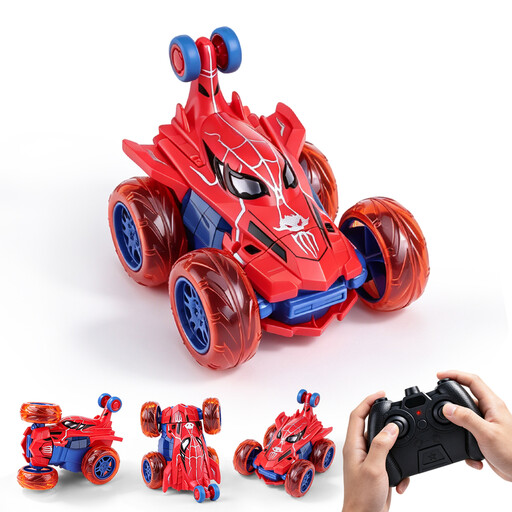
Why this choice suits this profile : Its rechargeable design and 2.4 GHz controller make it an appealing first remote-controlled car for children aged 4 to 12. It can drive on roads, grass or sand, depending on the conditions.
The 3.7 V battery and USB cable are included. However, the remote control requires two AA batteries, which are not included.
360° stunts, multi-coloured illuminated wheels, automatic demonstration mode and driving on several surfaces.
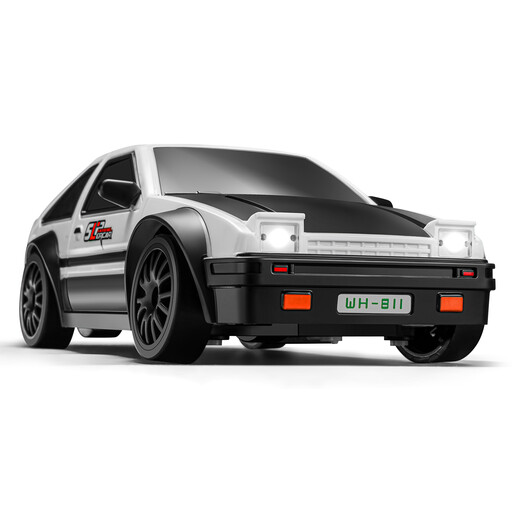
Why this choice suits this profile : Its compact size is ideal for improvised indoor circuits and offers several settings for users who are serious about improving their skills.
The two speed settings and adjustable gyroscope help prevent loss of control at the start. You do not need to rely solely on speed to have fun.
4WD, drift and racing tyres, ABS bodywork, and front and rear LEDs controlled remotely.
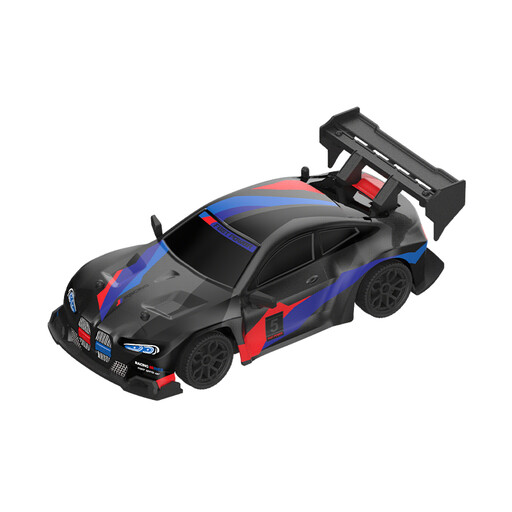
Why this choice suits this profile : With a stated range of 50 m and two tyre configurations, this model is suitable for racing and drifting sessions on flat surfaces, both indoors and outdoors.
Interchangeable tyres mean you do not have to choose between speed and drifting. The removable battery makes charging and replacement easier.
2.4 GHz controller, 4WD, stated running time of 20 to 40 minutes and LED lighting on the bodywork.
We have brought together a complete, real-time updated selection of products that meet these demanding criteria, while also taking European safety regulations into account.
To minimise wear and impacts, set up a course using soft or lightweight objects. A clear floor makes it easier to feel the steering and check the turning circle. Start with the racing tyres, then switch to the drift tyres once the child has mastered acceleration.
After each session, remove any hair, dust and small bits of gravel that have become lodged around the wheels. Also avoid storing the car for a long period with a completely flat battery. Models containing small parts are not suitable for children under 3 years old. Adult supervision is recommended, particularly while charging and during high-speed stunts.
Yes, provided you choose a model with a slow speed setting, progressive controls or an adjustable gyroscope. The first sessions should take place on a flat surface, with plenty of clear space around the vehicle. Always check the recommended age and the manufacturer’s warnings.
Tiles, smooth wooden flooring and indoor tracks are generally suitable for drift tyres. Racing tyres are preferable when better grip is needed. Outdoors, choose a flat, dry road and avoid puddles and deep gravel.
Charging the battery uses very little electricity. Ongoing expenses mainly involve batteries for the remote control, tyres and the possible purchase of a spare battery. Before ordering, check whether the batteries are included and whether compatible accessories are easy to find.