
Livraison le jour même ou le lendemain

Qualité garantie

Débloquez vos offres de bienvenue: Livraison GRATUITE | Jusqu'à -80 % | 30 jours d'essai gratuits à JoyPlus
Téléchargez l'application
A 4-season duvet means you do not have to change your bedding between summer nights and colder periods. However, not all duvets described as “all-season” work in the same way. Some combine two removable layers, while others rely on a single filling presented as versatile.
Before placing your order, three common pitfalls are worth bearing in mind:
Here are the criteria to consider when choosing a suitable summer-winter duvet for your bedroom, habits and budget.
A genuine 4-season duvet generally consists of two layers with different fillings weights. The lighter one is used in summer, the medium-weight layer in spring or autumn, and both are joined together for colder nights. This system lets you adjust the warmth without buying or storing several duvets.
Models with a single filling can also be suitable all year round. However, their comfort depends more heavily on the room temperature and how sensitive you are to the cold. In a home where the temperature varies significantly, a versatile design offers greater flexibility.
A synthetic duvet made from polyester or hollow fibres is often easy to care for. Nevertheless, check its filling weight, expressed in g/m², as well as the maximum washing temperature. Silicone-coated hollow fibres are described as helping air circulate, but the warmth you feel also depends on the cover and the quilting style.
A duck down and feather duvet offers a distinctive feel and loft. Read the proportion of down and feathers carefully: it directly affects the weight, volume and warmth level. Claims such as “hypoallergenic” or “anti-dust-mite” should be supported by certification or precise information from the manufacturer, rather than being taken as medical promises.
For people with sensitivities, a tightly woven cotton cover and a machine-washable duvet can make everyday care easier. It is still essential to follow the washing and drying instructions.
Measure your mattress and consider how much overhang you would like on the sides. The most common dimensions are as follows:
For couples, sufficient overhang helps prevent the duvet from being pulled away during the night. On a single bed, however, an oversized duvet may be more difficult to wash and store.
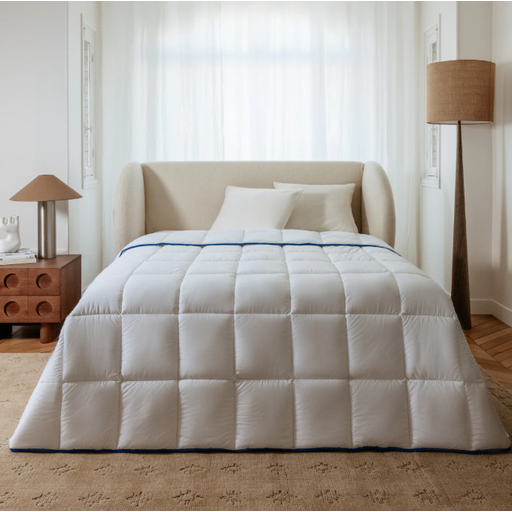
Why this choice suits this profile : This lightweight duvet is ideal for anyone looking for a simple solution for warm nights, in a 200x200 cm size suitable for a double bed.
The product details specify a filling of 250 g/m² silicone-coated hollow polyester fibres and washing at 40 °C. This information makes it easier to assess the stated lightness.
Percale cotton cover, 200x200 cm size and machine washing in accordance with the product instructions.
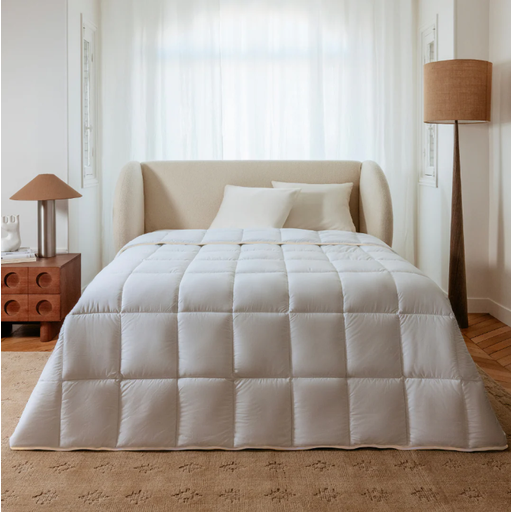
Why this choice suits this profile : Its natural filling and generous size are ideal for couples who prioritise loft and a cotton cover.
The stated composition distinguishes between 90 % duck feathers and 10 % down. This detail prevents you from confusing a natural filling with a duvet made predominantly from down.
Square quilting, organic cotton sateen cover and washing at up to 40 °C.
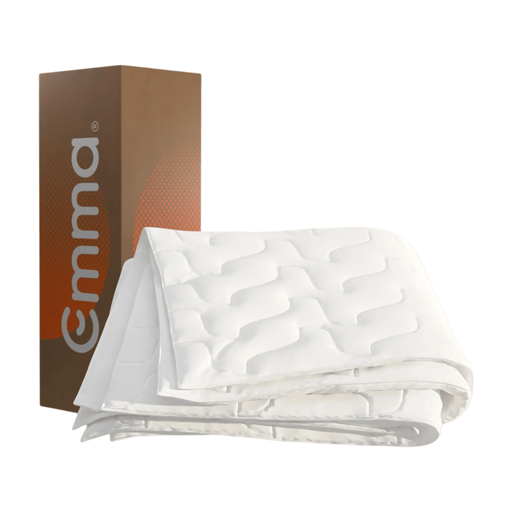
Why this choice suits this profile : Anyone who wants to adjust the warmth without storing several duvets can use its two removable layers according to the season.
The 3-in-1 design is clearly described, with two removable thicknesses. You can therefore check how the adjustable system works before buying.
240x220 cm size, two stated covers and machine washing in accordance with the manufacturer’s instructions.
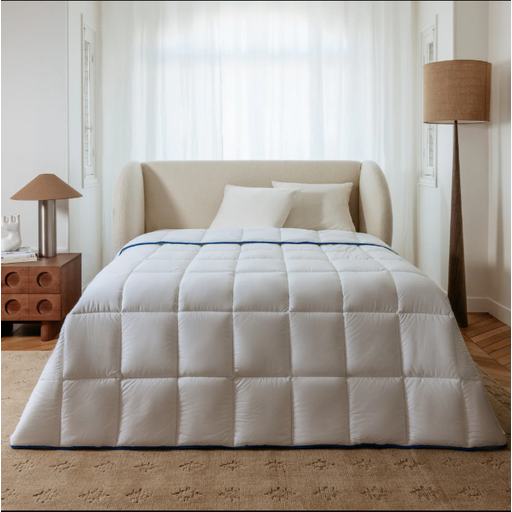
Why this choice suits this profile : This size is suitable for couples with 220x240 cm bedding who are looking for a thicker layer for cold nights.
The stated filling weight of 400 g/m² and thickness of 5 cm provide more concrete guidance than simply describing it as “warm”.
Silicone-coated hollow polyester fibres, percale cotton cover and washing at 40 °C.
We have put together a complete, real-time updated list of products that fully meet these strict selection criteria and European safety regulations.
A machine-washable duvet should be washed in a machine that is large enough to allow the filling to move freely. Very bulky models may sometimes require a drum with a capacity of at least 12 kg. Follow the stated temperature, avoid bleach when it is not recommended and dry the duvet completely to limit residual moisture.
Air it regularly, shake it gently and use a suitable cover. Its lifespan depends on the type of filling, how often it is washed, humidity and wear to the quilting. Replace it when the filling becomes compacted in places, the cover becomes damaged or it no longer provides the comfort you need.
Yes, provided you can remove one layer or use only the lightweight part. In a bedroom kept at a high temperature, a thick winter duvet can quickly become too warm. Check the temperature recommendations and filling weight where available.
The 200x200 cm, 240x220 cm and 220x240 cm sizes are common. Your choice depends on the bed’s width, the overhang you want and the orientation specified by the manufacturer. Also remember to measure the mattress height, particularly if it is thick.
Synthetic duvets generally stand out for their simpler care and easy-to-identify composition. Down and feathers offer a different feel, but require particular care when drying and close attention to the composition. Always compare the filling weight, cover, stated certifications and care instructions, rather than relying solely on advertising language.