
Livraison le jour même ou le lendemain

Qualité garantie

Débloquez vos offres de bienvenue: Livraison GRATUITE | Jusqu'à -80 % | 30 jours d'essai gratuits à JoyPlus
Téléchargez l'application
Cycling, motorcycling, hiking, skiing, diving or travel vlogging: a waterproof 4K action camera needs to handle movement, changing light and splashes without turning every shoot into a struggle. Yet some product listings focus mainly on maximum resolution, while glossing over important limitations.
Before you place an order, keep these three pitfalls in mind:
A 4K camera typically records at 3,840 × 2,160 pixels. This resolution captures considerably more detail than Full HD, but also creates much larger files. A sufficiently fast microSD card is therefore essential. If recommended by the manufacturer, U3 or V30 cards are suitable for high bit rates.
The frame rate directly affects how smooth your footage looks:
Electronic Image Stabilisation, or EIS, reduces vibrations caused by handlebars, a helmet or a brisk walk. It won’t eliminate every shake and may slightly narrow the field of view, but it’s still essential for an action camera.
Always check the claim that a camera is waterproof carefully. A model may withstand a few metres underwater without protection, but be rated to go much deeper when fitted inside its waterproof housing.
Before heading out on the water, check:
After using the camera at sea or in a swimming pool, rinse the camera or housing with fresh water, then dry it thoroughly before opening any compartments.
A wide-angle camera with a field of view between 135° and 170° captures a broad view of the scene, making it especially suitable for cycling, motorcycling and landscapes. The trade-off is that a very wide angle can cause distortion around the edges. Fisheye correction is particularly useful for urban footage or videos intended for social media.
A rear touchscreen makes it easier to frame shots and access settings. A front-facing screen is handy for setting up a selfie or vlog. Wi-Fi connectivity usually lets you control the camera from a smartphone and transfer files, but you should still back them up to a computer.
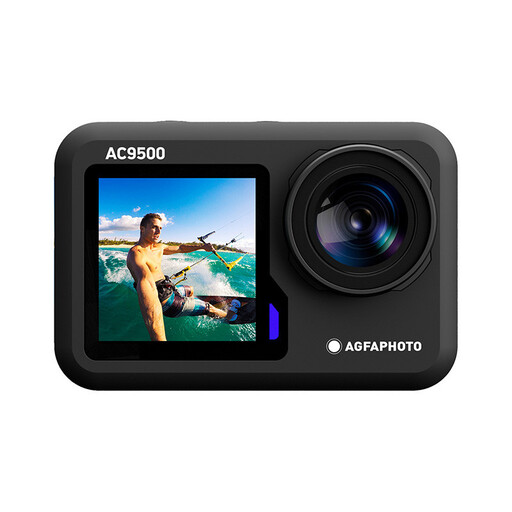
Why it suits this type of user: It’s easy to use for filming bike rides, holidays or water-based activities, without having to buy a host of extra accessories.
The product listing mentions EIS, two batteries and a charging station that charges both at once. That can help cut down on forced breaks during a day out.
4K video at 30 fps, 170° field of view, dual screens and waterproofing rated to 18 m under the conditions specified by the manufacturer.
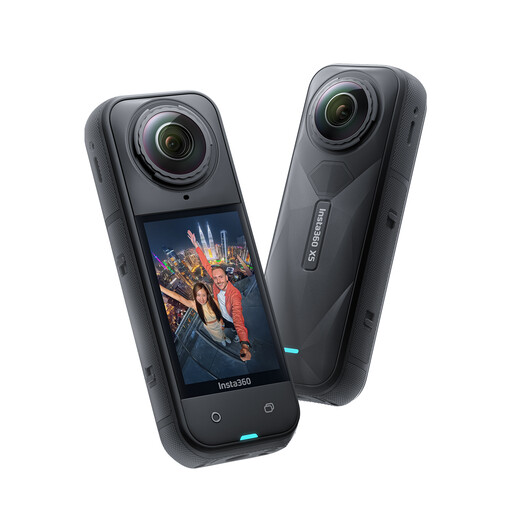
Why it suits this type of user: This 360° camera is designed for creators who want to choose their angle after filming and give their videos an immersive perspective.
360° capture reduces the risk of anything falling outside the frame. Stabilisation and horizon lock also help keep unwanted movement out of your footage.
8K video at 30 fps, waterproof to a stated depth of 15 m without a housing, replaceable lenses and claimed battery life of up to 208 minutes.
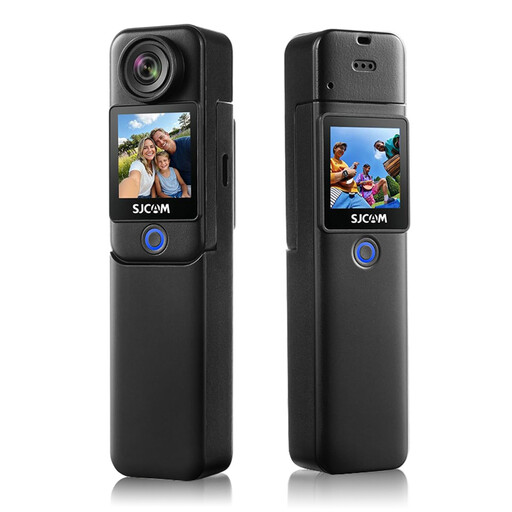
Why it suits this type of user: Its claimed battery life with the grip and auxiliary battery could make it a good fit for long days on a motorbike, on the slopes, fishing or travelling.
Six-axis gyroscopic stabilisation and a housing rated to a stated depth of 30 m are suited to movement and water-based activities, provided you check the seal carefully.
4K video at 30 fps, slow motion up to 120 fps in Full HD, 2.4/5 GHz Wi-Fi, touchscreen and claimed battery life of up to 460 minutes with accessories.
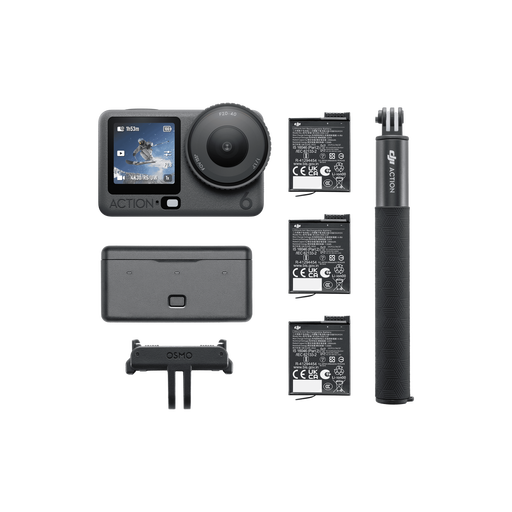
Why it suits this type of user: The screen, voice controls and stated compatibility with two DJI transmitters make it suitable for vlogging and interviews on the go.
The stated variable aperture, from f/2.0 to f/4.0, lets you adjust your recording to suit the lighting. Built-in storage also means you’re less reliant on a memory card while filming.
1/1.1-inch square sensor, 4K video, 50 GB of built-in storage, claimed battery life of up to 4 hours and waterproofing to a stated depth of 20 m without a housing.
We’ve put together a comprehensive, regularly updated selection of products that meet these demanding criteria, while taking European safety regulations into account.
It depends on the model. Some cameras can withstand water without a housing, while others need one to reach their maximum depth rating. Check this distinction carefully in the specifications before diving or heading out to sea.
Choose a microSD card with a capacity and speed class that match the manufacturer’s recommendations. For 4K recording, a fast U3 or V30 card is usually suitable. Remember to format it in the camera before first use, and make sure it has enough capacity for particularly large files.
Avoid leaving the camera in high temperatures for extended periods, use a compatible charging cable and let it cool down before plugging it in after a long recording session. If you use it on a bike or motorbike, check the mounts regularly. After using it underwater, rinse any exposed parts with fresh water and dry them thoroughly before putting everything away.