
Livraison le jour même ou le lendemain

Qualité garantie

Débloquez vos offres de bienvenue: Livraison GRATUITE | Jusqu'à -80 % | 30 jours d'essai gratuits à JoyPlus
Téléchargez l'application
Upgrading to a 4K TV promises a transformed viewing experience in your living room. The problem? The market is a jungle of technical terms and marketing promises that can make the choice daunting. Our mission: to help you see things more clearly and identify the criteria that truly matter. The goal: a purchase you won't regret.
Before you dive in, let's review a few classic traps that can ruin the experience:
To avoid falling into the trap, concentrate on the features that make a real difference in the quality and lifespan of your future television.
The choice of panel technology is arguably the most decisive.
If you have a latest-generation console (PlayStation 5, Xbox Series X) or want a future-proof television, the presence of at least one HDMI 2.1 port is crucial. This standard enables:
For a gaming TV, these features are real game-changers.
The screen size should be chosen based on your viewing distance. For a 55-inch 4K TV (140 cm), a very popular size, the ideal viewing distance is between 1.5 and 2.5 metres (5 to 8 feet). This is the secret to optimal immersion without being able to distinguish individual pixels. A screen that's too large in a small space can cause eye strain, while one that's too small will rob you of the fine details of 4K.
Rather than an endless list, here are a few models that tick all the right boxes for specific user profiles.
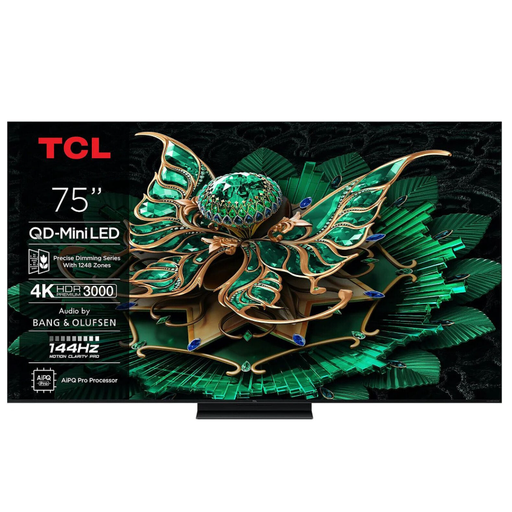
Why we recommend it: Perfect for recreating a true cinema experience at home. Its giant 75-inch panel, QD-Mini LED technology, and Dolby Vision IQ compatibility deliver an image with deep contrasts and explosive colours. The icing on the cake is the Bang & Olufsen sound system, ensuring first-class audio immersion.
This model goes far beyond simple 4K. It relies on advanced panel technology (QD-Mini LED) and a native 144 Hz refresh rate, guaranteeing image quality and fluidity that are light-years ahead of standard models.
Top-tier image quality with intense peak brightness and deep blacks. Its integrated sound system (Dolby Atmos) is so powerful it might save you from buying a separate soundbar.
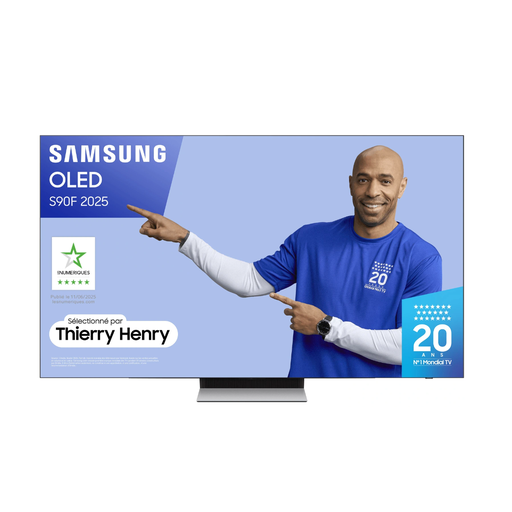
Why we recommend it: Tailor-made for demanding gamers, this TV combines the infinite blacks of OLED with cutting-edge performance: a native 144 Hz refresh rate and four HDMI 2.1 ports. It's the ultimate choice for unlocking the full potential of modern consoles.
It delivers a true next-gen gaming experience thanks to its full HDMI 2.1 connectivity and high native refresh rate. It's nothing like models that just offer a gimmicky "game mode" without the hardware to back it up.
Absolute fluidity with Motion Xcelerator 144Hz and FreeSync Premium Pro compatibility. The OLED technology ensures a near-instantaneous response time and spectacular contrasts.

Why we recommend it: For families who want a very large screen for streaming and daily use without breaking the bank. This 70-inch model combines a quality QLED picture with the Google TV ecosystem, which is ultra-simple and rich in apps. All at an unbeatable size-to-price ratio.
It comes with Google TV, a fluid, comprehensive, and, most importantly, well-supported interface. This avoids the trap of obscure, slow, proprietary operating systems that lose compatibility with your favourite apps after a year.
A giant 70-inch screen for total immersion. The QLED technology ensures colours that pop, even in a brightly lit living room.
We have selected a full range of televisions that meet our selection criteria and current standards.
It all depends on the panel technology. LED and QLED TVs are built to last, with an estimated lifespan of 60,000 to 100,000 hours, which is well over 10 years of typical use. Due to their organic nature, OLED models used to have a slightly shorter lifespan, but recent generations have made huge progress and now last for many years without issue. Their brightness may simply decrease very slightly over time.
Absolutely, it's actually its main strength. QLED technology can achieve much higher peak brightness levels than OLED. In practical terms, in a sun-drenched living room or under powerful lighting, a QLED TV will maintain vibrant colours and excellent contrast, whereas a less bright panel would look washed out and be prone to reflections.
If you mainly watch movies, series, and broadcast television, HDMI 2.1 is not essential. HDMI 2.0 ports are more than sufficient for streaming 4K content at 60 Hz. However, having at least one HDMI 2.1 port is a good investment for the future, in case you change your mind or upgrade your equipment later on.