
Livraison le jour même ou le lendemain

Qualité garantie

Débloquez vos offres de bienvenue: Livraison GRATUITE | Jusqu'à -80 % | 30 jours d'essai gratuits à JoyPlus
Téléchargez l'application
Navigating the jungle of 4K TVs can be a daunting task. Between obscure acronyms, misleading motion rates, and a dizzying array of display technologies, it's easy to feel overwhelmed... or end up with buyer's remorse. Our mission as experts is to give you the keys to decode the jargon on spec sheets. The goal?: to invest in a TV that truly meets your needs, without overspending on useless features.
Before jumping on the first TV deal you see, let's review the 3 most common traps that could ruin your experience... and more importantly, how to avoid them.
It's a classic trap?: models that boast impressive-sounding motion rates ("?Motion Rate 240?" or "?Picture Quality Index 2000?"), suggesting a 120Hz panel. The reality is often less glorious?: the native panel on these TVs caps out at 60Hz. This "artificial" smoothness is generated by software processing (the infamous MEMC) which not only can create an unpleasant "soap opera effect" in movies, but more importantly, doesn't offer the responsiveness of a true 120Hz TV for TV gaming. For new-generation console owners, a native 120Hz panel is simply non-negotiable to enjoy ultra-smooth, tear-free gaming.
Today, all televisions are Smart TVs. But be warned, not all operating systems (OS) are created equal. Some obscure, proprietary OSes can be slow, miss key apps (like your favourite streaming service), and, even worse, be abandoned by the manufacturer after just two or three years. The result?: you're left with a "smart" TV that has become completely obsolete, forcing you to invest in an external streaming device. Opting for established systems like Google TV or Tizen (on Samsung TVs) is a guarantee of longevity, compatibility, and responsiveness.
QLED TV technology promises richer, more vibrant colours. But be careful, its effectiveness depends entirely on the quality of the backlight system behind the panel. A QLED model with a simple Edge LED backlight (where the LEDs are placed along the edges of the screen) will only offer a marginal improvement in contrast. For the QLED magic to truly work, it must be paired with a more advanced backlight?: Direct LED (or Full-Array LED) or, the current holy grail, Mini LED. The latter offers much finer light control, delivering deep blacks and striking contrast.
To avoid making a mistake, focus on these three technical pillars. They alone determine 80% of the picture quality and your daily user experience.
Panel and Backlight Technology?: This is the core engine of your 4K TV.
Native Refresh Rate?: Forget the marketing indexes. The only value that matters is the "native refresh rate."
Operating System (OS)?: The brains of your TV.
Here is a selection of models that tick the right boxes, designed for specific uses.
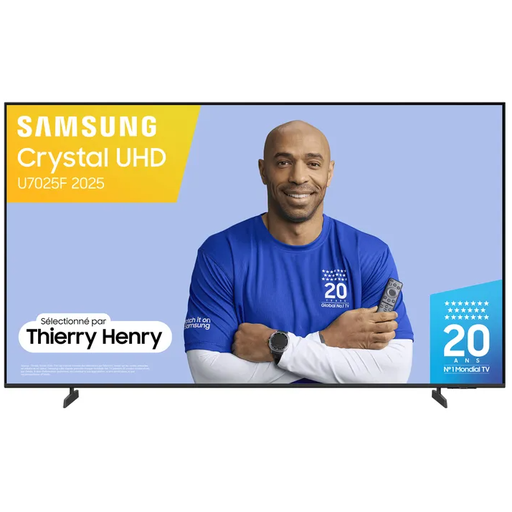
This model is an excellent entry point for enjoying a beautiful 4K picture on a comfortable 55-inch TV screen, without breaking the bank. Perfect for family movie and series nights, with the reliability and support of a major brand.
It runs on the excellent Samsung Tizen OS, known for its smoothness and long-term software support. This helps you avoid the trap of a sluggish Smart TV that becomes obsolete after two years.
Its Crystal 4K processor optimises colours and upscales non-4K content. The Tizen ecosystem ensures access to all the current streaming platforms.
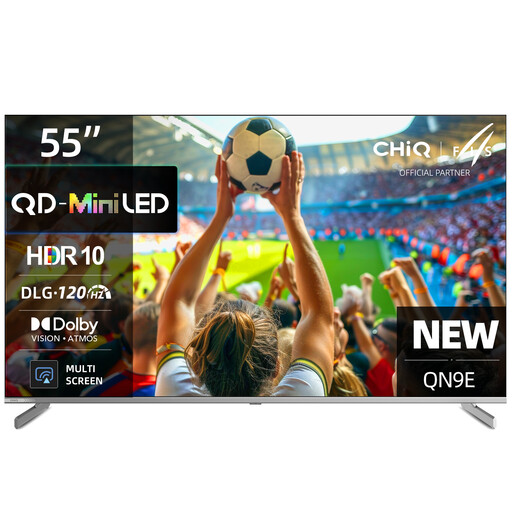
This model combines cutting-edge display technologies (Mini LED and QLED) with features dedicated to TV gaming. It's aimed at those seeking a stunning picture and great responsiveness at a more accessible price point than top-tier models.
It sidesteps the entry-level QLED trap by pairing it with a high-performance Mini LED backlight, ensuring high contrast and deep blacks. Its DLG 120Hz technology is a clever software trick to simulate high-fluidity gaming, a smart alternative to a more expensive native 120Hz panel.
The Mini LED + QLED duo delivers stunning picture quality at this price point. The inclusion of Google TV (running on Android 14) ensures a rich and future-proof connected experience.
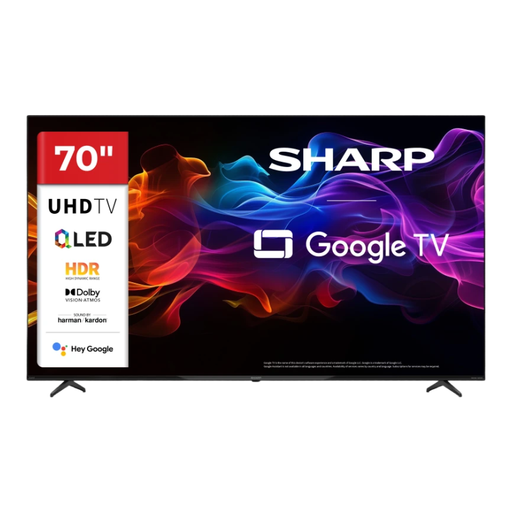
For those who dream of turning their living room into a cinema, this giant 70-inch (177 cm) screen promises spectacular immersion. The perfect model for large spaces and XXL movie nights with family or friends.
It doesn't fall into the "big but mediocre" trap. The QLED technology, support for Dolby Vision, and a Harman Kardon sound system compatible with Dolby Atmos guarantee a complete and high-quality audiovisual experience worthy of its large screen size.
Its XXL 70-inch screen provides total immersion. Its connectivity is up to date with 4 HDMI 2.1 ports, and the Google TV OS ensures great versatility.
Discover our full selection of televisions that meet our quality standards and the demands of the market.
A panel's lifespan is typically between 60,000 and 100,000 hours of operation. In practical terms, for 5 to 7 hours of use per day, that's well over 10 years. In reality, the limiting factor isn't so much hardware failure as it is software obsolescence (the Smart TV part). This is why it's crucial to choose a future-proof OS like Google TV or Tizen.
For a casual gamer, a 60Hz panel is perfectly fine. However, if you're a hardcore gamer on a PS5 or Xbox Series X, especially with competitive titles (FPS, racing games), a TV with a native 120Hz panel and HDMI 2.1 ports is a game-changer. The boost in smoothness and responsiveness is immediate and makes the gaming experience incomparable.
It all depends on your budget and your expectations.