
Livraison le jour même ou le lendemain

Qualité garantie

Débloquez vos offres de bienvenue: Livraison GRATUITE | Jusqu'à -80 % | 30 jours d'essai gratuits à JoyPlus
Téléchargez l'application
Choosing a new television can be a daunting task. Between spec sheets riddled with acronyms and lofty marketing promises, it's hard to know what to believe. The result is often disappointment with a device that fails to deliver on its promises. As a product expert at Joybuy, I'm here to share my secrets for decoding the jargon and helping you make an informed choice that's truly tailored to your needs.
To start, let's review the three most common traps that lead to a regrettable purchase.
To avoid falling for these tricks, focus on the technical specifications that really make a difference.
This is the starting point: the choice of panel technology is crucial.
For perfect fluidity, whether for sports or video games, the panel's native refresh rate is the key criterion.
The user experience of a Smart TV relies entirely on its operating system. Platforms like Google TV, Tizen (Samsung), or webOS (LG) are safe bets. They guarantee a large app catalogue, responsive navigation, and regular updates, ensuring security and access to the latest streaming services.
Rather than aiming for the "perfect" TV that doesn't exist, it's better to find the one that's perfect for you. Here are our recommendations for 2026.
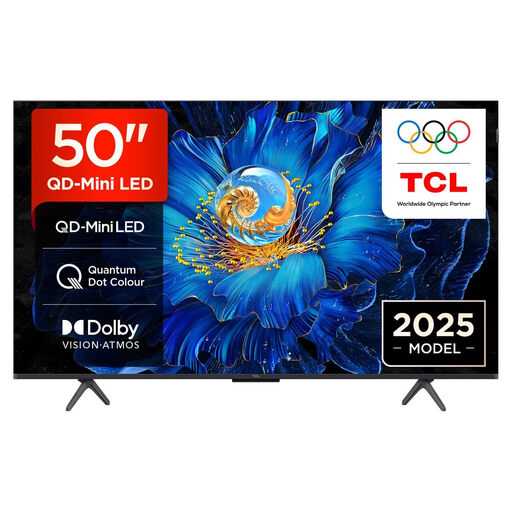
Why it's the right choice: Built for performance with its native 144 Hz panel and Game Master features, it checks all the boxes for demanding gamers on next-gen consoles or PC who seek maximum fluidity and responsiveness.
No tricks here: you get a true native 144 Hz refresh rate, accessible via HDMI 2.1 ports. The fluidity is maximal, without any software gimmicks.
The QD-Mini LED technology ensures high peak brightness and precise contrasts. A decisive advantage for spotting enemies in dark areas.
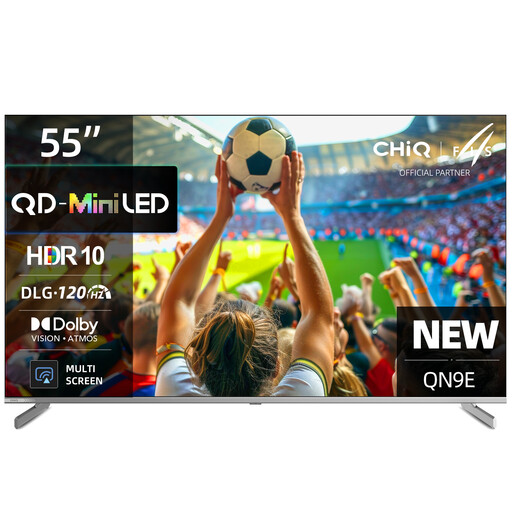
Why it's the right choice: Perfect for recreating a home cinema experience, this 55-inch television combines cutting-edge display technology with compatibility for the most immersive audiovisual formats.
Its Mini-LED technology allows it to reach high peak brightness levels. The result: Dolby Vision content is displayed to its full potential, avoiding the "watered-down HDR" effect of less capable screens.
The combination of Dolby Vision picture and Dolby Atmos sound creates an immersive audiovisual bubble, right in your living room.
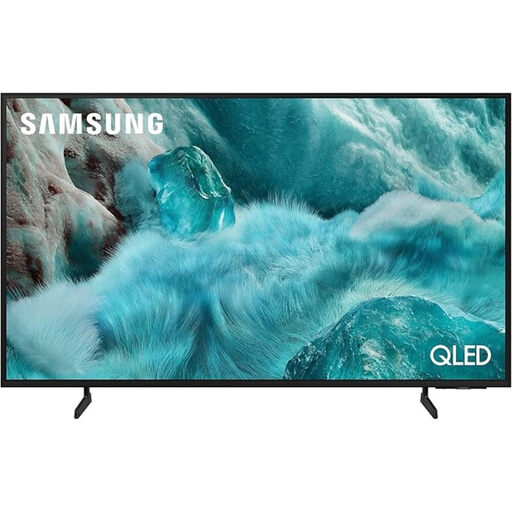
Why it's the right choice: This is the ultimate all-rounder. Ideal for daily use (streaming, broadcast TV, news), it offers image quality far superior to a standard LED TV, all in a versatile form factor.
Its Tizen operating system, known for its fluidity and excellent support, shields you from the frustrations of a slow and poorly designed Smart TV interface.
The QLED technology ensures excellent colour volume, for vibrant images even in a brightly lit living room.
We have curated a full range of products that meet our demanding selection criteria and all relevant safety standards.
Fortunately, the lifespan of a modern television is quite long. QLED panels (and LED in general) have a proven longevity, often estimated at over 60,000 hours. OLED panels, due to their organic nature, initially had a more limited lifespan. Rest assured, recent technologies have significantly improved their endurance. The notorious risk of "screen burn" (or burn-in) is now virtually non-existent with normal use.
A 4K TV's power consumption depends on its technology, size, and, of course, your brightness settings. To put it simply, an OLED model generally consumes less power than a QLED on dark scenes, but the opposite is true for very bright images. To help you navigate this, the European energy label, mandatory on all models, remains your best tool for comparing their power consumption. Good news: recent models are increasingly energy-efficient.
The short answer is no. For standard use (movies, series, TV shows), a native 60 Hz panel is more than sufficient. As a reminder, films are shot at 24 frames per second, and TV broadcasts are aired at 50 or 60 Hz. A 120 Hz panel only provides a visible fluidity boost for video gaming and, to a lesser extent, for certain sports events broadcast at a high frame rate.