
Livraison le jour même ou le lendemain

Qualité garantie

Débloquez vos offres de bienvenue: Livraison GRATUITE | Jusqu'à -80 % | 30 jours d'essai gratuits à JoyPlus
Téléchargez l'application
Buying a new Smart TV 4K can quickly become overwhelming. Between the technical acronyms, promises of incredible picture quality, and "smart" features, it's easy to get lost. The risk? Paying for overpriced technology or ending up with a TV whose performance visibly degrades over time.
As a Product Recommendation Manager at Joybuy, I'm here to help you make sense of it all. This guide breaks down the essential criteria for making an informed choice, helping you sidestep the market's most common pitfalls.
Before you even start comparing models, let's review the most misleading marketing claims.
To ensure you don't regret your purchase, focus on these three technical pillars. They determine 90% of your daily satisfaction.
Picture quality primarily depends on how the screen is backlit.
If you're a console gamer (PlayStation 5, Xbox Series X) or want your TV to remain relevant for years to come, the presence of at least one HDMI 2.1 port is non-negotiable.
This standard unlocks essential features for TV gaming:
The ultra-slim design of modern TVs has a downside: it leaves little room for powerful speakers. For a cinematic experience, compatibility with the Dolby Atmos format is a real bonus. This audio format creates a dome of sound that immerses you in the heart of the action. To fully enjoy it, pairing it with a compatible soundbar or home cinema system is almost essential, often via an HDMI eARC connection.
Let's get practical with a few models that tick all the right boxes for different user profiles.
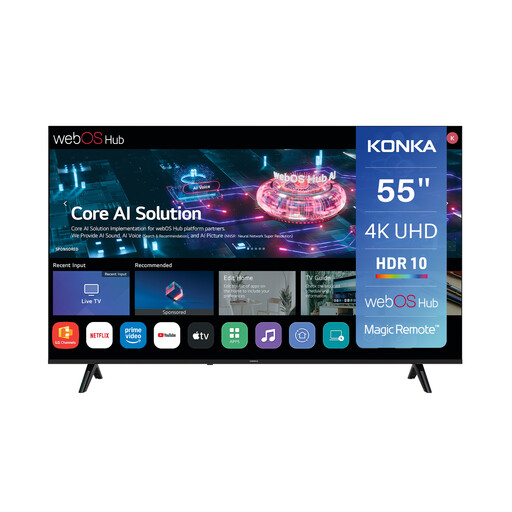
The sensible choice: Ideal for those looking for a large 55-inch 4K TV for their living room without breaking the bank. It ticks all the boxes for enjoying films and series in 4K and HDR10 quality.
It runs on the webOS operating system (the same one used in LG TVs), renowned for its smoothness and well-stocked app store (Netflix, Prime Video, etc.). Goodbye to the risk of a laggy interface after a year!
Its Magic Remote lets you navigate the screen like a mouse—it's incredibly intuitive. And with AirPlay/Google Cast compatibility, sending content from your smartphone is child's play.
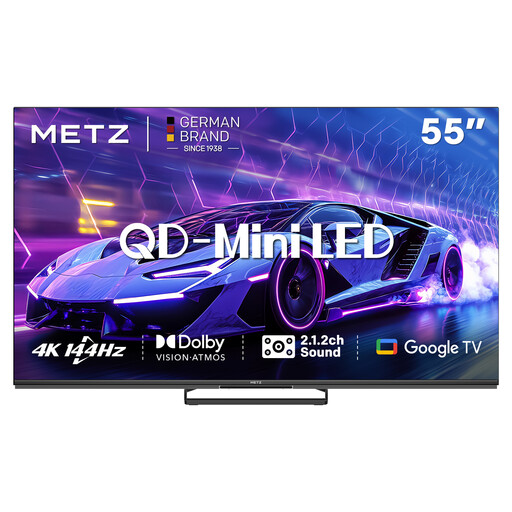
The powerhouse for gamers: This is the TV tailor-made for PS5 and Xbox Series X owners. It combines all the cutting-edge technologies for a no-compromise gaming experience: smoothness, responsiveness, and superior picture quality.
No marketing fluff here: you get a true native 144 Hz panel and HDMI 2.1. It goes even further by combining Mini LED and QLED for a picture that far surpasses a standard 4K screen.
The combination of a 144 Hz panel, HDMI 2.1 (with VRR and ALLM), and Mini LED makes this a beast for TV gaming. The inclusion of Google TV ensures a rich and responsive connected experience.
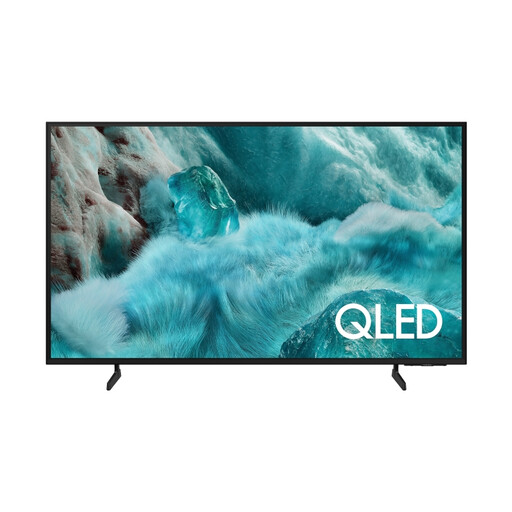
For a stunning visual experience: For those dreaming of a generous 65-inch TV to turn their living room into a cinema. It's the perfect companion for binge-watching nights, with picture and sound quality to match.
Rather than just settling for a "4K" label, this model leverages QLED technology for a much richer picture than a standard LED. Its Tizen operating system, one of the fastest on the market, delivers an excellent Smart TV performance.
Wireless Dolby Atmos compatibility and OTS Lite technology (where the sound tracks the on-screen action) enhance immersion. A practical and eco-friendly bonus: its remote is solar-powered.
Explore our full selection of TVs that meet our quality charter and safety standards.
The panel itself has a comfortable lifespan, often between 7 and 10 years. It's the "Smart" part that ages the fastest. After 3 to 5 years, it's not uncommon for the processor to show signs of slowing down and for apps to no longer be updated. That's why it's crucial to choose a major OS like Google TV, Tizen (Samsung TVs), or webOS (LG TVs), which guarantee much longer software support.
Yes, and the difference is visible to the naked eye. A QLED TV uses a layer of nanocrystals (Quantum Dots) to filter the light from the backlight. The result: much purer and more vibrant colours, as well as peak brightness far beyond what a standard LED TV can offer. The leap in quality is obvious on High Dynamic Range (HDR) content, where the full richness of colours and contrasts can finally be expressed.
If you own or plan to buy a PlayStation 5 or Xbox Series X, an HDMI 2.1 port is simply essential. It's the key to unlocking 4K gaming at 120 frames per second (fps) and Variable Refresh Rate (VRR), which ensures flawless fluidity. However, if you only use your TV for streaming films and series, an HDMI 2.0 port is still perfectly adequate.