
Livraison le jour même ou le lendemain

Qualité garantie

Débloquez vos offres de bienvenue: Livraison GRATUITE | Jusqu'à -80 % | 30 jours d'essai gratuits à JoyPlus
Téléchargez l'application
4K video has become the new standard, whether you're shooting with a mirrorless camera, a drone, or an action cam. But to capture these ultra-detailed images without any stuttering or data loss, choosing the right memory card is absolutely crucial. The wrong card is a recipe for disaster, leading to crashed recordings, corrupted files, or your device simply refusing to work.
Navigating the jungle of standards (UHS-I, UHS-II, V30, V90) can be overwhelming. At Joybuy, our mission is to help you make sense of it all. This guide will demystify the technical jargon and present our selection of the best memory cards, tailor-made for high-definition video.
Before diving into our top picks, let's review the essential criteria for making the right choice—one that's perfectly suited to your gear and your needs.
For video, don't be fooled by the maximum read speed advertised in big letters on the packaging. What really matters is the sustained write speed. This is what guarantees your card can handle the continuous data stream of 4K recording without a hitch. The most reliable indicator for this is the Video Speed Class, symbolised by a V (V30, V60, V90).
The UHS (Ultra High Speed) interface is the highway that connects the card to your device. Its design determines the theoretical top speed.
The format is dictated by your device. Most mirrorless and DSLR cameras use the standard SD format, while drones, action cams, and smartphones require a 4K microSD card.
When it comes to capacity, don't underestimate how storage-hungry 4K video is. A 256?GB memory card offers an excellent balance between recording time and budget. Today, nearly all cards over 32?GB are SDXC (eXtended Capacity), making it the de facto standard.
Enough theory—let's get practical. Here are our favourite memory cards, chosen for their reliability and performance in 4K video.
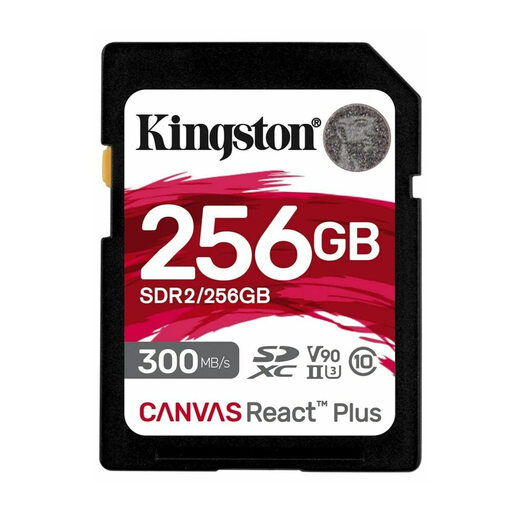
What sets it apart
This model is built for the most intense professional workflows. With its UHS-II interface and V90 certification, it delivers stratospheric read and write speeds, allowing you to effortlessly manage 8K video, high-bitrate 4K, and high-resolution burst shooting.
Key features:
Who is it for?
Expert or professional videographers and photographers using a high-end, UHS-II compatible mirrorless or DSLR camera. It's the peace-of-mind choice for those who demand the best and refuse to compromise on performance.
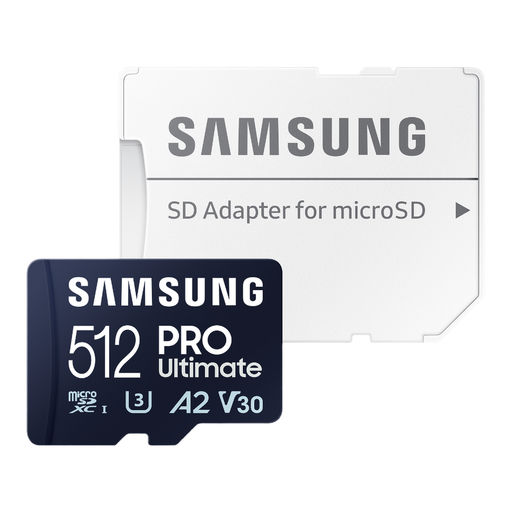
What sets it apart
This microSD card for drones and action cams is a storage monster. It combines a colossal 512?GB capacity with rock-solid performance. Its V30 certification ensures smooth 4K recording, while its A2 rating guarantees excellent responsiveness for apps on Android smartphones and tablets.
Key features:
Who is it for?
Adventurers, drone pilots, and action cam users (like GoPro) who want maximum storage space without sacrificing smooth 4K video performance.
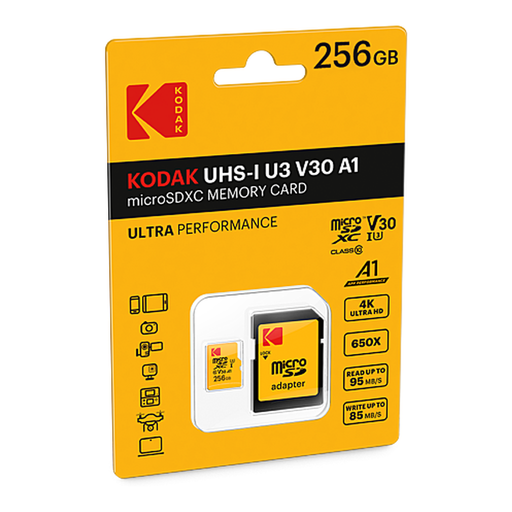
What sets it apart
This Kodak card offers an excellent price-to-performance ratio and impressive versatility. With a 256?GB capacity and V30 certification, it meets the needs of the vast majority of users shooting in 4K. Its included SD adapter turns it into a true Swiss Army knife.
Key features:
Who is it for?
Amateur photographers and videographers, as well as owners of multiple devices (cameras, tablets, handheld consoles). It's the quintessential all-rounder card for shooting 4K without breaking the bank or needing the extreme speeds of UHS-II.
Our selection highlights three excellent models for specific use cases, but the memory card market is full of options. If you're looking for a different capacity, speed, or price point, you're sure to find the perfect fit.
To discover other models, we invite you to explore our full collection of MicroSD SDHC Cards and use the filters to refine your search.
1. What's the difference between a V30 and a V90 card? It all comes down to the guaranteed minimum write speed. A V30 card ensures a minimum of 30?MB/s, which is perfect for the majority of 4K shooting. A V90 card steps that up to a guaranteed 90?MB/s. This is essential for very high-bitrate 4K/8K video streams and for RAW burst photography, situations where the camera's buffer needs to clear at top speed.
2. Is a 256?GB card enough for 4K video? Yes, 256?GB is an excellent starting point for 4K. It can store several hours of footage, although the exact duration depends on your camera's bitrate and the codec used. For intensive shoots or long trips, a 512?GB card (or larger) will offer more peace of mind.
3. Can I use a microSD card in a camera that takes SD cards? Absolutely. That's the whole point of the SD adapter, which is often included with microSD cards like the Kodak model in our selection. Simply insert the microSD card into the adapter, and then place the entire unit into your camera. Just make sure the card's performance (especially its V speed class) meets your camera body's requirements for video.