
Livraison le jour même ou le lendemain

Qualité garantie

Débloquez vos offres de bienvenue: Livraison GRATUITE | Jusqu'à -80 % | 30 jours d'essai gratuits à JoyPlus
Téléchargez l'application
The promise is alluring: turning a simple white wall into a 100-inch cinema screen. The 4K portable projector market is booming, offering a portable and much smaller-footprint alternative to a traditional TV. But beware: behind the flashy spec sheets often lie pitfalls that can turn your 4K home cinema projector dream into a costly disappointment.
As the Head of Product Selection at Joybuy, my mission is to help you decode marketing jargon to make an informed choice. Here are the most common mistakes to avoid and the essential criteria to check.
Marketing is often misleading. Before you pull out your credit card, keep an eye on these three points that separate a sound investment from a quickly regretted gadget.
For a successful viewing experience and a purchase you won't regret, focus on these objective technical specifications.
Native resolution is the actual number of pixels the projector can display. For an image that stays sharp and detailed, even on a large screen, a Full HD mini projector (1920 x 1080 native resolution) is an excellent starting point. These models accept a 4K signal and downscale it, offering a great balance of quality and price. A native 4K projector (3840 x 2160 pixels) will deliver surgical image precision, but the budget is in a different league.
Brightness, measured in ANSI lumens, determines if your projector can be used anywhere outside of complete darkness. Here are a few concrete benchmarks:
Ease of use is essential. A good modern portable projector must include:
Here are a few options that cater to different needs, taking into account performance and ease-of-use criteria.
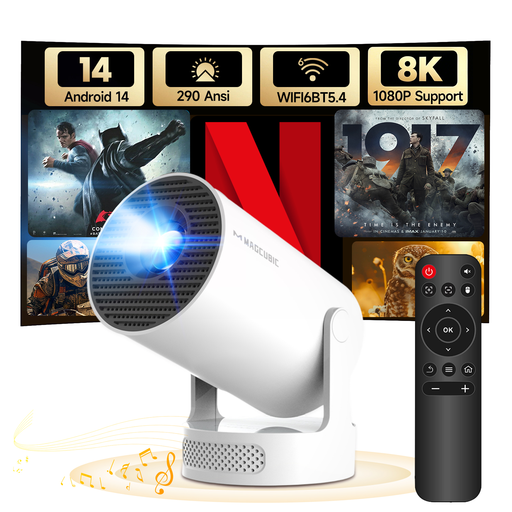
Why it stands out: Ideal for those who want a simple and affordable solution for movie nights in a bedroom or small living room. Its compact design and 180° rotating stand make it incredibly easy to position, including for ceiling projection.
It features a recent Android 14 system and WiFi 6, allowing it to avoid the "fake smart features" trap. Its 290 ANSI lumen brightness is transparently stated, positioning it for use in the dark, without false promises.
Its main strength is its unbeatable feature-to-price ratio. It packs recent technologies (WiFi 6, Android 14, auto-correction) into a portable and very accessible package.
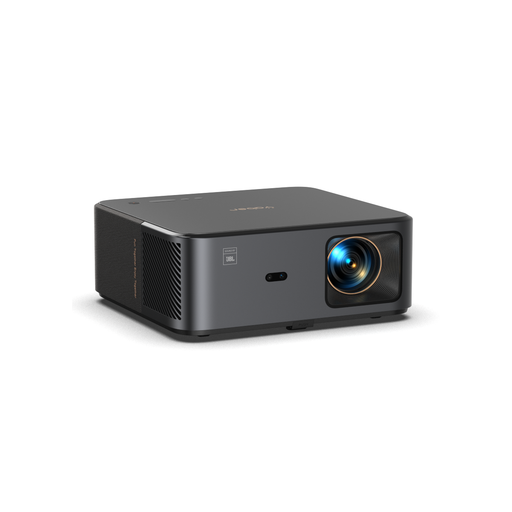
Why it stands out: Designed for those who are serious about home cinema. It combines high brightness, native 1080p resolution, and superior sound to confidently replace a TV in the living room.
It sidesteps the three classic pitfalls: its resolution is a true native 1080p, its 800 ANSI lumen brightness is clearly specified for versatile use, and its built-in Google TV system guarantees certified access to Netflix and over 7,000 apps.
The sound. Its dual 10W JBL speakers with Dolby Audio support deliver powerful, immersive sound, a rarity for portable projectors that often eliminates the need to buy a separate soundbar.
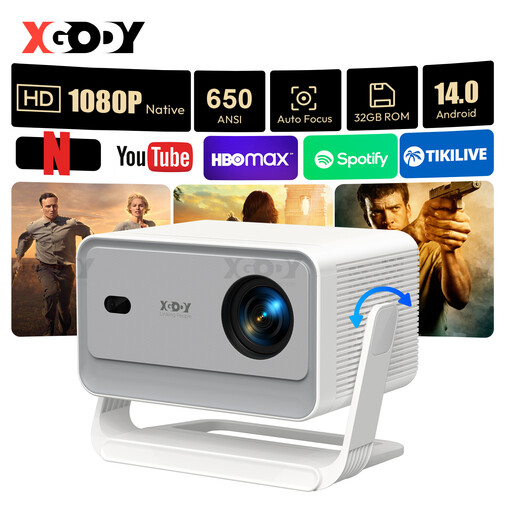
Why it stands out: Perfect for the on-the-go, tech-savvy user who wants to project an image anywhere, without any constraints. Its integrated gimbal stand pivots 135°, making ceiling or angled-wall projection astonishingly simple.
It bypasses the tedious setup trap thanks to its arsenal of automatic corrections (autofocus, keystone, obstacle avoidance, screen alignment). The image is perfect in seconds, with no manual adjustments needed.
Its integrated gimbal stand design is its masterstroke. It offers unparalleled placement freedom, without needing a tripod or external stand. Its 650 ANSI lumens and native 1080p resolution ensure excellent image quality.
We have curated a complete and up-to-date selection of projectors that meet our demanding selection criteria and current safety standards.
What is the lifespan of a portable LED projector? Most modern portable models use an LED light source with a lifespan ranging from 20,000 to 30,000 hours. In practical terms, that's over 10 years of use at 5 hours per day. Needless to say, you will likely never have to worry about replacing it.
Do I need a special projection screen? Not necessarily. A smooth, matte white wall already yields very good results, especially for occasional use. However, a dedicated projection screen will significantly improve image quality by optimizing reflectivity, contrast, and colour accuracy. For a true home cinema experience, it's an accessory worth considering.
Is a 700 ANSI lumen projector bright enough for daytime use? Even with 700 ANSI lumens, daytime use in a sun-drenched room remains challenging. The ambient light is simply too strong. On the other hand, this brightness level is perfectly comfortable in a room where you can control the light (with curtains or blinds) or in the early evening. For true daytime use, you would need to look at much more powerful—and much more expensive—professional models.