
Livraison le jour même ou le lendemain

Qualité garantie

Débloquez vos offres de bienvenue: Livraison GRATUITE | Jusqu'à -80 % | 30 jours d'essai gratuits à JoyPlus
Téléchargez l'application
Turning your living room or bedroom into a real movie theatre is a cinephile's dream. However, the thought of installing heavy, complex equipment can be off-putting, especially when every square foot counts. This is where the 4K mini projector comes in?: a flexible, high-performance solution capable of projecting a giant image without the constraints of a TV.
With so many options on the market, it can be hard to know where to start. Between the technical jargon and marketing promises, how do you find the model that will truly meet your needs?? Our mission?: to decipher the spec sheets for you and present a selection of projectors that are truly worth your while.
By our high-tech experts
To make sure you make the right choice, here are the essential points to examine. They will help you decode spec sheets and choose the portable projector that's perfectly suited to your needs.
Image sharpness is crucial. Be careful not to confuse two key concepts?:
Brightness, measured in ANSI lumens, is just as critical. The higher this number, the more legible and contrasted the image will remain, even if the room isn't completely dark. For comfortable evening viewing, aim for at least 300 to 700 ANSI lumens.
Recent models are packed with ingenious features to simplify setup. Gone are the days of endless manual adjustments! Look for these life-changing features?:
These technologies guarantee a true "plug-and-play" experience?: just plug it in, turn it on, and the show begins in seconds.
A good smart projector needs to be self-sufficient. The presence of an operating system, like on an Android projector, gives you access to an app store to directly install your favourite streaming services. A Netflix-certified projector, for example, guarantees flawless compatibility and streaming quality.
Wireless connectivity has become the standard?:
We've scoured the market to select three models that stand out for their technical specs and relevance for today's users.
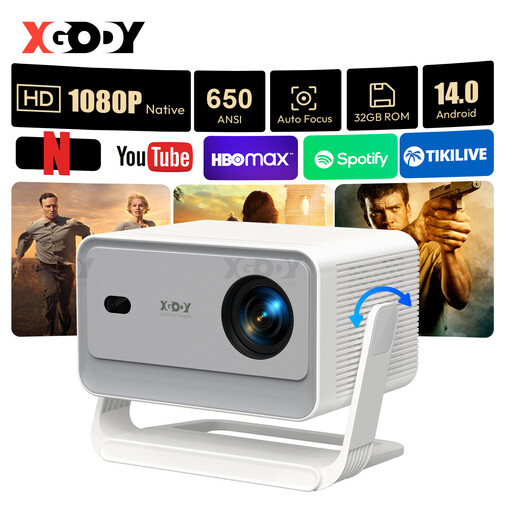
Why it stands out
The XGODY Gimbal A6 Pro stands out with its recent operating system (Android 14.0) and fully automated adjustments. Exceptionally quiet (35 dB), it goes unnoticed during movie nights in a bedroom or small living room.
Key Features
Who is it for?? Ideal for those seeking a high-performance, discreet, "all-in-one" solution, who appreciate the latest technology and an effortless setup.
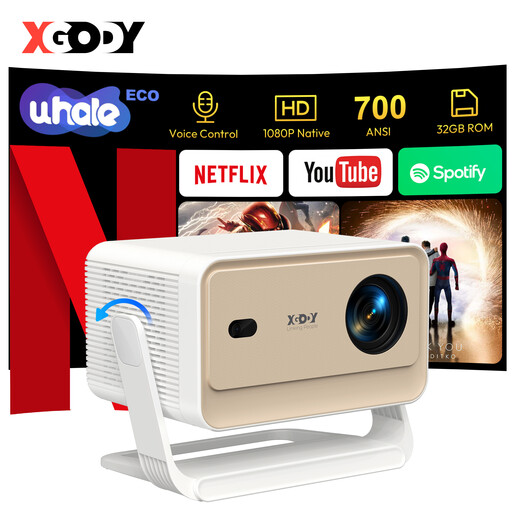
Why it stands out
This model is tailor-made for binge-watchers of series and movies. Its official Netflix licence and WhaleOS 3.0 operating system with voice control make it the ultimate Netflix projector. No more searching for the remote?: just speak to launch your content.
Key Features
Who is it for?? Perfect for streaming platform addicts (Netflix, Disney+, Prime Video) who want an experience as simple and seamless as on a Smart TV.
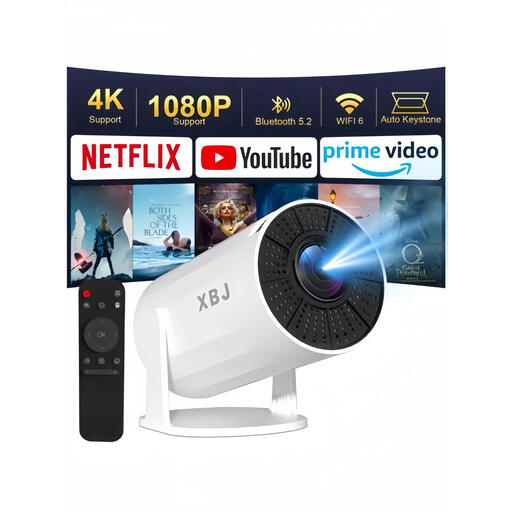
Why it stands out
This mini projector is all about versatility and mobility. Its 180° rotating base lets you project an image anywhere, including the ceiling, for unique movie nights. It's an accessible entry point into the world of video projection.
Key Features
Who is it for?? A recommended option for those looking for a secondary, ultra-portable, and fun solution. Ideal for a teenager's room, on-the-go projections, or for trying out the experience of watching movies in bed, projected on the ceiling.
This selection is just a glimpse of the possibilities offered by portable projectors. To explore other models or find the one that perfectly matches your needs, feel free to browse our full catalogue.
? Discover Our Full Range of Smart Electronic Accessories
1. What's the difference between a native 4K projector and a projector that supports 4K?? A native 4K projector has a display chip with approximately 8.3 million pixels, allowing it to create an authentic 4K image. A projector that "supports 4K" actually has a lower native resolution (often 1080p) but is capable of receiving a 4K signal and downscaling it for display. The result is a higher-quality image than a 1080p source, but logically less detailed than a true native 4K image.
2. Do I need a projection screen?? It's not mandatory. A smooth, matte white wall can work just fine for occasional use. However, a dedicated projection screen is designed to reflect light optimally, which will significantly improve contrast, brightness, and colour accuracy.
3. Can I use a mini projector during the day?? It all depends on the projector's brightness (in ANSI lumens) and the ambient light. The brightest models (700 ANSI lumens and up) perform respectably in a room with the curtains drawn. However, for a true cinema-like experience, it's always best to make the room as dark as possible. No consumer-grade mini projector can compete with direct sunlight.