
Livraison le jour même ou le lendemain

Qualité garantie

Débloquez vos offres de bienvenue: Livraison GRATUITE | Jusqu'à -80 % | 30 jours d'essai gratuits à JoyPlus
Téléchargez l'application
On the road, caution is always advised, but the unexpected can happen in an instant. A hit-and-run, a dispute over accident liability, vandalism on your parked car… In these situations, irrefutable video evidence can make all the difference. This is precisely the role of a 4K front and rear dash cam: to give you peace of mind by recording everything that happens in front of and behind your vehicle in high definition.
To help you make sense of it all, this guide breaks down the essential criteria and presents our selection of the best models to help you find the car camera that truly fits your needs and budget.
With the jungle of available models, it can be tough to know where to start. Let's focus on the essentials: the features that truly make a difference day-to-day.
The main benefit of 4K? Formidable image clarity, capable of capturing crucial details like a license plate or a road sign, even from a distance or at high speed. This is a critical point for turning a video into indisputable evidence.
A dual-lens dash cam system (front and rear) ensures complete surveillance. The rear camera is essential for capturing rear-end collisions, tailgating, or parking lot incidents. Most models pair a 4K sensor at the front with a 1080p sensor at the rear: the ideal compromise between image quality and storage space.
Because trouble doesn't wait for sunrise, good night vision isn't an option—it's a necessity. This performance depends on several technical factors:
Parking mode takes over to monitor your vehicle when it's parked. It activates either by detecting an impact (via an accelerometer or G-sensor) or by continuously recording in time-lapse mode to save battery and memory card space. Note: this feature almost always requires the installation of a specific hardwire kit for a continuous power supply.
A dash cam with built-in GPS does more than just film: it records your speed, exact location, and route. This is crucial data that can support your testimony in a dispute.
Built-in Wi-Fi is all about everyday convenience. No more fumbling with memory cards! It allows you to connect directly to the camera from your smartphone via a dedicated app. You can then watch live video, download important clips, and adjust settings in seconds.
Let's get practical with three models that caught our eye, each catering to a specific type of user.

Why it stands out
The DDPAI Z50 Pro is the ultimate all-rounder, offering a perfect balance of performance and modern features. It combines 4K resolution at the front with 1080p at the rear, ensuring high-quality video coverage. Its integrated 5GHz Wi-Fi 6 allows for exceptionally fast file transfers to a smartphone.
Pros
Who is it for? Ideal for daily drivers looking for a complete, high-performance solution with ultra-detailed images and simple management via a smartphone.
Why it stands out
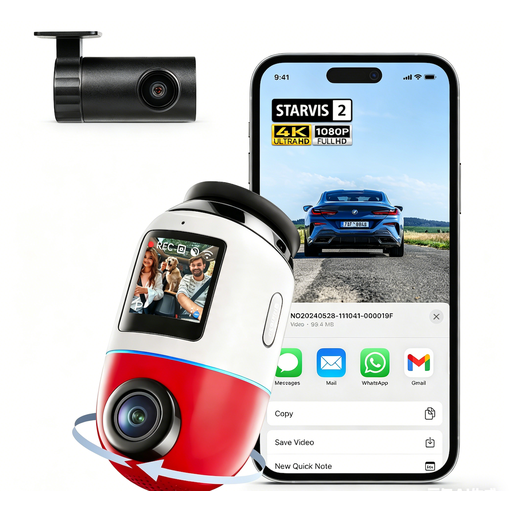
The 70mai Omni X800-2 stands out with its unique design featuring a 360° motorized rotation, eliminating all blind spots around the vehicle. Paired with a next-generation Sony STARVIS 2 image sensor and the ability to record in 4K at 60 frames per second, it's aimed at tech enthusiasts and the most demanding users when it comes to surveillance.
Pros
Who is it for? Perfect for tech enthusiasts, professional drivers (ride-sharing, taxis), or owners of high-value vehicles who demand absolute surveillance and advanced features like remote access.
Why it stands out
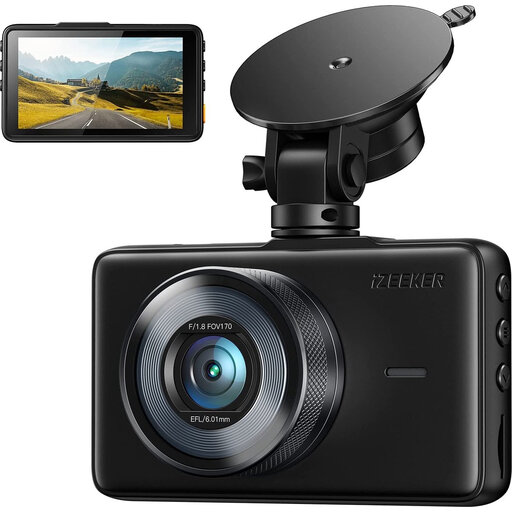
Sometimes, simplicity and reliability are what matter most. The iZEEKER GD100 gets straight to the point: reliably recording the road in Full HD 1080p without the complexity of apps and connected features.
Pros
Who is it for? The pragmatic choice for drivers who want a simple, effective, and budget-friendly "plug-and-play" solution to secure their drives. Ideal for those who don't need 4K or connected features.
Is your priority to secure your reversing manoeuvres and nail your parallel parks stress-free? If continuous road recording isn't your number one need, a dedicated solution will be more suitable.
? Explore our range of wireless backup cameras to make parking and reversing safer and easier.
1. Is using a dash cam legal in France? Yes, using a dash cam is perfectly legal in France for private use. Recordings are admissible as evidence by law enforcement and insurance companies. However, be careful when sharing footage online: it is imperative to blur faces and license plates to respect privacy and image rights.
2. How does a dash cam's parking mode work? Parking mode takes over when the engine is off. The secret? A continuous power supply, provided by a "hardwire kit" connected to the vehicle's fuse box. This kit includes a protection feature to prevent draining your car battery. Once active, parking mode either records in time-lapse or only triggers when an impact is detected by the G-sensor.
3. What memory card capacity should I choose for a 4K dash cam? 4K videos are storage-hungry. For a 4K front and rear dash cam, a 128?GB microSD card is the minimum. Aim for 256?GB or 512?GB for peace of mind and to store many hours of driving before loop recording overwrites the oldest files. Most importantly, choose a "High Endurance" U3 class card, which is specifically designed to handle the continuous write and rewrite cycles of a dash cam.