
Livraison le jour même ou le lendemain

Qualité garantie

Débloquez vos offres de bienvenue: Livraison GRATUITE | Jusqu'à -80 % | 30 jours d'essai gratuits à JoyPlus
Téléchargez l'application
Equipping your car with an in-car camera, or dashcam, has become second nature for many drivers. Faced with dense traffic and sometimes unpredictable behaviour, having a reliable video recording provides invaluable peace of mind. However, the market is flooded with marketing promises that often conceal disappointing products.
To avoid falling into these traps, here are the most common pitfalls to watch out for.
To make an informed decision, focus on a few essential technical points that make all the difference in the real-world performance of a 4K dashcam.
True 4K resolution (3840 x 2160 pixels) only makes sense when paired with a high-quality image sensor. Sensors like the Sony STARVIS 2 are specifically designed to excel in low-light conditions. They capture more detail and reduce digital noise, even in near-darkness.
The essential complement is HDR (High Dynamic Range) technology, which manages high-contrast scenes. Effective HDR night vision ensures a clear image even when facing the headlights of an oncoming vehicle or exiting a tunnel. This is what separates usable footage from a mere blob of light.
A reliable 24-hour parking surveillance feature relies on a powerful combination: a continuous power supply and intelligent detection. For power, a dedicated hardwire kit is essential. It connects to the vehicle's fuse box and protects the battery from a complete discharge.
On the detection side, a car camera with AI motion detection far surpasses a simple shock sensor (G-sensor). The artificial intelligence algorithm can distinguish between a person approaching the vehicle and harmless events (rain, wind), preventing unnecessary recordings and false alerts.
A GPS dashcam does more than just record. It logs your speed, geographical coordinates, and the time in real-time, directly onto the video. In the event of a dispute, this information can be decisive.
Advanced Driver-Assistance Systems (ADAS) add a layer of active safety. They can alert you to lane departures, dangerous proximity to the vehicle ahead, or pedestrian detection.
Let's get practical with a model that checks all the boxes. It's aimed at users who refuse to compromise on image quality and reliability.
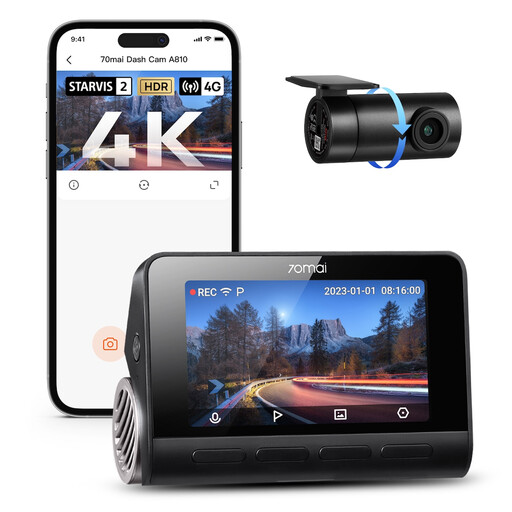
The Verdict: Ideal for the driver seeking irrefutable video evidence, day or night. This model combines the latest image sensor technologies with smart features that tangibly enhance vehicle security, both when parked and on the move.
This model directly addresses the "fake 4K" pitfall by using a Sony STARVIS 2 IMX678 sensor for the front camera. Dual-channel HDR technology ensures excellent night visibility. Its parking mode relies on an AI motion detection algorithm (requires the UP04 kit), which is far more precise than a simple shock sensor.
Its ultimate strength is the combination of superior 4K HDR image quality, thanks to the dual Sony sensors, and intelligent parking surveillance. The built-in GPS and ADAS alerts complete this highly cohesive security package.
We have compiled a comprehensive and up-to-date list of products that meet these strict selection criteria and safety regulations.
Yes, using a dashcam is perfectly legal in France for personal use. You have the right to film on public roads from your vehicle. However, broadcasting these images on the internet or social media is subject to image rights and privacy laws: the faces and licence plates of third parties must be blurred. In the event of an accident, the recordings can be presented to law enforcement and are admissible as evidence in court, with their acceptance left to the judge's discretion.
That depends on your comfort level with automotive electronics. To function, this mode requires a "hardwire kit" that connects to your car's fuse box. This installation provides a continuous power supply without draining the main battery. If you are comfortable with this procedure, you can do it yourself by following the instructions. If you're not, it's safer to hire a professional to ensure a secure and reliable installation.
Continuous recording, especially in 4K, is very demanding on a memory card. It is imperative to choose a "High Endurance" SD card. These cards are specifically designed to withstand numerous write and rewrite cycles. Opt for a card with a minimum class of U3 / V30 to ensure sufficient write speed. As for capacity, 128 GB is a good starting point to maintain an adequate recording history.