
Livraison le jour même ou le lendemain

Qualité garantie

Débloquez vos offres de bienvenue: Livraison GRATUITE | Jusqu'à -80 % | 30 jours d'essai gratuits à JoyPlus
Téléchargez l'application
By the Joybuy Editorial Team, 07/09/2026
Between endless traffic jams and unexpected fender benders, the road can often feel like a jungle. In this environment, the in-car camera, or dash cam, is no longer a gadget but a true guardian angel for a growing number of drivers. A 4K dash cam offers unparalleled image clarity—a decisive advantage for reading a license plate or analysing the circumstances of an accident. But with an overwhelming number of models and confusing spec sheets, how do you make sense of it all? Don't worry. This guide is here to demystify the market and help you find THE dash cam that truly fits your needs, without the marketing fluff.
Before diving into our top picks, let's review the key factors that make all the difference.
While 4K (3840x2160p) resolution is a prerequisite for a detailed image, it's not enough on its own. The real magic happens at the image sensor level, especially when light is scarce. Models equipped with Sony STARVIS sensors are the industry standard for their excellent low-light performance. Paired with technologies like WDR (Wide Dynamic Range), they turn your dash cam into a true night vision pro, capable of delivering sharp, legible footage, whether at night, in a dark tunnel, or when facing glaring headlights.
What level of protection are you looking for? The number of cameras will depend on your answer.
A good dash cam does more than just record. The following options provide real added value.
We've selected three models that stand out from the crowd, each with its own strengths.
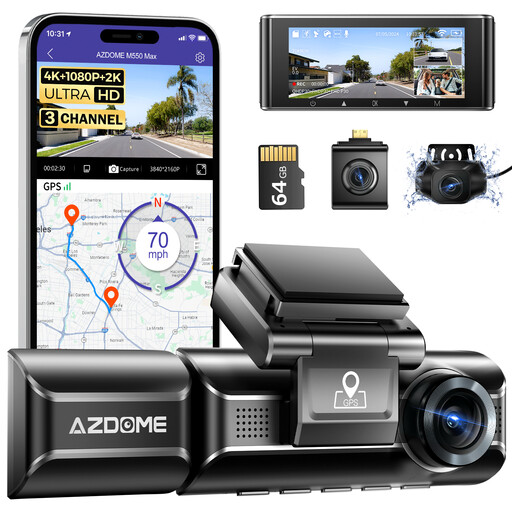
Why it stands out?: The AZDOME M550 MAX is the ultimate all-in-one package. It provides 3-channel surveillance (Front 4K, Interior 2.5K, Rear 1080p) and even includes a 64GB SD card. Unbox, install, and drive!
Pros?:
Who is it for? Perfect for rideshare drivers, families, and anyone who wants complete protection without the hassle of additional purchases.
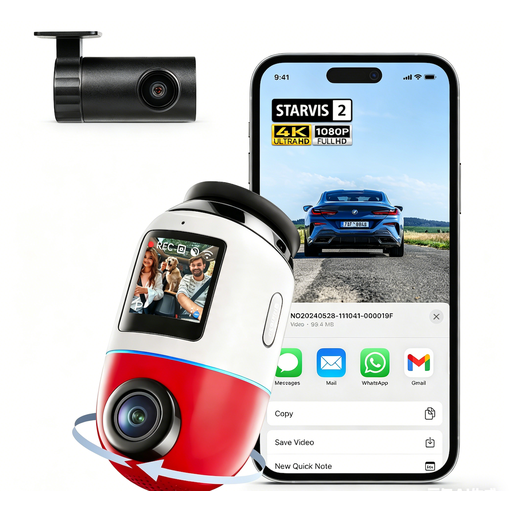
Why it stands out?: This model is distinguished by its unique design featuring a motorised 360° rotating lens that leaves no blind spots. Paired with a Sony STARVIS 2 IMX678 sensor and 4K recording at 60 fps (frames per second), it captures action scenes with stunning smoothness and clarity.
Pros?:
Who is it for? For tech enthusiasts and demanding drivers who want the pinnacle of image quality and connected surveillance features.
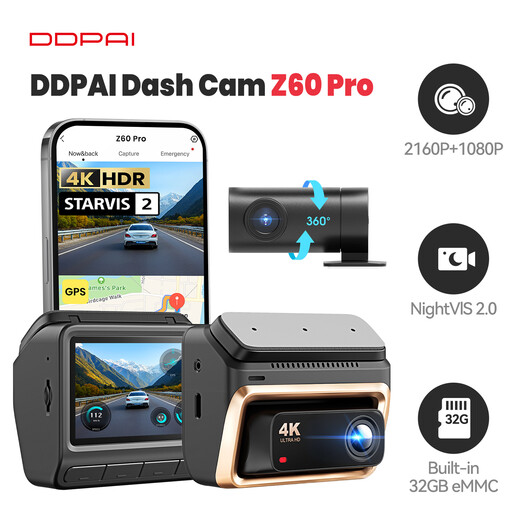
Why it stands out?: The DDPAI Z60 Pro focuses on performance and security. Its secret weapon? A dual Sony STARVIS 2 sensor setup and, most importantly, a dual storage system: 32GB of internal eMMC memory in addition to the microSD port. Your recordings are safe, even if the memory card fails.
Pros?:
Who is it for? For those who make no compromises on reliability and image quality, day or night. It's the choice for peace of mind.
Do these three models not quite match what you're looking for? No worries, our catalogue is full of other gems.
? Explore Our Full Range of Front and Rear Cameras
4K resolution offers four times more pixels than Full HD (1080p). This advantage isn't just a marketing gimmick: it translates directly into a much greater ability to zoom in on the image without losing quality. Reading a distant license plate, deciphering a sign, or identifying a crucial detail at an accident scene becomes child's play, reinforcing the value of your recordings as evidence.
Yes, installing and using an in-car camera to film public roads from your vehicle is perfectly legal in France. The important nuance concerns distribution: publishing these images on the internet or social media is strictly regulated by privacy and image rights laws. You must blur the faces and license plates of third parties. In the event of a legal dispute, the recordings can be submitted as evidence, with their admissibility left to the judge's discretion.
Parking mode takes over to monitor your car when you're not there. There are two main approaches: