
Livraison le jour même ou le lendemain

Qualité garantie

Débloquez vos offres de bienvenue: Livraison GRATUITE | Jusqu'à -80 % | 30 jours d'essai gratuits à JoyPlus
Téléchargez l'application
A parking lot collision, a hit-and-run, or just the desire to capture a memorable road trip? There are plenty of reasons to install a dash cam. But with an overwhelming number of options on the market, it's hard to know where to start. Is 4K a marketing gimmick or a real step forward?
I'm a product expert at Joybuy, and my role is to help you sort through the options. This guide gets straight to the point: we'll break down the essential features of a 4K car dash cam and introduce you to the models that matter, without the unnecessary jargon.
Before comparing models, let's review the criteria that truly make a difference. Here are the key points to check to find the dash cam that's right for you.
Resolution determines the level of detail in the image. A 4K dash cam (3840 x 2160 pixels) captures four times more information than a Full HD (1080p) model. What does this mean in practice? In the event of an incident, your chances of reading a license plate or identifying a crucial detail are significantly increased, day or night. It's the number one criterion for obtaining irrefutable video evidence.
A front and rear dash cam offers far more comprehensive security than a single front-facing lens. It records the road ahead of you as well as what's happening behind, an essential asset in the event of a rear-end collision. Some models go even further with 360° surveillance, including the cabin and sides. This is a popular choice for rideshare and taxi drivers, as well as for anyone seeking maximum protection against vandalism.
These options make your dash cam much more than just a camera:
Enough theory, let's get to the products. Here is a selection of models that cater to different uses and budgets, all approved based on the criteria above.
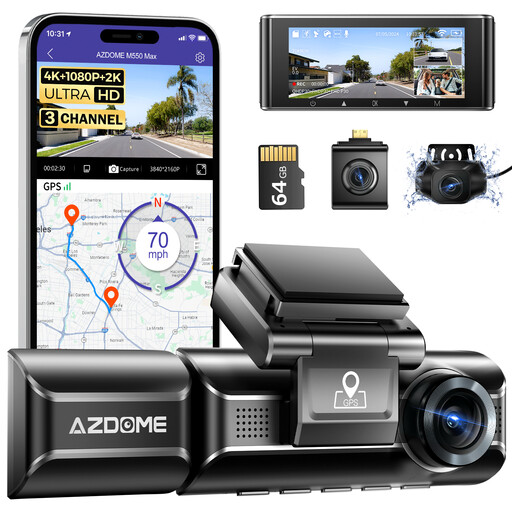
What sets it apart: Its three-channel setup, which simultaneously records the front, rear, and interior of the vehicle. Near-total coverage.
Key Features:
Who is it for? Ideal for families, rideshare drivers, or taxi drivers who want to keep an eye on the road and inside the cabin.
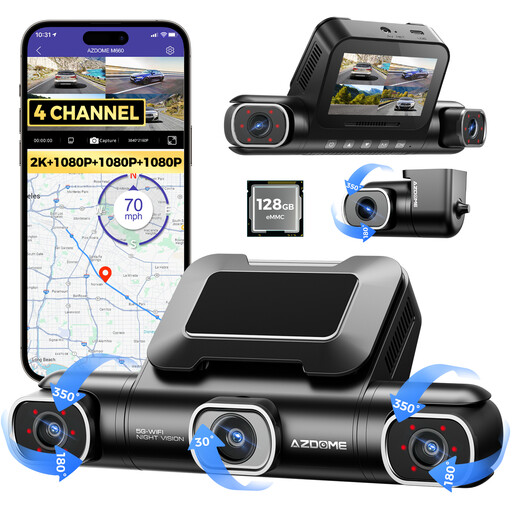
What sets it apart: 360° coverage thanks to its 4 channels and built-in 128GB eMMC storage, which frees you from needing an SD card.
Key Features:
Who is it for? Discerning drivers who want absolute surveillance, tech enthusiasts, and those looking for a reliable all-in-one solution.

What sets it apart: Its ultra-compact, screenless design, which makes it virtually invisible once attached to the windshield.
Key Features:
Who is it for? Those who prioritize discretion and a clean, minimalist setup without sacrificing front-camera image quality.
If these three models don't check all your boxes, don't worry. Our full catalog is packed with alternatives for every need.
Discover More 4K WiFi Camera Models
Yes, if the clarity of the evidence is your priority. 4K resolution often makes the difference in reading a license plate or distinguishing a detail from a distance. In a legal dispute, this can be a game-changing advantage.
Yes, completely. You have the right to film public roads from your vehicle. The recordings are also admissible as evidence in court. However, be careful: sharing these images on the internet is strictly regulated. You must blur faces and license plates to comply with privacy and data protection laws.
Parking mode turns your dash cam into a watchdog when your car is parked. Thanks to its gravity sensor (G-sensor), it wakes up and records a video clip as soon as an impact or suspicious movement is detected. For this monitoring to be effective over the long term without draining your battery, installing a hardwire kit connected to the fuse box is highly recommended.