
Livraison le jour même ou le lendemain

Qualité garantie

Débloquez vos offres de bienvenue: Livraison GRATUITE | Jusqu'à -80 % | 30 jours d'essai gratuits à JoyPlus
Téléchargez l'application
Equipping your vehicle with a front and rear 4K dash cam has become a smart move to secure your drives and protect yourself in case of a dispute. But with aggressive marketing and often opaque spec sheets, how do you make the right choice?? This guide is here to help you avoid the most common pitfalls and identify the model that truly fits your needs.
Before you commit, be wary of these three common issues that can turn a promising purchase into a costly disappointment.
To make the right choice, focus on these objective technical characteristics. They are what determine the true performance of a dash cam.
Beyond the simple 4K mention, check the image sensor's model number. A quality sensor, like a Sony STARVIS, is specifically designed to capture more light and deliver better clarity, day or night. This is a non-negotiable criterion for obtaining sharp images in all conditions and hoping to get the best dash cam for night vision.
A front and rear car camera system offers complete surveillance. It records what's happening in front of you, but also behind, which is essential in the event of a rear-end collision or a hit-and-run. Aim for a viewing angle of at least 140° at the front and 120° at the rear to cover multiple traffic lanes and minimise blind spots.
Certain connected features provide real added value.
Rather than an exhaustive list, we've matched specific models to user profiles to help you find the dash cam that's right for you.
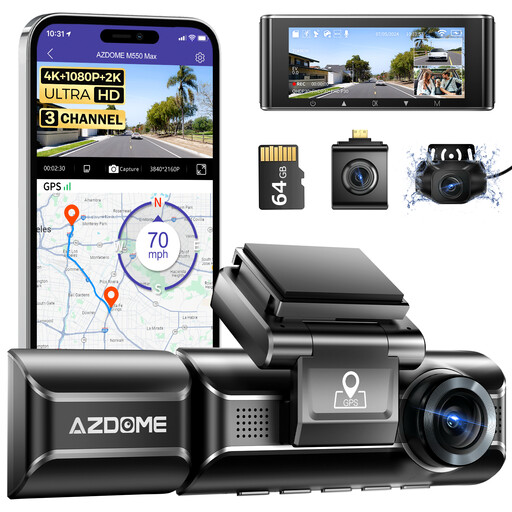
Why this model ? Ideal for families or rideshare drivers, this model offers 360° surveillance with its three cameras (front, rear, cabin). An all-in-one, out-of-the-box solution for complete peace of mind behind the wheel.
It offers true native 4K resolution at the front and includes a 64 GB SD card, which prevents compatibility issues and hidden storage-related costs.
Three-channel monitoring (front, rear, interior) ; dual STARVIS sensors for solid low-light performance.
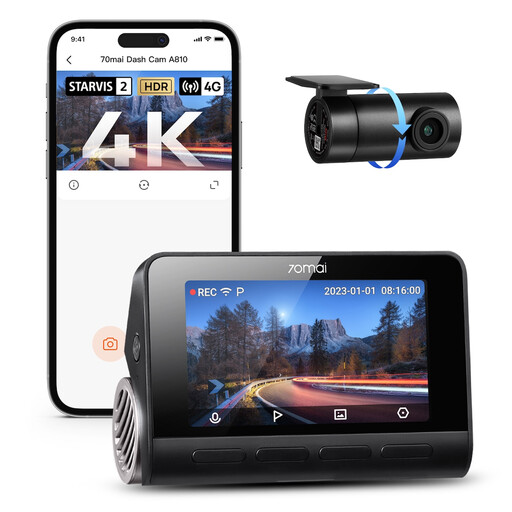
Why this model ? For those who demand cutting-edge image quality and advanced features. The option to add 4G connectivity for remote monitoring makes it a decidedly modern choice.
It counters the poor night vision pitfall with its dual Sony STARVIS 2 sensors and HDR technology, which ensure clear images even when facing dazzling headlights.
Top-tier image quality thanks to STARVIS 2 sensors ; optional 4G module for real-time remote monitoring (kit sold separately).
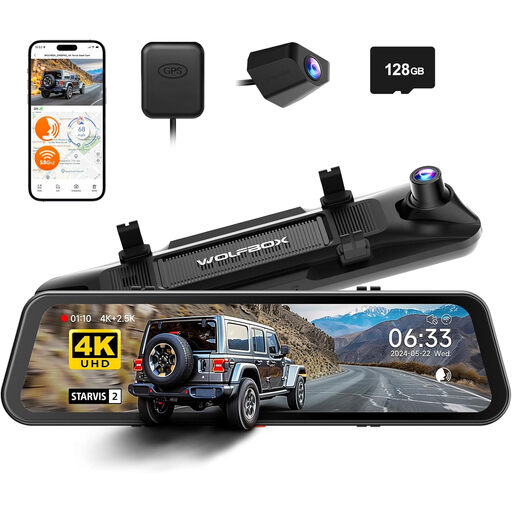
Why this model ? Its rear-view mirror design is ideal for drivers who want a discreet installation without anything on the windscreen. The large 12-inch touchscreen provides a perfect rear view, a major asset for utility vehicles or camper vans.
Its discreet integration eliminates often unreliable suction cup mounts. The included 128 GB card is perfectly calibrated for long 4K recordings, avoiding the insufficient storage trap.
Discreet rear-view mirror format with a large touchscreen ; 2.5K rear camera for a clear, high-quality view.
The performance of your 4K dash cam, particularly for recording GPS data, also depends on the memory card. An unsuitable card can lead to the loss of crucial evidence.
We have selected products for you that meet these demanding criteria, including high-endurance memory cards.
The answers to the questions you most often ask before buying a front/rear 4K dash cam.
For smooth and reliable 4K recording, opt for a "High Endurance" microSD card, designed for intensive write cycles. Ensure it has at least the U3 and V30 certifications. For a dual 4K camera, a capacity of 128?GB or 256?GB is recommended to store several hours of video before loop recording begins to overwrite the oldest files.
Installation is generally straightforward. The front camera attaches to the windscreen, often behind the central rear-view mirror, and plugs into the cigarette lighter. The rear camera is placed on the rear window. The most time-consuming step is hiding the cable that connects the two cameras by running it under the vehicle's headliner and pillars. Most kits include a plastic tool to make this step easier.
A dash cam's parking mode consumes very little power to remain on standby. To avoid draining your car's battery, it is essential to use a hardwire kit. These kits connect to the vehicle's fuse box and include low-voltage protection: they automatically cut power to the dash cam if the battery voltage drops below a certain threshold, ensuring you can always start your car.