
Livraison le jour même ou le lendemain

Qualité garantie

Débloquez vos offres de bienvenue: Livraison GRATUITE | Jusqu'à -80 % | 30 jours d'essai gratuits à JoyPlus
Téléchargez l'application
A parking lot collision, a hit-and-run, vandalism… These are all stressful situations where, without a witness or proof, it's often impossible to assert your rights. This is where a 4K dash cam comes in: by recording everything that happens on the road and around your vehicle in high definition, it becomes your best ally for renewed peace of mind.
Faced with an overwhelming number of options, choosing the right model can quickly become a daunting task. This guide is here to help. We'll break down the essential features and present a curated selection of products to help you make an informed choice, without any unnecessary marketing jargon.
Before you take the plunge, let's review the technical criteria that will make all the difference in your daily use.
Resolution is the most critical factor. A 4K dash cam (3840 x 2160 pixels) captures four times more detail than a Full HD (1080p) model. And this isn't a luxury: it's what allows you to clearly read a license plate, identify a face, or pick out crucial details at an accident scene, day or night. It's your guarantee of obtaining truly usable video evidence.
An incident can happen from any direction. A front and rear dash cam system (or dual-channel) simultaneously records the road ahead of you and what's happening behind. This dual perspective is essential for documenting rear-end collisions, other drivers' reckless manoeuvres, or parking lot scrapes. In short, it provides much more comprehensive protection.
Beyond resolution, certain features have become must-haves:
To help you see more clearly, here are three models that stand out from the crowd, each meeting specific needs.
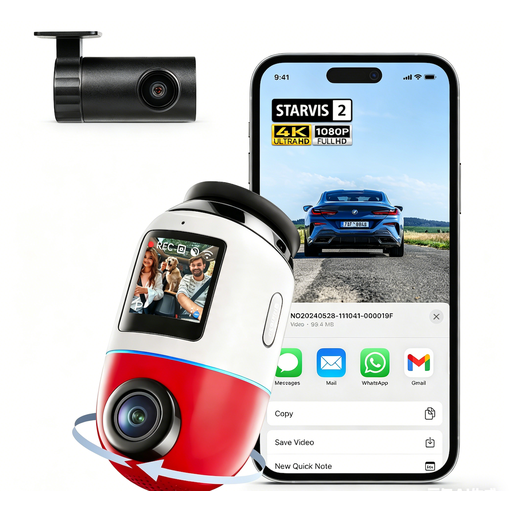
What sets it apart
The 70mai Omni X800-2 stands out with a major innovation: a 360° motorised rotating head that eliminates all blind spots. It can film in front, to the sides, or even inside the cabin. Paired with a 1080p rear camera, it offers truly comprehensive surveillance. Its Sony STARVIS 2 sensor and 4K resolution at 60 frames per second deliver stunningly smooth and sharp image quality, even in fast-moving scenes.
Pros
Who is it for??
For tech enthusiasts and drivers who want absolute surveillance of their surroundings, both while driving and parked. Perfect if you often park your vehicle in high-risk areas.
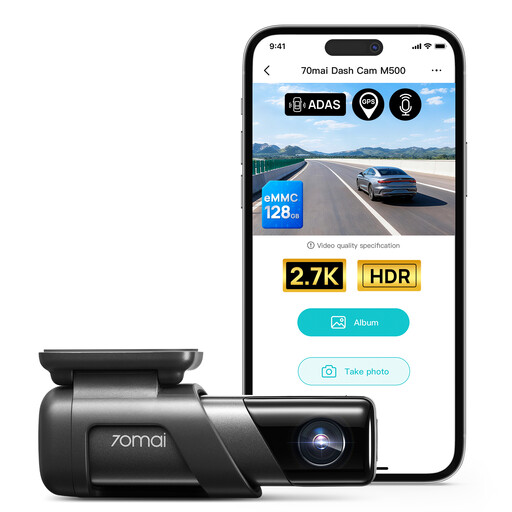
What sets it apart
The 70mai M500 focuses on simplicity with its built-in 64GB eMMC storage. No more fussing with microSD cards: the camera is ready to use right out of the box. This type of memory is also known to be more stable and durable. With its 1944P Ultra HD resolution (2.5 times more detail than 1080p) and its very wide 170° field of view, it misses nothing on the road.
Pros
Who is it for??
For those looking for a reliable and high-performing "plug-and-play" solution, without the hassle of memory cards. Ideal for daily use where simplicity and safety are paramount.
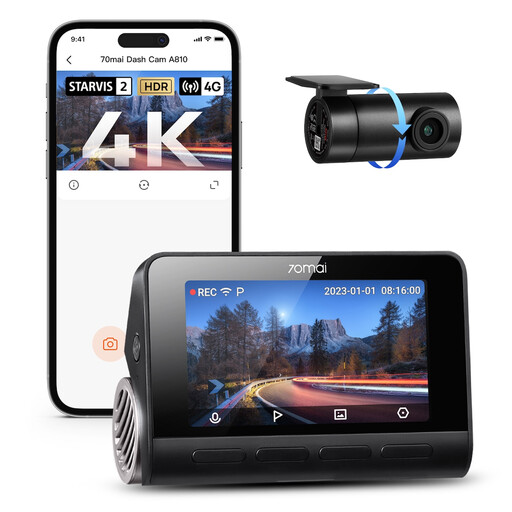
What sets it apart
The 70mai A810-2 is the queen of low light. It is armed with two Sony STARVIS 2 sensors, one for the 4K front camera and the other for the 1080p rear camera. Combined with 70mai Night Owl Vision technology, it offers first-class night vision, rendering vivid colours and precise details even when facing glaring headlights or on poorly lit streets. The manufacturer also highlights several awards received in 2024, notably from leading German media outlets like Autobild.de.
Pros
Who is it for??
For drivers who often travel at night, dawn, or dusk, and for whom image clarity in low light is the number one criterion. It's the top choice for high-mileage drivers and road professionals.
Our selection covers the most common needs, but your situation may be unique. To explore other technologies or compare more products, feel free to browse our complete catalogue.
? Explore our full selection of night vision accessories
Yes, using a dash cam is perfectly legal in France for private use. You have the right to film the public road from your vehicle. However, be aware: broadcasting these images on the internet or social media is subject to privacy laws and personal data protection (GDPR). In the event of a dispute, the recordings can be presented to law enforcement or your insurer as a starting point for evidence.
While driving, the dash cam is powered by the car's cigarette lighter or a USB port, so it has no impact on the battery. In parking mode, it's a different story: it draws power directly from the vehicle's battery. This is why it is essential to use a specific hardwire kit. This kit includes a protection feature that cuts power to the camera if the battery voltage drops too low, thus preventing a dead battery when you start the car.
Parking mode activates as soon as you turn off the ignition. The camera enters a standby state and uses its sensors to monitor the surroundings. There are two main types of detection: