
Livraison le jour même ou le lendemain

Qualité garantie

Débloquez vos offres de bienvenue: Livraison GRATUITE | Jusqu'à -80 % | 30 jours d'essai gratuits à JoyPlus
Téléchargez l'application
The action camera market is a dizzying array of promises: 4K, 8K, waterproofing, stabilisation... It's easy to get lost and end up with a device that doesn't live up to the hype. As a senior tech editor, my job is to cut through the jargon to help you make the right choice. This guide gets straight to the point: we'll break down the pitfalls to avoid and the real criteria that matter to find the perfect 4K camera for your adventures, whether for vlogging, sports, or travel.
Marketing can be ruthless. Too many buyers regret their purchase after just a few uses, once the hidden flaws come to light. Here are the three most common mistakes to avoid.
To avoid these pitfalls, focus on the features that truly make a difference in the quality and versatility of your future camera.
Image quality primarily rests on two pillars: sensor size and the effectiveness of the stabilisation. A larger sensor (like a 1/1.3-inch type) captures more light. In practical terms, this means sharper images, richer colours, and much better performance when light is scarce.
Stabilisation is just as crucial. Systems like Insta360's FlowState or the 3-axis stabilisation of a DJI Osmo rely on advanced gyroscopes and algorithms to deliver stunningly smooth footage, even while mountain biking or skiing. This is what separates a nauseating amateur video from a professional-looking one.
The battery life advertised by manufacturers is almost always measured in lab conditions. In the real world, 4K recording, active Wi-Fi, and cold weather can cut battery life in half. To avoid running out of juice at the worst possible moment, opt for models with a removable battery or compatibility with external charging.
The accessory ecosystem is just as strategic. A good sports camera or travel camera needs to be mountable everywhere: helmets, handlebars, backpacks, drones... A wide range of mounts, compatibility with external microphones, and the availability of a dive case will unlock your camera's creative potential.
Rather than an endless catalogue, here are three models that meet specific needs, all selected based on the quality and relevance criteria we've just defined.
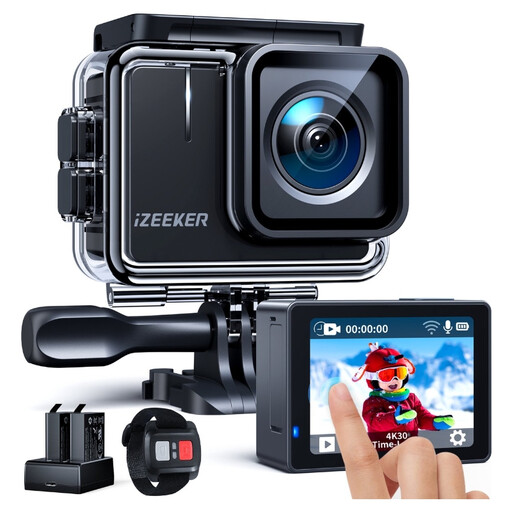
Why it's a good choice: Perfect for getting started with action video without breaking the bank. It offers the essentials for capturing your holidays or occasional sports activities.
It doesn't try to compete with high-end models. Its price is fair and consistent with its performance, allowing it to avoid the "too-good-to-be-true" 4K deal. The waterproofing is clearly stated: up to 40m, but with the included case.
Its ultra-complete bundle. With its myriad of mounting accessories and waterproof case, it's ready to use right out of the box for a host of activities.
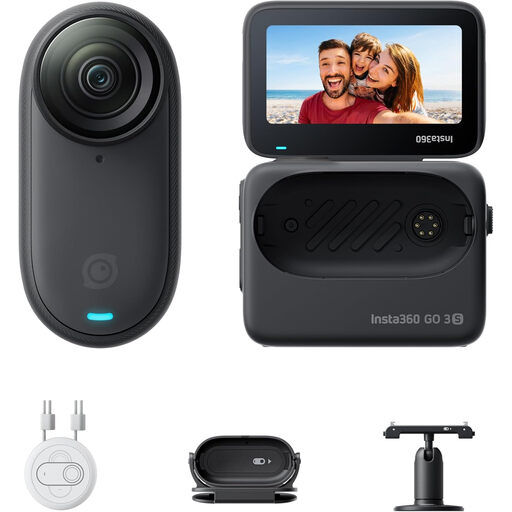
Why it's a good choice: The camera for vloggers and creators who value discretion and spontaneity. Barely bigger than a thumb, its magnetic mounting system lets you capture unique angles without ever being weighed down.
It shatters the poor stabilisation pitfall with its FlowState technology, which ensures a smoothness worthy of a mechanical gimbal, but without the bulk. Its modular design with the Action Pod cleverly solves the battery life issue, often the weak point of mini-cameras.
Its versatility and discretion. Being able to mount it absolutely anywhere (clothing, helmets, objects...) opens up endless creative possibilities for immersive first-person view (POV) shots.
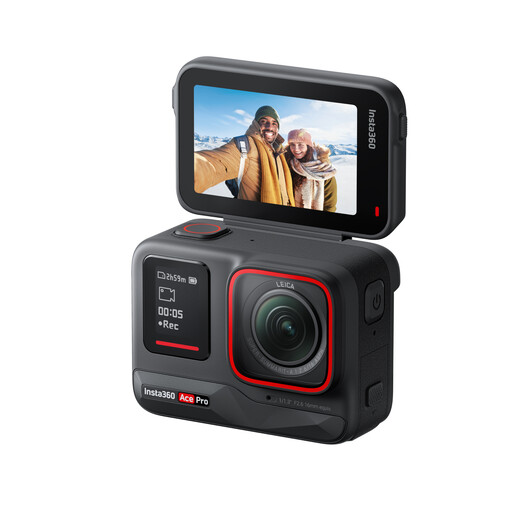
Why it's a good choice: Built for demanding users who refuse to compromise on image quality, even in the toughest conditions. Ideal for winter sports, night-time mountain biking, or capturing landscapes with maximum detail.
It tackles the "cut-rate 4K" pitfall head-on by combining a large 1/1.3-inch sensor with a lens co-engineered with Leica. The result is uncompromising image quality, especially in low light, where most competitors throw in the towel.
Its low-light performance and flip screen. The AI-powered PureVideo mode works wonders to reduce digital noise and produce clean night-time videos. The flip-up screen is a game-changing advantage for vlogging and creative framing.
We've curated a full selection of products that meet our selection criteria and current standards.
It's not mandatory, but it is highly recommended. Most of our screens (TVs, monitors, smartphones) are now 4K. Filming in this resolution gives you more flexibility in editing (allowing you to crop into the image without losing quality for a final 1080p video) and ensures your content won't be outdated tomorrow. But remember: good stabilisation and a large sensor are more valuable than a simple 4K label.
Optical zoom uses the lens assembly to get closer to the subject without any loss of quality. In contrast, digital zoom simply crops the image captured by the sensor and artificially enlarges it, causing a visible degradation of detail. For a digital camera or camcorder, if zoom is an important criterion for you, always prioritise a model with optical zoom.
Battery life varies greatly, but on average, you can expect 60 to 90 minutes of continuous recording in 4K at 30 fps. Be aware that filming at a higher frame rate (60 or 120 fps), enabling the highest performance stabilisation, or shooting in cold weather can easily drop this duration to under an hour. Therefore, packing at least one spare battery is essential for any lengthy outing.