
Livraison le jour même ou le lendemain

Qualité garantie

Débloquez vos offres de bienvenue: Livraison GRATUITE | Jusqu'à -80 % | 30 jours d'essai gratuits à JoyPlus
Téléchargez l'application
For new parents, your baby's safety and well-being are the number one priority. The baby monitor market has evolved significantly, with increasingly sophisticated models, including the much-hyped 4K baby monitor. But behind the promise of high definition, you'll often find misleading marketing claims. Our guide is here to help you cut through the noise and choose the right model with complete peace of mind.
Before you commit, watch out for these three common pitfalls:
To avoid disappointment, focus on the features that truly matter in your daily life. Here are our three non-negotiable criteria.
Image clarity is paramount. A 4K sensor provides a solid foundation for digital zoom without turning the image into a pixelated mess, which is useful for checking on your baby's breathing without getting closer. But daytime quality isn't everything: low-light performance is just as crucial. A good night vision baby monitor should use discrete infrared technology (without the notorious red glow that can disturb a child) while ensuring a clear, high-contrast image, even in complete darkness.
For rock-solid reliability, nothing beats a hybrid system. It combines two modes of operation:
This dual connectivity ensures uninterrupted monitoring, even if your internet router goes down or during a power outage (if the devices are battery-powered).
Your baby will grow, and so will your needs. A motorised baby camera (Pan & Tilt) allows you to remotely adjust the lens from the parent unit or your phone. This is a must-have feature when your baby starts to roll over in their crib or explore their room. Also, consider battery life: a portable, battery-powered baby monitor, for both the camera and the parent unit, is a major plus. It guarantees continuous monitoring during power outages and makes life easier when travelling (vacations, weekends at the grandparents').
Every family has different needs. Here is a selection of products that meet specific expectations, taking into account the criteria we've just discussed.
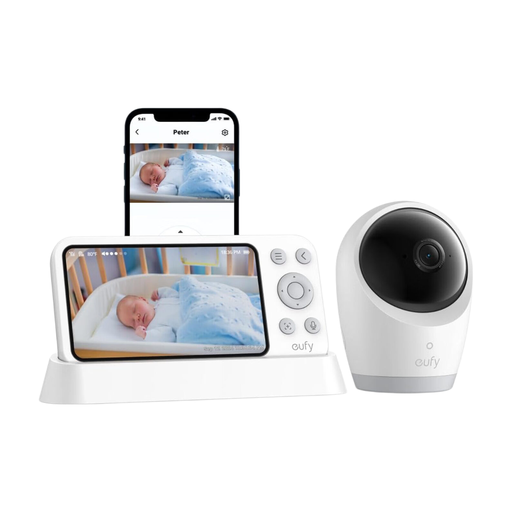
Who is it for? Perfect for parents who demand the best in quality and reliability. It's also a must-have for parents of twins thanks to its split-screen function.
It avoids the Wi-Fi dependency trap with its hybrid mode (Wi-Fi + local connection). Recording to an SD card (not included) frees you from cloud subscription fees.
Hybrid connectivity for rock-solid monitoring, with or without Wi-Fi. Portable, battery-powered camera (5000 mAh) to use it anywhere, even during a power outage.
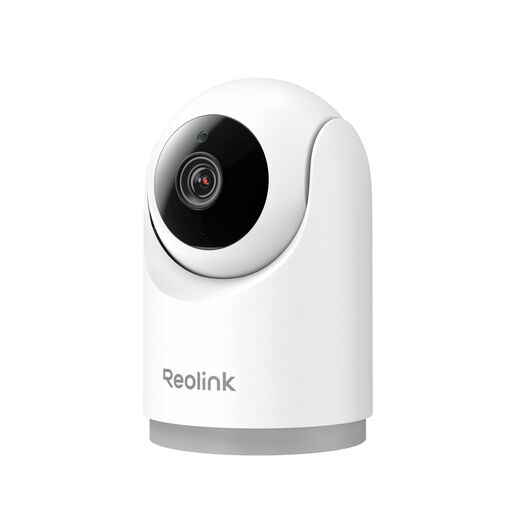
Who is it for? Designed for tech-loving parents who appreciate smart features and seamless smartphone integration for proactive monitoring.
Rather than focusing on 4K, this model concentrates on genuinely useful features like cry detection. Local storage on a microSD card helps you avoid subscription fees.
Smart detection (people, pets, crying) with real-time notifications. Panoramic view of the room thanks to Pan/Tilt motorisation (355°/50°).
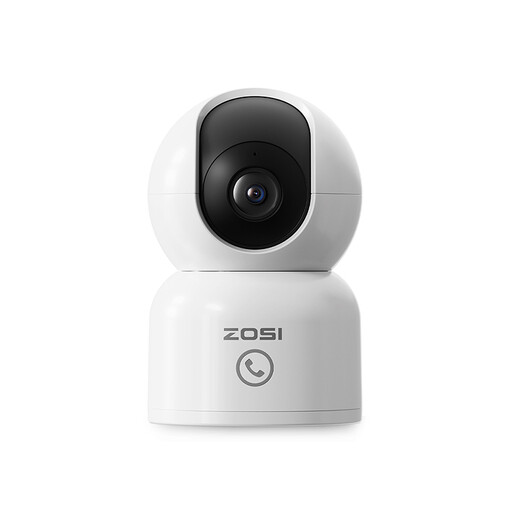
Who is it for? The smart choice for parents who want the essentials of a video baby monitor (HD image, motorisation, mobile access) without breaking the bank.
This model is upfront about its perfectly adequate 1080p (2MP) resolution, without the marketing hype. Storage on a memory card (up to 256 GB, not included) saves you from cloud fees.
Automatic motion tracking to never lose sight of your baby. Call button on the camera, which is handy for older children to contact parents directly through the app.
We have selected other models that meet our demanding selection criteria and current safety standards.
Yes, 4K streaming is more bandwidth-intensive than 1080p. If you plan to use remote 4K monitoring frequently, make sure you have a stable internet connection and a mobile plan with enough data. At home, a hybrid model is still the ideal choice: its direct local connection won't use your Wi-Fi bandwidth at all.
Reputable brands use robust encryption protocols (like AES-128) to secure the connection between the camera, the cloud, and your app. To bulletproof your security, follow a few best practices: choose a strong password for your account and enable two-factor authentication if the option is available. Here again, a hybrid model provides absolute peace of mind with its local connection, which is completely isolated from the internet.
The battery life on a single charge depends on usage (continuous streaming, alerts, etc.) and the battery's capacity (in mAh). The lifespan of the battery itself, just like with any smartphone, depends on the number of charge cycles. You can expect several years of trouble-free use. Models where the camera can also be plugged into a power outlet offer good long-term insurance.