
Livraison le jour même ou le lendemain

Qualité garantie

Débloquez vos offres de bienvenue: Livraison GRATUITE | Jusqu'à -80 % | 30 jours d'essai gratuits à JoyPlus
Téléchargez l'application
The action camera market is a jungle of marketing promises: 8K, rock-solid waterproofing, artificial intelligence... It's easy to get lost and regret your purchase. As a product expert for Joybuy, my mission is to help you read between the lines of the spec sheets. The goal? To find the model that truly fits your needs, not the siren song of marketing. Before you take the plunge, here are the three most common pitfalls to avoid.
To avoid making a mistake, get back to basics. These are the fundamentals that guarantee a great image and a hassle-free experience.
A shaky 4K video is simply unwatchable. The quality of the built-in video stabiliser is therefore the number one criterion, especially for a sports camera. Cutting-edge technologies like FlowState (Insta360) or RockSteady (DJI) work wonders, smoothing out shakes to perfection with powerful algorithms. Horizon Lock is the other magic feature: the camera keeps the image perfectly level, even if you rotate it 360°.
Forget the megapixel race; it's the sensor size that matters most. A larger sensor (for example, a 1/1.3-inch type) captures more light. In practical terms, this means better image quality, less digital "noise" as light diminishes, and a wider dynamic range (more detail in shadows and highlights). The lens aperture (noted as "f/", e.g., f/2.0) plays the same role: the smaller the number, the wider the aperture, and the more light gets in.
An excellent 4K action camera is more than just hardware. The companion mobile app is just as crucial. Is editing simple and intuitive? Does it offer AI-powered auto-edits to create impactful clips in seconds? Finally, the ecosystem of accessories (mounts, external mics, extra batteries) is decisive. This is what will allow you to adapt the camera to your activities, whether you use it as a vlogging camera or to film your sporting achievements.
Here is our selection, designed for different user profiles and based on real-world performance, not marketing hype.
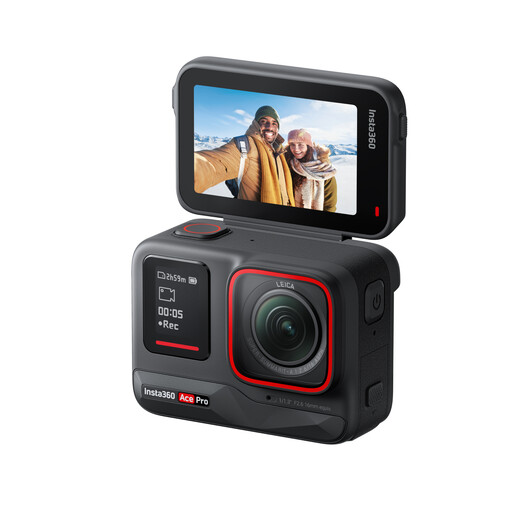
Why it stands out: Perfect for vloggers and athletes who refuse to compromise. Its large 2.4-inch flip screen is a dream for framing your shots, while its 1/1.3-inch sensor and Leica-engineered lens deliver stunning image quality, day or night.
Instead of 8K, it bets on a winning combination: a large sensor and a 5nm AI chip that enhance 4K, especially in low light. Its PureVideo mode works wonders to reduce digital noise.
2.4" flip screen, ideal for vlogging. Top-tier night-time image quality thanks to the large sensor and AI processing.
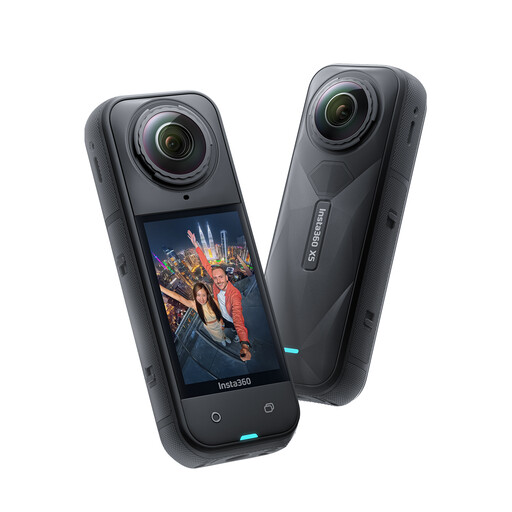
Why it stands out: For those who dream of impossible angles and total creative freedom. This 360 camera films absolutely everything around it. The result? You choose your frame long after the action is over, during the edit. Its Invisible Selfie Stick effect creates stunning, drone-like shots.
8K isn't a gimmick here: it's essential for reframing the 360° video into an ultra-detailed 4K or 1080p "flat" clip. You lose no quality, even when zooming into the image.
"Shoot first, frame later" principle: impossible to miss the action. Invisible Selfie Stick effect for unique third-person shots. FlowState Stabilisation and unshakable 360° Horizon Lock.
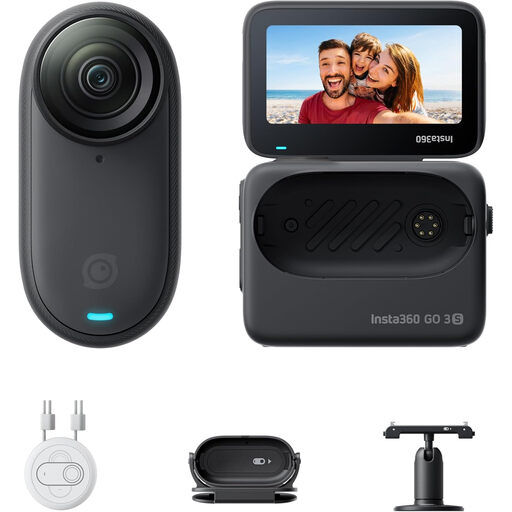
Why it stands out: Weighing in at just 39 grams, it mounts absolutely anywhere thanks to its magnet. It's perfect for capturing moments on the fly, hands-free, for immersive POV shots on a bike, or for travel memories without ever being bulky.
It sidesteps the battery life trap with a stroke of genius: the Action Pod. This housing serves as a screen, remote control, and external battery, boosting the total battery life to 140 minutes. The camera itself remains featherlight.
Featherlight design (39g) for absolute discretion. Ultra-versatile magnetic mounting. Modular Action Pod that extends battery life and adds a flip screen.
Of course, serious competitors like the DJI Osmo Action 6 also deserve your attention. We particularly note its innovative variable aperture, which adapts to brightness, and its excellent battery life. Ultimately, the choice will depend on your priority: vlogging versatility, the limitless creativity of 360°, or extreme portability.
Our team has selected other models that meet these demanding specifications and current safety standards.
On average, expect 60 to 90 minutes of continuous 4K recording. This duration drops drastically in cold weather (lithium batteries hate low temperatures) or if you leave Wi-Fi and the screen enabled. For long sessions, investing in one or two extra batteries isn't a luxury, it's a necessity.
For 95% of people, the answer is a firm no. 4K already offers sublime image quality on a TV, monitor, or smartphone. 8K is only justified for professionals who need to heavily reframe their footage in post-production, or for 360° video where this high resolution allows for extracting a much higher quality "flat" clip.
For a casual swim in a pool or lake, yes. However, for sea diving, surfing, or any intense water activities, a dedicated dive case is essential. Salt, sand, and repeated pressure will eventually wear down the camera's seals, creating a risk of a leak that could cost you dearly. The case remains the only truly reliable insurance policy for your gear.