
Livraison le jour même ou le lendemain

Qualité garantie

Débloquez vos offres de bienvenue: Livraison GRATUITE | Jusqu'à -80 % | 30 jours d'essai gratuits à JoyPlus
Téléchargez l'application
Choosing a 4K action camera can quickly become overwhelming. Between overly technical spec sheets and sometimes misleading marketing promises, it's easy to end up with a device that disappoints in practice. To help you see more clearly, we're breaking down the pitfalls to avoid and the criteria that truly matter before you make a purchase.
The market is flooded with models, but not all are created equal. Here's a rundown of common mistakes that can turn a great deal into a nasty surprise.
Many models proudly display a "4K" label, but the actual image quality depends on a combination of factors. A 4K resolution with a low frame rate (less than 30 frames per second) or an insufficient bitrate will produce choppy or artifact-ridden footage, sometimes worse than an excellent Full HD (1080p) video. True 4K is, above all, a smooth and detail-rich image.
A camera with image stabilization is a non-negotiable feature for filming on the move. However, a subpar electronic image stabilization (EIS) leads to a visible degradation of the image: it undergoes a significant crop, and a "floating" effect or unsightly distortions can appear during fast movements. This makes footage filmed on a mountain bike or with a motorcycle dash cam almost unusable.
Manufacturers highlight maximum recording times achieved under lab conditions (in 1080p, without Wi-Fi, at room temperature). In practice, filming in 4K, especially in cold weather, drains the battery, sometimes cutting its life by half or even two-thirds. With a non-removable battery, a long outing can turn into the frustration of only capturing a few minutes of footage.
To make an informed choice, focus on these key points. They are what separate a gadget from a genuine tool.
Resolution determines the sharpness of the image. 4K (3840 x 2160 pixels) has become the standard for a crisp, professional look. But be careful, it's not everything! It must be paired with a frame rate (fps) suited to your needs:
Forget about entry-level stabilization systems. Insist on 6-axis gyroscopic stabilization (EIS). This system analyzes the camera's movements on multiple axes and digitally compensates for them to deliver impressively stable footage, even in the heat of the action. It's the essential criterion for sports like skiing, mountain biking, or running.
A waterproof sports camera opens up a world of possibilities. Be sure to distinguish between:
Rather than searching for a single, perfect model, it's better to find the camera that fits your specific use case. Here is our selection, designed for different profiles.
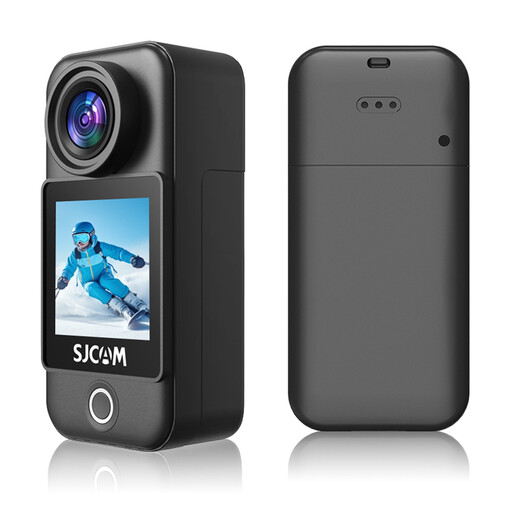
Ideal for capturing the moment without the bulk. Its pocket-sized format makes it the perfect mini 4K camera for travel, city outings, or as a second camera that's always within reach.
No more battery anxiety! Its removable battery allows you to carry several to last a full day of shooting, far from any power outlet.
Star Feature: Its feather-light (55g) and tiny dimensions. Strengths: Effective 6-axis gyro stabilization, 4K at 30 fps, and waterproof up to 30m (with case).
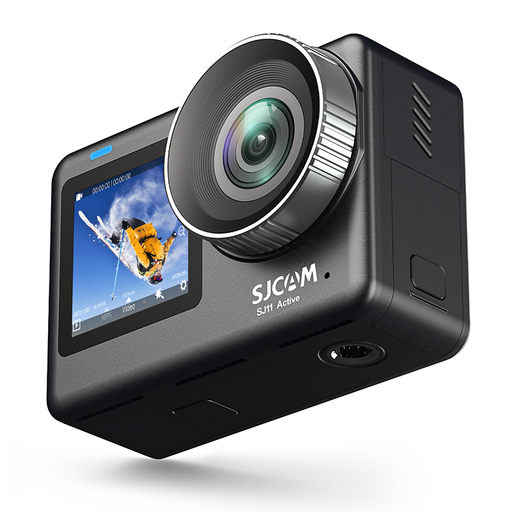
Designed for those who are in front of the camera as much as behind it. Its dual screen (one on the back for control, one on the front for feedback) is the dream companion for vlogging: framing is always perfect, even in the middle of the action.
No compromises on stability. Its 6-axis gyro stabilization ensures smooth shots, even while walking—a must-have for dynamic vlogs that don't cause motion sickness.
Star Feature: The dual screen for flawless selfie framing. Strengths: Waterproof to 5m without a case, 4K at 30 fps, and a large, user-friendly 2.33-inch touchscreen.
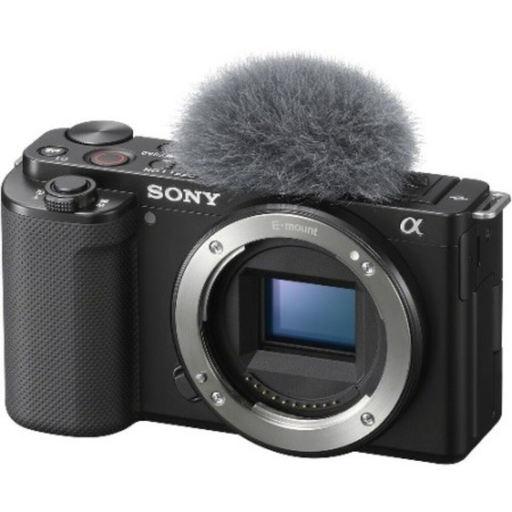
For those whose top priority is image quality. Here we move beyond pure action cameras to an excellent GoPro alternative dedicated to vlogging. Its large APS-C sensor and interchangeable lenses open the door to a cinematic look that is out of reach for traditional action cams.
It shatters the concept of "gimmicky 4K." Here, the 4K is derived from a 6K oversample, delivering exceptional sharpness and detail. Its eye-tracking autofocus ensures flawless focus, no matter what.
Star Feature: Cinema-grade image quality thanks to its large sensor and interchangeable lenses. Strengths: A fully articulating screen perfect for self-filming, ultra-responsive autofocus, and polished audio capture via its directional mic.
Explore our full selection of products that meet our demanding selection criteria and current safety standards.
The lifespan depends on usage and maintenance. On average, a good quality model can last between 3 and 5 years. A few simple steps can extend its life: always rinse the case with fresh water after a trip to the sea, dry the battery contacts thoroughly, and store it in a dry place away from extreme temperatures.
Recording in 4K is very storage-intensive. For one hour of 4K video at 30 fps, expect to use between 30 and 40 GB. A 128 GB microSD card is a comfortable starting point, providing enough space for 3 to 4 hours of footage. Crucially, opt for a card certified U3 (or V30) at a minimum. This guarantees a flawless recording experience.
Absolutely! It's one of their main strengths. Many action cameras are perfect for vlogging thanks to their compact size, durability, and impressive stabilization. For maximum convenience, choose a model with a front-facing (or articulating) screen and, if possible, an external microphone input for professional-quality sound.