
Livraison le jour même ou le lendemain

Qualité garantie

Débloquez vos offres de bienvenue: Livraison GRATUITE | Jusqu'à -80 % | 30 jours d'essai gratuits à JoyPlus
Téléchargez l'application
Want to immortalise your adventures, travels, or vlogs with breathtaking 4K footage? Faced with the jungle of action cameras, it's easy to get lost in technical jargon and end up with a disappointing device. Too many users invest in a camera that, on paper, promises the world, only to get mediocre videos in the end.
To save you from this disappointment, this guide gets straight to the point. We've broken down the spec sheets, identified the marketing traps, and listed the criteria that truly matter. The goal: to help you choose THE 4K action camera that meets your expectations, not the advertisers' claims.
The 3 traps to avoid before buying your sports camera:
To make the right choice, forget the fluff and focus on these few points that guarantee the quality of your future 4K sports camera.
True 4K resolution (3840 x 2160 pixels) is the foundation. But the frame rate (expressed in fps) is just as crucial.
A camera with a stabiliser isn't an option; it's a must-have. The most effective and widespread technology is Electronic Image Stabilisation (EIS). The best systems rely on a 6-axis gyroscopic stabiliser that analyses movements in real time to digitally compensate for shakes. This is the secret to perfectly stable videos, even when the action heats up.
Your playground will dictate the level of protection required.
When it comes to battery life, only trust tests conducted under real-world conditions (4K recording) and plan ahead: the availability of extra batteries or power grips is a major purchasing criterion to ensure you never run out of juice.
To guide you, here are a few options that cater to different user profiles, based on the performance and reliability criteria we've just discussed.
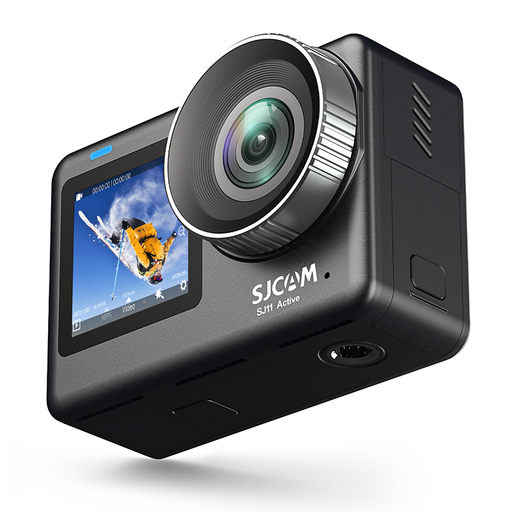
The Profile: The Swiss Army knife for the modern adventurer. Its dual screen is perfect for framing vlogs, and its body, waterproof to 5m without a case, makes it ready to face a downpour or an impromptu paddleboarding session.
It checks all the right boxes: true 4K at 30 fps and a clearly advertised 6-axis gyroscopic stabilisation. No nasty surprises—the image is sharp and stable.
The versatility-to-price ratio. The dual screen, native waterproofing, and effective stabilisation make it an ultra-complete model without breaking the bank.
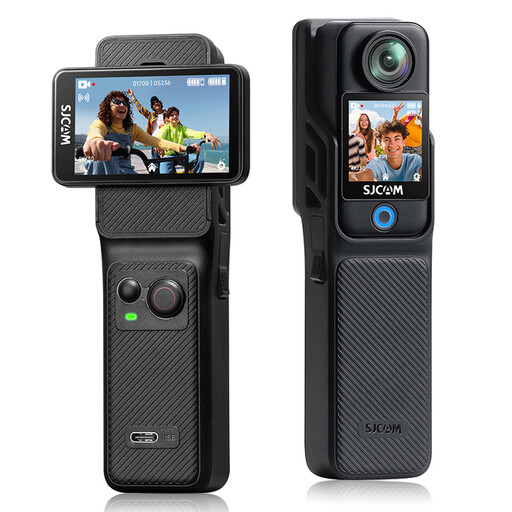
The Profile: The marathon runner of vlogging. Designed for content creators, its external battery grip shatters battery life records (up to 437 minutes!). Its dual touchscreen, with a tilting front screen, is a decisive advantage for self-filming.
It tackles the battery life problem head-on. No more low-battery anxiety: its external grip is a concrete solution that ensures hours of uninterrupted 4K shooting.
Its outstanding battery life, smart modular design, and dedicated vlogging features (tilting screen, 6-axis stabilisation).
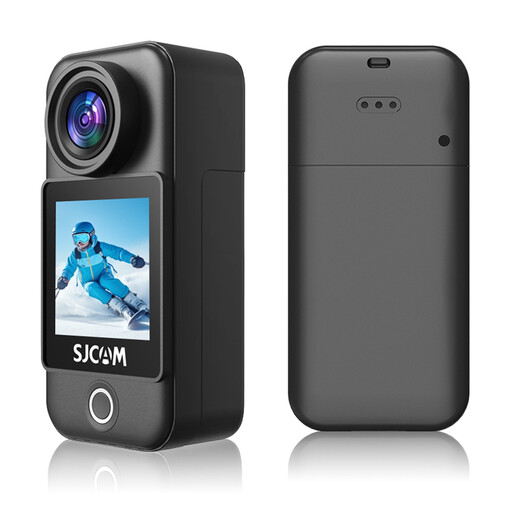
The Profile: The perfect ally to get started with 4K without breaking the bank. Ultra-compact and feather-light (55g), this pocket camera goes unnoticed to capture your holiday memories or outings on the fly, while still packing the essentials.
It proves that a small price doesn't mean sacrificing the essentials. It packs true 4K at 30 fps and 6-axis gyroscopic stabilisation, leaving low-end models with shaky, "inflated" resolution far behind.
Its excellent value for money. Its compact size and light weight make it a discreet yet surprisingly capable travel camera.
A good image is great. Good sound is better. Don't underestimate the impact of action camera accessories, which can literally transform your videos.
We have compiled a complete list of products that meet these strict selection criteria and current regulations.
It depends on the offer, but it's a real bonus to look out for. Several models, like those from SJCAM, often include a 64GB memory card as a gift. Enough to start filming right out of the box! In any case, for 4K, don't skimp on quality: a fast card (U3 class minimum) is essential to avoid any recording issues.
The solution is simple: use an external microphone. Built-in mics quickly get overwhelmed outdoors. If your camera has a USB-C port or a dedicated adapter, a lavalier mic or, even better, a wireless system will make all the difference. A wireless camera microphone will give you complete freedom of movement and clear audio, worthy of a professional finish for your vlogs.
Optical Image Stabilisation (OIS) is hardware-based: micro-motors move the lens or sensor to counteract vibrations. It's a more expensive technology and therefore rarer on action cams. Electronic Image Stabilisation (EIS) is software-based: the image is slightly cropped in real time to digitally cancel out shakes. Today, EIS systems with a 6-axis gyroscope are so effective that they represent the best efficiency-to-price compromise for this type of camera.