
Livraison le jour même ou le lendemain

Qualité garantie

Débloquez vos offres de bienvenue: Livraison GRATUITE | Jusqu'à -80 % | 30 jours d'essai gratuits à JoyPlus
Téléchargez l'application
Choosing a 4K action camera can quickly become a headache. Between jargon-filled spec sheets and flashy marketing promises, it's easy to feel lost and end up with buyer's remorse. The result: a device that overheats, a battery that dies in the blink of an eye, or disappointing image quality as soon as the light drops. This guide is here to help you avoid the most common pitfalls and identify the features that truly matter for you.
Before taking the plunge, watch out for these three often-overlooked points. They make all the difference between a good investment and a major disappointment.
To make the right choice, focus on these three pillars. They are the real deciding factors for evaluating the performance of a waterproof sports camera.
Image quality primarily depends on the amount of light the camera can capture. A large sensor, like a 1/1.3-inch model, is physically capable of collecting more light. What does this mean in practice? Clearer videos, less digital noise in dark areas, and a better dynamic range (the ability to retain detail in both shadows and highlights). When such a sensor is paired with a renowned lens, like those designed in partnership with Leica, the result is often clarity and colourimetry on another level.
Action, by definition, involves movement. Good image stabilisation is therefore non-negotiable. The most advanced systems, known by names like FlowState or 6-axis gyroscopic stabilisation, analyse the camera's movements in real time and digitally compensate for them, delivering stunningly smooth results. This is what allows you to run, jump, or race down a rough trail while maintaining a stable and visually pleasing image.
Beyond the spec sheet, it's the day-to-day experience that matters most. A camera with a flip screen makes framing for vlogs or complex-angle shots much easier. Native waterproofing down to 10 metres gives you the freedom to film in the rain or near water without an accessory. Finally, software features like editing via a mobile app, pausing a recording, or fast transfers with Wi-Fi 5 GHz are assets that radically simplify the workflow for any content creator.
We have vetted several models to match them with specific user profiles, based on the performance and reliability criteria we've just discussed.
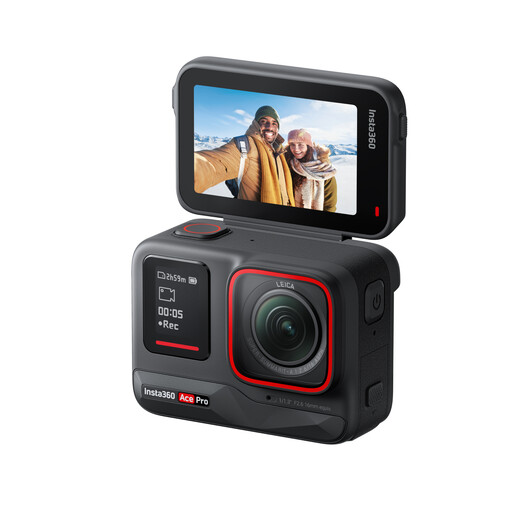
WHY IT'S A MATCH: Ideal for vloggers and tech enthusiasts who refuse to compromise on image quality. Its 2.4-inch flip screen is perfect for self-filming, and the partnership with Leica ensures top-tier visual results.
This model doesn't just rely on resolution. It combines a large 1/1.3-inch sensor with a Leica lens and a 5nm AI chip for exceptional low-light performance, an area where most competitors fail.
Superior image quality day and night; large flip touchscreen; high-performance FlowState stabilisation.
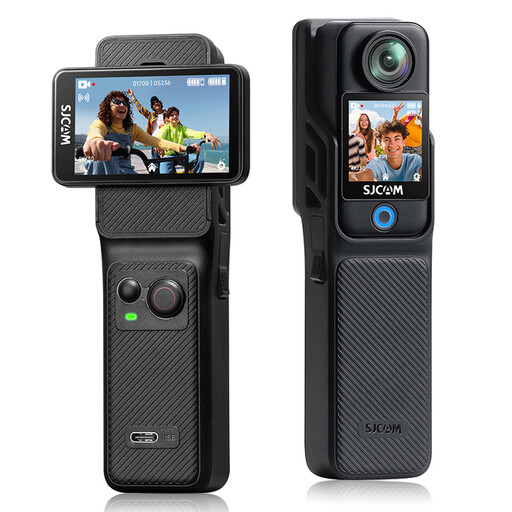
WHY IT'S A MATCH: Designed for long outings (hiking, cycling, fishing). Its record-breaking battery life with its battery grip and compact size make it a reliable companion that won't quit in the middle of the action.
It bypasses the trap of poor battery life. Instead of promising unrealistic numbers, it provides a practical solution with an external battery integrated into the grip, ensuring extra-long recording times, even in 4K.
Marathon battery life (up to 437 min); dual touchscreens for easy framing; 6-axis gyroscopic stabilisation.
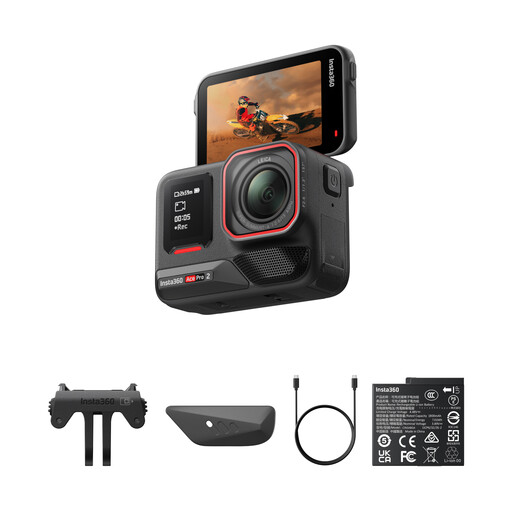
WHY IT'S A MATCH: For those who already have one foot in the future of video and demand cutting-edge performance. The 8K capability and dual-battery pack are perfect for intensive shoots and projects that require flawless image quality.
This model doesn't just boast 8K resolution on paper. It pairs it with a dual AI chip and a large sensor to ensure the processing power is up to the challenge of ultra-high definition.
Future-proof image quality (8K); included dual-battery pack for long sessions; excellent audio and low-light performance.
We've compiled a complete and up-to-date selection of cameras that meet our demanding criteria.
Most recent models offer native waterproofing, typically down to 10 metres deep. This is more than enough for rain, splashes, or brief immersion. For diving or more intense water sports, a dedicated protective case remains essential. A good rule of thumb: always rinse your camera with fresh water after use in the sea to prevent corrosion.
Battery life varies greatly depending on the model and usage conditions. On average, expect between 60 and 90?minutes of continuous recording in 4K at 30/60?fps. Be aware that cold weather can significantly reduce this duration. For long sessions, it's best to have spare batteries or choose a model that supports fast charging.
Yes, stabilisation systems like FlowState are effective regardless of lighting conditions because they rely on data from a gyroscope. However, the overall image quality in low light remains entirely dependent on the sensor/lens/noise-processing trio. Good stabilisation won't work miracles with a small sensor in the dark.