
Livraison le jour même ou le lendemain

Qualité garantie

Débloquez vos offres de bienvenue: Livraison GRATUITE | Jusqu'à -80 % | 30 jours d'essai gratuits à JoyPlus
Téléchargez l'application
Whether you're a content creator, an extreme sports enthusiast, or a passionate traveller, choosing the right 4K action camera can be a daunting task. The market is flooded with models boasting endless spec sheets, making comparisons difficult. This guide is here to decode the technical jargon and help you find the camera that truly fits your needs, whether you're capturing a vlog, a ski descent, or an underwater exploration.
We've vetted the top models on the market to bring you a balanced selection, focusing on essential criteria: image quality, stabilisation, and ergonomics.
Before diving into our top picks, let's review the key factors that should guide your decision.
The "4K" logo is everywhere, but it doesn't guarantee a great image on its own. The sensor size is the real differentiating factor: a larger one (like a 1/1.3-inch or 1-inch type) captures significantly more light. The result? Sharper videos, richer colours, and much better low-light performance—the typical Achilles' heel of 4K mini cameras. The lens, sometimes designed in partnership with prestigious brands, also plays a crucial role in the sharpness and final rendering of the image.
A sports camera must be perfectly stable. Shakes and vibrations are the number one enemy of a successful shot. Most current models feature highly effective electronic image stabilisation (EIS). Some go even further with mechanical stabilisation (a gimbal) for cinema-grade smoothness. Also, consider durability: a waterproof camera that doesn't require an additional case offers far greater freedom, whether in the rain or during water activities. The waterproof depth rating (often 10 metres) is a good indicator of its versatility.
For a vlogging camera, ergonomics are a non-negotiable feature. A flip-out or tilting touchscreen is essential for easily framing yourself in selfie mode. Simple menus, a responsive interface, and smart features (gesture control, AI-assisted editing, subject tracking) are all assets that radically simplify the creative process. Finally, don't overlook connectivity (Wi-Fi, Bluetooth) for quickly transferring your files to your smartphone.
Here are three models that stand out from the crowd, each with a distinct market position.
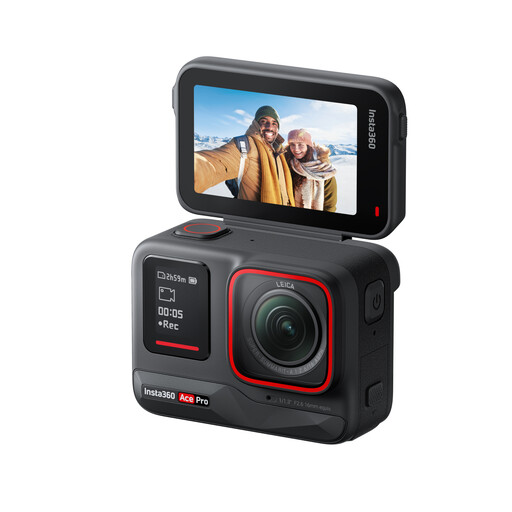
Why it stands out The Insta360 Ace Pro goes all-in on image quality, with its large sensor and a lens co-developed with Leica. According to the brand, its 5nm AI chip and PureVideo mode promise to drastically improve low-light performance: a real advantage for evening or indoor shoots. Its large 2.4-inch flip-out screen is a joy to use for framing shots from any angle.
Key features
Who is it for? For demanding creators and adventurers who refuse to compromise on image quality, day or night, and who want the flexibility of a large flip-out screen for their vlogs.
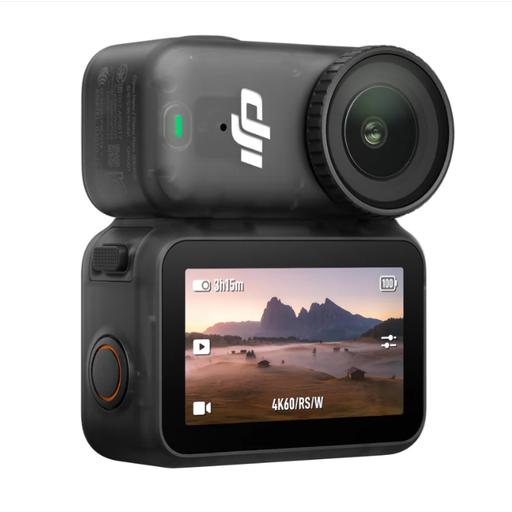
Why it stands out The DJI Osmo Nano focuses on extreme compactness and versatility. Its featherlight design and magnetic mount make it the perfect tool for capturing immersive POV shots without being weighed down. Its 143° ultra-wide field of view is ideal for plunging the viewer into the heart of the action.
Key features
Who is it for? For athletes and content creators looking for an ultra-discreet 4K mini camera that can be mounted anywhere for dynamic POV shots and on-the-go vlogs.
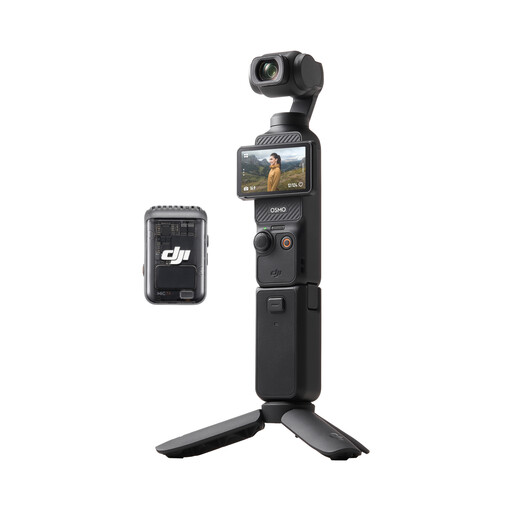
Why it stands out The DJI Osmo Pocket 3 is not a traditional action camera. It's an all-in-one filming solution designed for videographers. Its key advantage: a 3-axis mechanical stabilisation (gimbal), which provides image smoothness far superior to any electronic stabilisation. Paired with its large 1-inch sensor, it's built to produce shots with a cinematic look. The Creator Bundle adds essential accessories, including a wireless microphone.
Key features
Who is it for? For vloggers, mobile journalists, and creators who prioritise flawless image stability and high-quality audio over the all-weather durability of a sports camera.
An action camera is a versatile tool, but every creator has unique needs. If you're more focused on streaming or looking for a desktop solution, other types of cameras might be more suitable.
To explore alternatives, take a look at our selection of budget-friendly gaming cameras.
Discover our selection of gaming cameras
The number of frames per second (fps) determines the smoothness of the video. Recording at 60 fps already ensures excellent fluidity, perfect for action scenes. Filming at 120 fps opens the door to ultra-detailed and perfectly smooth slow-motion effects in post-production: simply divide the speed by 4 or 5 to get playback at 24 or 30 fps without any choppiness.
Yes, and it's an excellent choice for many types of vlogs, especially those involving movement, travel, or outdoor activities. Its compactness, durability, and wide-angle lens are major advantages. For more stationary vlogs or for those seeking a cinematic look, a model with a mechanical stabiliser like the Osmo Pocket 3 will be more suitable.
It all depends on the model and how you use it. Most recent action cameras are waterproof up to 10 metres without a case, which is more than enough for handling rain, snorkelling, or surface water sports. However, for scuba diving at greater depths, a dedicated dive housing becomes essential to protect the device and ensure it functions correctly.