
Livraison le jour même ou le lendemain

Qualité garantie

Débloquez vos offres de bienvenue: Livraison GRATUITE | Jusqu'à -80 % | 30 jours d'essai gratuits à JoyPlus
Téléchargez l'application
Choosing a new TV is never a small task, especially when you're looking for the best for gaming and movies. The 4K 144Hz TV market is booming, promising unprecedented smoothness and responsiveness. But be warned: behind the tempting spec sheets lie subtleties that can turn the dream into a disappointment. Our mission: to help you decode the marketing jargon to make the right choice, without getting burned.
Before you pull out your credit card, here are the 3 classic mistakes that could turn your exciting new purchase into a source of regret:
To ensure your future 4K TV delivers on its promises, don't get lost in the details. Instead, focus on these three essential points. It's your best guarantee for a lasting, immersive experience.
The starting point is a panel with a native refresh rate of 144Hz (or 120Hz, which is the bare minimum). This refers to the screen's physical ability to display 144 frames per second. Paired with VRR (Variable Refresh Rate), this feature is absolutely crucial for gaming.
VRR (and its variants like AMD FreeSync or NVIDIA G-Sync) synchronizes the panel's refresh rate with the number of frames per second sent by your console or PC. The result is undeniable: goodbye to screen tearing and micro-stutters! The smoothness is perfect, even when the game's framerate fluctuates. This is a non-negotiable feature for a TV built for the PS5 or Xbox Series X.
The choice of panel technology is critical for image quality.
The choice is yours, and it depends on your usage and your room: the infinite contrast of OLED for a cinematic atmosphere, or the brilliant brightness of Mini LED for the whole family's living room.
In today's hyper-connected world, a single HDMI 2.1 port is no longer enough. Demand a TV with four full-bandwidth (48 Gbps) HDMI 2.1 ports. This allows you to connect your PS5, Xbox Series X, PC, and a Dolby Atmos soundbar (via eARC) simultaneously, without ever having to juggle cables or sacrifice quality. The inclusion of ALLM (Auto Low Latency Mode) is also a must-have: the TV automatically switches to game mode when it detects a console.
Here are a few models that meet our criteria perfectly, designed for different budgets and use cases.
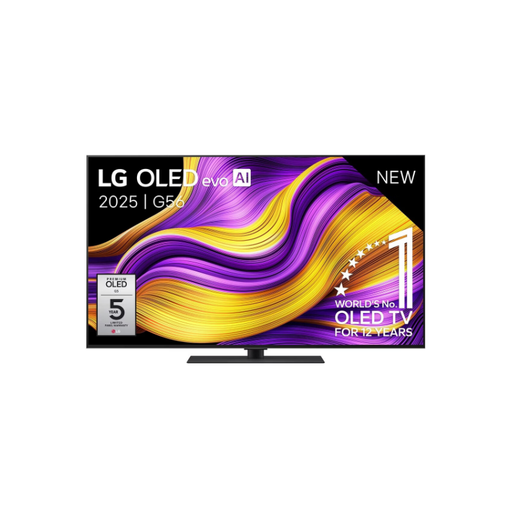
Why this model? This user wants the best of both worlds: uncompromising picture quality for their Dolby Vision movies and absolute responsiveness for competitive gaming. The OLED evo technology provides perfect blacks and a near-instantaneous response time. The immersion is total.
With its native 144Hz OLED panel and 4 full-bandwidth HDMI 2.1 ports, it avoids the fake 144Hz trap and subpar connectivity.
Infinite contrast for a cinematic picture. Blazing-fast response time for gaming. "One Wall" design for seamless wall integration.
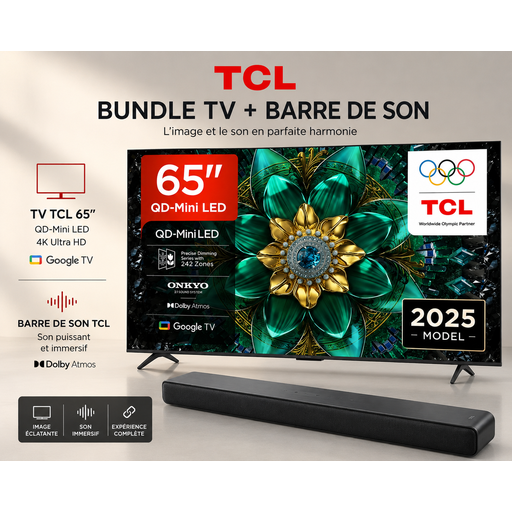
Why this model? Perfect for a bright living room where you're constantly switching between movies, TV shows, and gaming sessions. Its QD-Mini LED peak brightness crushes reflections, while its large screen size and Smart TV features make it the heart of family entertainment.
It doesn't fall for the "nits marketing" trap. Its high brightness (up to 1000 nits) is paired with controlled backlighting for high contrast and very contained blooming.
Ideal brightness for bright rooms and HDR. A complete gaming arsenal (144Hz VRR, ALLM, FreeSync). Immersive sound thanks to the Onkyo 2.1 system and included soundbar.
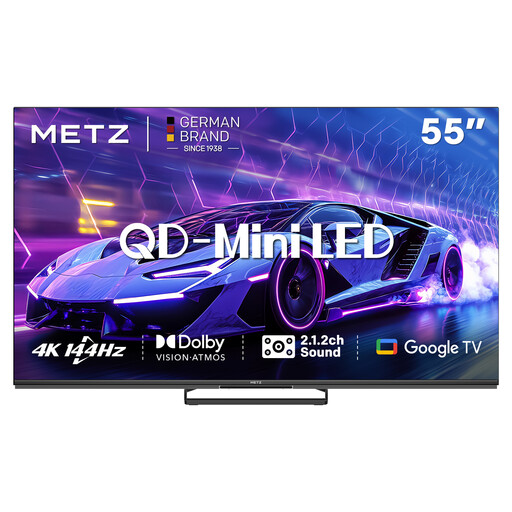
Why this model? This user wants to get a taste of the latest technologies (Mini LED, 144Hz) without splurging on premium brands. They're looking for the best value for an up-to-date gaming and cinema experience.
It focuses on the essentials: a 144Hz panel, Mini LED for solid contrast, and HDMI 2.1 connectivity. There's no sacrificing gaming specs for the sake of price.
Mini LED and 144Hz at a very attractive price. Dolby Vision & Atmos compatibility. Integrated Google TV for a rich and simple smart experience.
We've curated a complete selection of TVs that meet all our demanding criteria.
Is a 144Hz TV really useful for a PS5 or Xbox Series X? Yes, absolutely. Even though the consoles primarily target 120Hz, a 144Hz TV ensures perfect, effortless compatibility. It's also a future-proof investment, whether for upcoming consoles or for connecting a gaming PC. Finally, 144Hz panels are often of higher quality.
What's the difference between Mini LED and OLED for gaming? To put it simply: OLED shines with its unbeatable response times and infinite blacks, ideal for immersion in dark environments. Mini LED, on the other hand, offers superior peak brightness, perfect for bright rooms and HDR, with no risk of burn-in from static game displays (like HUDs).
Do I need a special HDMI cable for 4K at 144Hz? Yes, it's essential. To enjoy 4K at 120Hz or 144Hz with HDR, you need a certified "Ultra High Speed" HDMI 2.1 cable. Only this type of cable can provide the required 48 Gbps bandwidth. Your old HDMI cables, even "Premium" models, will bottleneck your setup's performance.