
Livraison le jour même ou le lendemain

Qualité garantie

Débloquez vos offres de bienvenue: Livraison GRATUITE | Jusqu'à -80 % | 30 jours d'essai gratuits à JoyPlus
Téléchargez l'application
Securing a holiday home, construction site, or remote farm can often be a major challenge. With no Wi-Fi or power outlets in sight, conventional surveillance systems are not an option. Fortunately, a new technology has come to the rescue?: the 4G solar-powered security camera.
Completely self-sufficient, it uses the mobile network to transmit footage and a solar panel to recharge its battery. It's a solution that offers peace of mind, without the hassle of a complex installation. To help you make an informed decision, this guide breaks down the essential criteria and presents our selection of the best models for 2026.
Before diving in, it's crucial to understand the key features that make all the difference. Let's review the key points to check to ensure you make the right choice.
Their secret?? A connection to the mobile network. A wireless outdoor security camera with a SIM card requires a data plan from a mobile operator.
The other cornerstone of these systems is, of course, their power autonomy. The combination of a rechargeable battery and a solar panel ensures 24/7 operation.
The usefulness of a security camera primarily depends on the clarity of its images. Resolution and detection capabilities are therefore decisive criteria.
Based on these criteria, here are the models that caught our attention.
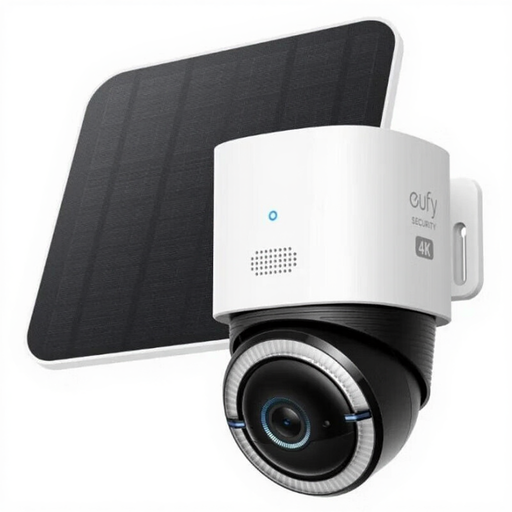
Why It Stands Out?: This model from the eufy 4G range makes a strong impression with its dual connectivity (4G and Wi-Fi) and 4K resolution. The result? Incredible flexibility. Use 4G for a remote site, then switch to Wi-Fi if a connection becomes available. The icing on the cake is its motorised head, which provides 360° surveillance, and its AI that automatically tracks detected people and vehicles.
Pros?:
Who Is It For?? For the most demanding users who want to make no compromises on image quality and are looking for a future-proof solution. Ideal for monitoring large plots of land, premium properties, or areas where Wi-Fi might be installed in the future.
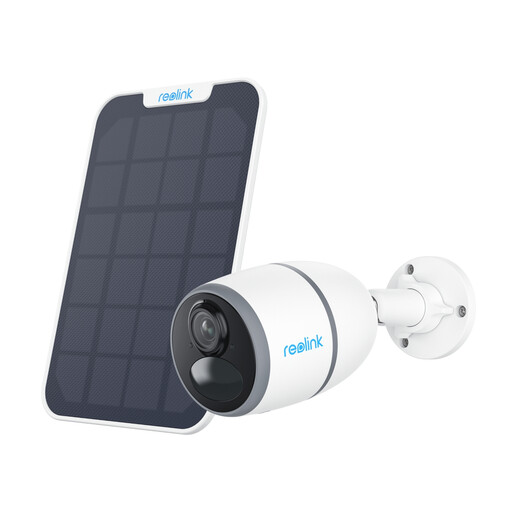
Why It Stands Out?: The Reolink Go Series G330 has established itself as a benchmark for standalone 4G cameras. Designed as a 100% mobile solution, it is robust, reliable, and easy to deploy. Its 2K+ resolution is more than sufficient for most uses, and its smart detection of people and vehicles drastically reduces false alarms. IP65 certified, it stands up to the elements without flinching.
Pros?:
Who Is It For?? For those who prioritise robustness and reliability in challenging environments. It is perfect as a 4G construction site camera, for a farm, or for monitoring a moored boat.
4G cameras are the go-to solution for locations completely cut off from the internet. But if your site has a Wi-Fi signal, even without a nearby power outlet, other options may be more suitable and, above all, more cost-effective, as they don't require a mobile subscription.
? Discover our selection of Solar-Powered Wi-Fi Trail Cameras to explore alternatives that remain autonomous with solar power but use Wi-Fi.
A SIM card with a data plan is essential. Most cameras accept nano-SIM cards from traditional operators. M2M (Machine-to-Machine) or IoT (Internet of Things) plans, which are often contract-free, are the best option. Check the manufacturer's estimated consumption to choose a suitable data allowance (typically between 2 and 10 GB/month).
Absolutely. During the day, the solar panel recharges the internal battery. The battery then takes over at night or on days without sun. A good model includes a battery capable of lasting several days without any sunlight. Furthermore, all modern cameras integrate infrared night vision to see perfectly in complete darkness.
It all depends on your usage. Streaming live video is the most data-intensive activity. Sending notifications and short video clips is much less data-hungry. For standard use (recording on detection and occasional viewing), a 5 GB per month plan is a good starting point. For a 4G construction site camera with active monitoring, you will need to budget for a more generous plan.