
Livraison le jour même ou le lendemain

Qualité garantie

Débloquez vos offres de bienvenue: Livraison GRATUITE | Jusqu'à -80 % | 30 jours d'essai gratuits à JoyPlus
Téléchargez l'application
Securing a second home, a construction site, or a farm far from any Wi-Fi connection or power outlet is often a major challenge. How do you keep an eye on your property when traditional surveillance solutions are not an option? The answer lies in the 4G solar security camera, designed specifically for these scenarios.
Using a simple SIM card for connectivity and a solar panel for power, these cameras offer complete autonomy. This guide breaks down the essential criteria and presents the top models available today, helping you secure your off-grid location with complete peace of mind.
To make the right choice, several technical criteria must be evaluated. They will determine the effectiveness and reliability of your camera in the field.
The crucial element is the mobile network connection. Before any purchase, it is imperative to check the quality of 4G coverage at the exact installation site. A solar camera with a SIM card requires a Nano-SIM card and a mobile data plan. Data consumption will depend entirely on your usage: a few gigabytes per month will be enough to receive alerts and view footage occasionally, but frequent live streaming will require a more substantial plan.
The autonomy of an outdoor 4G camera relies on the combination of its internal battery and its solar panel. The battery's capacity, expressed in milliampere-hours (mAh), determines its endurance without sunlight. A high-performance solar panel, ideally south-facing, ensures continuous recharging, even on overcast days. For monitoring an off-grid location like a second home or a farm, aim for a high-capacity battery (over 5,000 mAh) paired with an efficient solar panel. This is the secret to long-lasting peace of mind.
What good is a camera if the image is blurry? High resolution (2K or 4K) is essential for identifying crucial details like a face or a licence plate. To cover large areas (like a field or a large car park), a 4G PTZ (Pan-Tilt-Zoom) camera is ideal: its motorised head pans and tilts to provide a 360° view, all controllable from your smartphone. Finally, prioritise smart motion detection that can distinguish between a person, a vehicle, or an animal. This is key to avoiding a flood of false alerts, a critical point for a 4G construction site camera.
Here are a few options that meet different needs for autonomous surveillance.
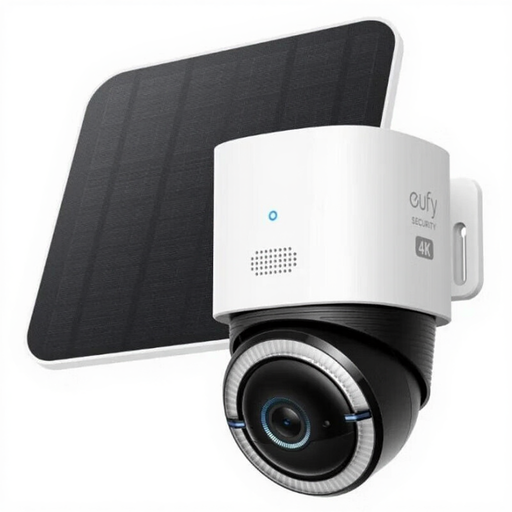
Its Standout Feature: Dual connectivity. It works just as well on 4G in an off-grid location as it does on Wi-Fi if a network is available. A truly formidable versatility.
Key Features:
Best for: Those who demand impeccable image quality and an all-terrain solution capable of adapting to any network configuration.
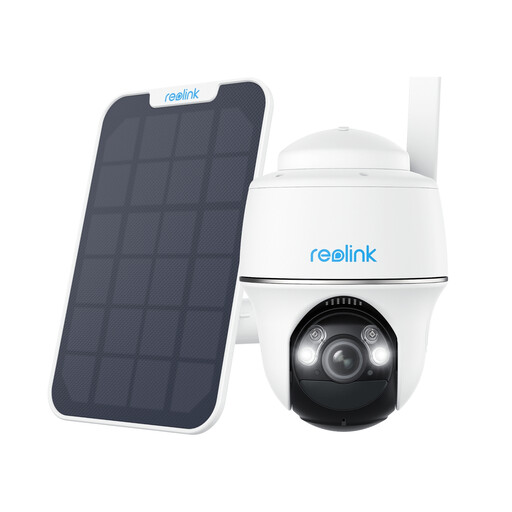
Its Standout Feature: A specialist for areas with no Wi-Fi, the REOLINK G430 is a pure 4G camera. Its strength lies in its motorised Pan & Tilt head, which allows you to scan a vast perimeter remotely, directly from the app.
Key Features:
Best for: Perfect for 4G construction site surveillance, monitoring a farm, or any large property where a single camera needs to cover it all.
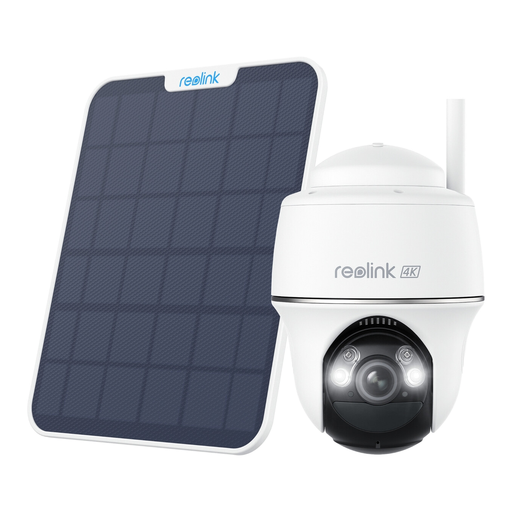
Please note: This model is not 4G; it requires a Wi-Fi (or Ethernet) connection. It's an excellent alternative for locations that have internet access but no nearby power outlet.
Its Standout Feature: Its very high 4K 8MP resolution combined with solar-powered autonomy. It's the perfect wireless security camera for areas covered by Wi-Fi but where running a power cable is a hassle.
Key Features:
Best for: Owners of large gardens, outbuildings, or car parks located within the home's Wi-Fi range but too far for an easy electrical connection.
To optimise your setup and ensure rock-solid autonomy, accessories like additional solar panels may be necessary. Discover our selection in the Solar Panels category.
Most 4G cameras use a Nano-SIM card. As for the plan, it all depends on your usage. For occasional viewing and receiving alerts, a plan with 2 to 5 GB of data per month is usually sufficient. If you plan to watch the live stream frequently, opt for a plan with 10 GB or more. The most important thing is to choose a provider that offers excellent 4G coverage at the installation site.
Absolutely. During the day, the solar panel recharges the camera's internal battery, which stores enough energy to operate throughout the night. On overcast days, charging is slower but still sufficient to ensure continuous monitoring. For night-time vision, this is provided by infrared LEDs (for black and white images) or, on some models, by a spotlight that allows for a full-colour image.
It's simple: a security camera without Wi-Fi, such as a 4G model, uses the mobile network, just like your smartphone. Thanks to its SIM card, it connects to the internet to send you motion detection alerts and give you access to the live video stream or recordings, wherever you are, via its dedicated app.